



A University of Oxford mathematician has challenged the long-held theory that ancient Greek builders designed the Parthenon’s subtle curves to compensate for optical illusions. Alain Goriely argues that the widely repeated explanation is likely a myth.
Goriely laid out his case in a paper titled “The Illusion of Illusions.” He examined the long-held claim that architects of the Parthenon in Athens added slight curves to the temple’s stone platform, columns, and carvings.
The goal, according to the theory, was to make the building appear perfectly straight and even from a distance. The idea traces back to the Roman writer Vitruvius, who described the practice roughly 400 years after the Parthenon was completed in 432 B.C.
How the Mathematician Tested the Parthenon’s Optical Illusion Claims
The theory notes that a flat stone platform would look like it sags in the middle, so builders curved it slightly upward instead. Columns were given a slight bulge, known as “entasis,” so they would not appear to cave inward.
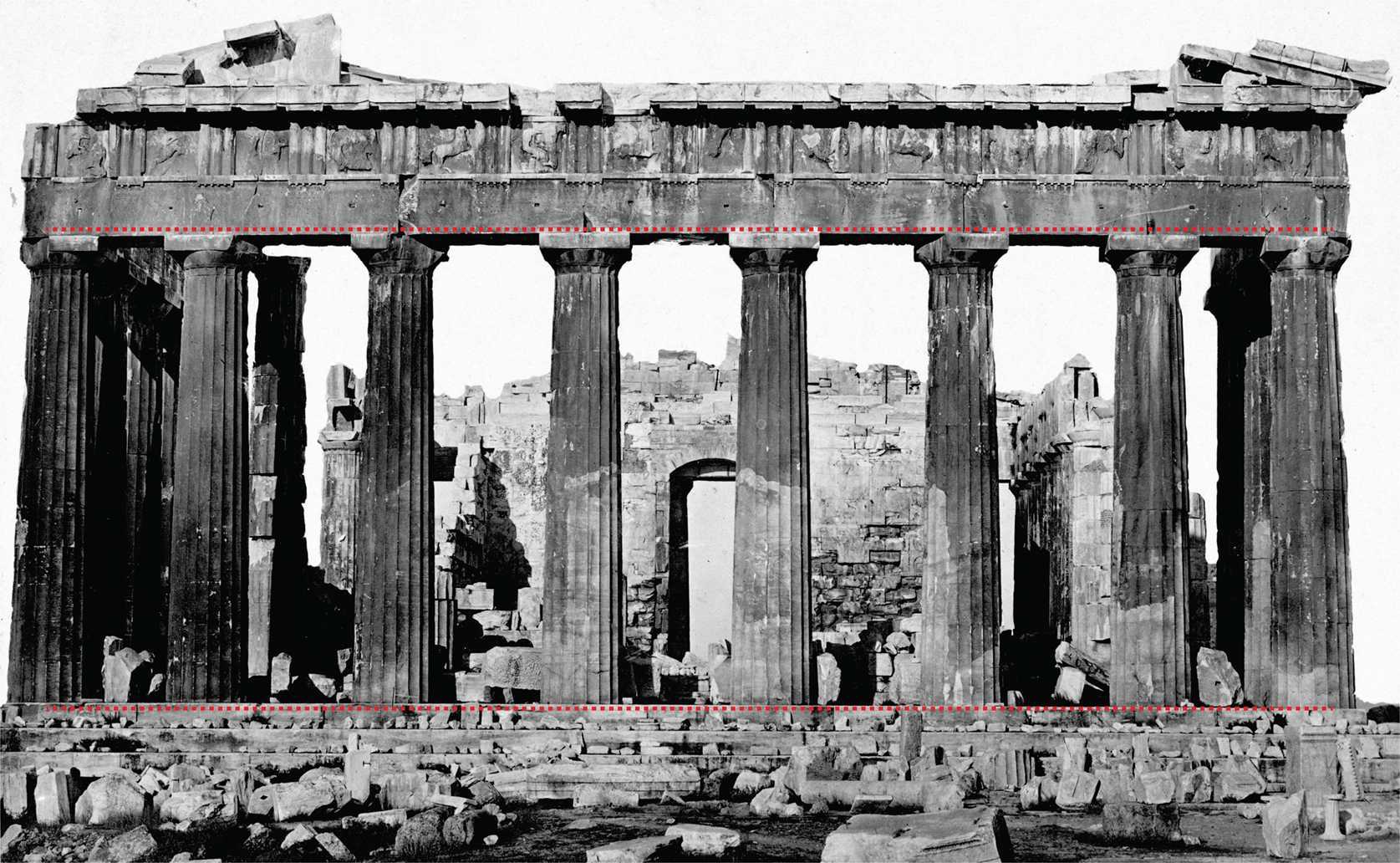
Corner columns were made a bit thicker because sunlight around them supposedly made them look thinner than columns seen against darker backgrounds. Carved figures placed high on the building were enlarged to offset the effect of being viewed from below.
Goriely used measurements of the temple along with studies on human vision to test whether these adjustments would actually work. He found the platform curves only about 6 centimeters (2.4 inches) over its full length, an amount generally too small for the eye to notice from typical viewing distances.
He also found that the exact spots needed for the corner column illusion to succeed are so limited and impractical that the design would have created more unevenness than it corrected.
Historians, AI chatbots and the persistence of an old myth
Goriely pointed out that Vitruvius never offered evidence that Greek builders intended these features as corrections. Some historians doubted the theory long before modern science could test it. Seventeenth century French architect Claude Perrault argued there was no real reason to alter the columns’ proportions for optical purposes.
The paper also notes that the myth has spread into artificial intelligence chatbots. Goriely tested ChatGPT, Gemini and Claude and found each one repeated the optical correction explanation as fact when asked about it. He linked the pattern to years of repetition in textbooks, encyclopedias and museum tours.
Instead of correcting an optical illusion, Goriely suggests the Parthenon’s curves may have served a practical purpose, such as helping rainwater drain off the platform. He also said the curves may simply reflect the aesthetic taste of builders who worked without any formal theory of vision or engineering.
See all the latest news from Greece and the world at Greekreporter.com. Contact our newsroom to report an update or send your story, photos and videos. Follow GR on Google News and subscribe here to our daily email!

