


Archaeologists in Italy have uncovered a cluster of Roman warehouses alongside Etruscan remains at Vada Volaterrana, an ancient port system on Tuscany’s coast that operated for more than a thousand years.
The University of Pisa’s 2026 excavation season, carried out at the San Gaetano site near Rosignano Marittimo, added new detail to a settlement that once linked the inland city of Volterra to Mediterranean trade routes.
Researchers describe Vada Volaterrana as far more than a single harbor. In Etruscan and Roman times, the name referred to a network of landings, settlements and workshops spread along the coast between the Fine and Cecina rivers.
The ancient name appears in Roman literary sources, including the writings of Cicero, and later in maritime records from the late antique period.
San Gaetano’s monumental warehouses, baths and marble-lined halls
Excavations have focused for years on San Gaetano, a port district that grew into a monumental complex under Emperor Augustus and remained in use, despite repeated rebuilding, until the seventh century.
Earlier digs there uncovered storage warehouses known as “horrea,” bath complexes, a large cistern, a monumental fountain, and a hall believed to have served as the meeting place of a merchants’ guild.

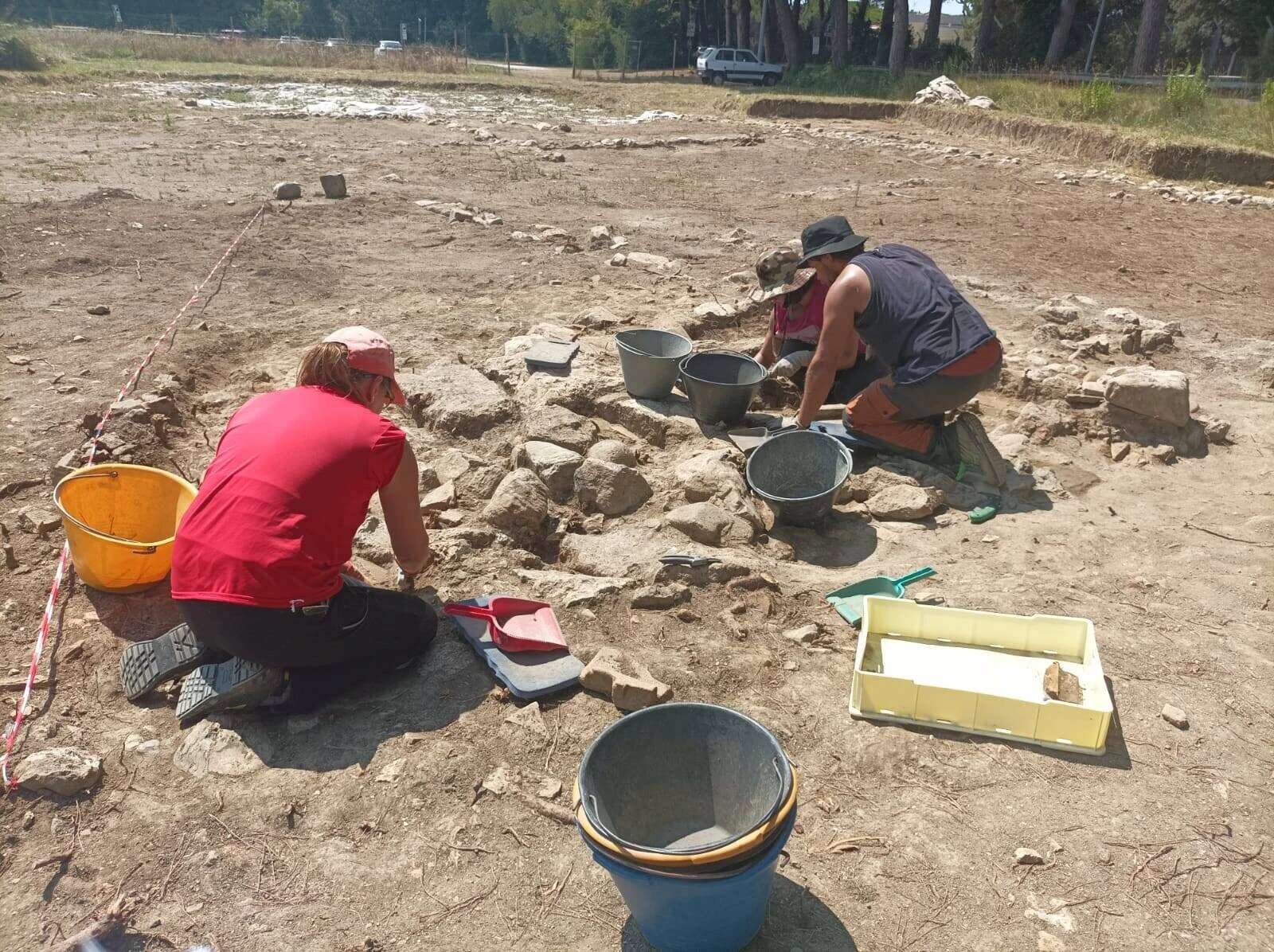
This year’s fieldwork ran from July 6 to July 24. On the northern side, excavators continued clearing two circular rooms finished with marble floors and wall panels, though their exact function remains unclear.
Archaeologists say the rooms may have served as ceremonial spaces or as a kind of archive linked to port administration. Finds inside show they remained in use into the sixth and seventh centuries, long after the height of Roman rule.
Roman warehouses and Etruscan remains found in new sectors
To the south, in a spot known locally as the “Fanfani lot,” researchers mapped at least 14 rectangular rooms belonging to a large horreum built in the second century.
Drainage channels cross the structure, and an open area nearby may have served for sorting goods unloaded from ships. After the warehouse lost its original function, the area later became a burial ground, with graves dated to the fifth and sixth centuries.
On the eastern edge of the site, archaeologists identified traces of hut dwellings dating between the eighth and sixth centuries B.C., confirming that Etruscan communities occupied the area long before Roman builders arrived.
Marble statue of the ancient Greek god Attis highlights museum finds
The Palazzo Bombardieri museum in Rosignano Marittimo, led by archaeologist Carolina Megale, displays finds from the site, including a marble statue of Attis, the ancient Greek god of vegetation, fertility and rebirth who served as the beloved consort of the Great Mother goddess, Cybele.
The statue was recovered from the site’s bathhouse. In July, the municipality and the University of Pisa signed an agreement to guide research at Vada Volaterrana through 2028.
Together, the Roman warehouses and Etruscan remains uncovered at San Gaetano trace a community that lived for centuries along the boundary between land and sea, linking northern Etruria to Mediterranean trade routes.
See all the latest news from Greece and the world at Greekreporter.com. Contact our newsroom to report an update or send your story, photos and videos. Follow GR on Google News and subscribe here to our daily email!

