



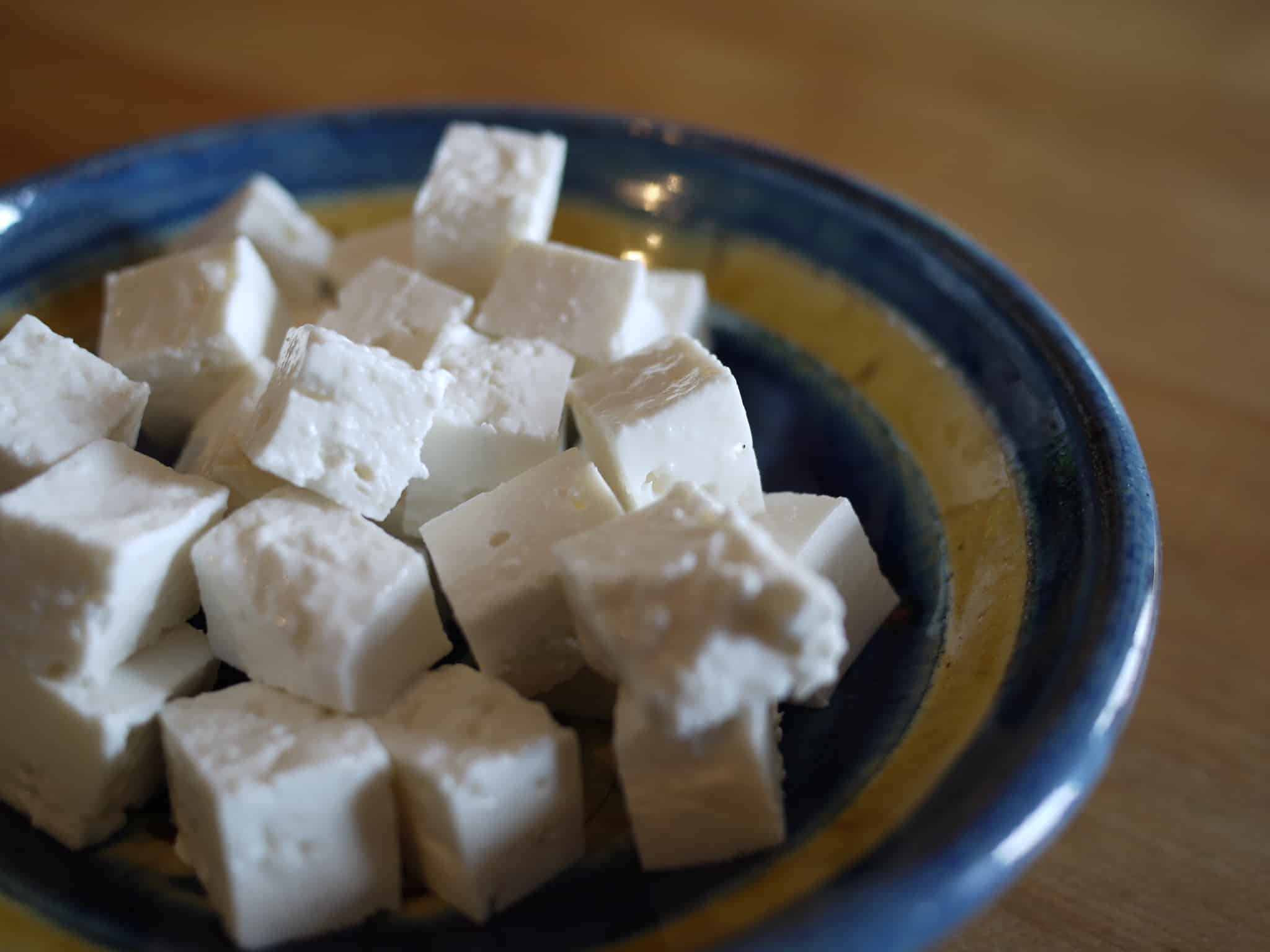
A dispute over the use of European cheese names, including Greece’s Feta, has emerged as an obstacle in trade negotiations between the United States and Mexico.
Washington has objected to provisions in the recently signed European Union-Mexico trade agreement that strengthen legal protections for hundreds of European products linked to specific geographic regions. Among them are Feta, Parmigiano Reggiano and Manchego.
The dispute has brought the European system of Geographical Indications, or GIs, into a broader international debate over whether well-known food names should be protected as regional intellectual property or treated as generic commercial terms.
Why Greece’s feta protection matters in US-Mexico trade talks
The United States has long argued that names such as “feta” and “parmesan” have become generic descriptions that producers outside Europe should be allowed to use.
The European Union takes a different position. Under its geographical indication system, Feta can only be marketed under that name when it meets specific production requirements and originates in designated areas of Greece.
Washington is concerned that Mexico’s commitments to the EU could restrict American dairy companies from selling cheeses under familiar names in the Mexican market.
The commercial stakes are significant. US cheese exports to Mexico are worth about $1 billion annually, making the country one of the most important foreign markets for American dairy producers. EU dairy exports to Mexico, by comparison, are worth roughly $200 million.
The US Trade Representative has repeatedly criticized the European GI system, arguing that it can restrict market access for producers outside the bloc.
EU-Mexico agreement expands protection for Greek products
The European Union and Mexico signed their Modernised Global Agreement and an interim Trade Agreement on May 22, 2026. The deal expands protection in Mexico to 568 European geographical indications, including Greek Feta and Elia Kalamatas.
Protected products cannot be marketed under those names when their use conflicts with the geographical-indication rules agreed between the two sides. The European Commission has indicated that the negotiated provisions cannot simply be reopened because of US objections.
Mexico must still complete domestic procedures before the broader agreement fully takes effect, leaving the issue open to diplomatic pressure as Washington and Mexico City also discuss their wider trade relationship and the future implementation of the US-Mexico-Canada Agreement.
Mexico’s cheese market raises the stakes
Mexico has become an increasingly important market for imported cheese. Imports account for close to 30 percent of domestic cheese consumption, with the United States supplying much of that demand.
American producers sell cheeses labeled as parmesan and Manchego in Mexico, while European companies are seeking greater access for products marketed under protected regional names.
Some Mexican distributors have welcomed the EU agreement because lower tariffs could make European products more competitive. Domestic producers, however, have also expressed concern over inexpensive US dairy imports and the pressure that large-scale American production can place on local cheesemakers.
The dispute therefore goes beyond labeling. It reflects two competing approaches to agricultural trade: the European emphasis on geographic origin and protected production standards, and the US preference for broader commercial use of established food names.
US-Mexico cheese dispute extends to Mercosur
Although the immediate dispute concerns Mexico, the same disagreement over geographical indications has also surfaced in South America. The EU-Mercosur framework includes protections for European geographical indications, including Greek Feta. Mercosur countries began provisionally applying protections for 344 EU GIs on May 1, 2026.
Feta has attracted particular attention because some transitional arrangements allow qualifying existing producers to continue using certain protected names under specific conditions. The wider US-EU dispute has also appeared in Argentina.
Earlier in 2026, members of the European Parliament questioned how Argentina’s commitments under a US trade arrangement would interact with its obligations under the EU-Mercosur framework. The US arrangement included several cheese names Washington considers generic, among them Feta, Parmesan and Gorgonzola.
Argentina is also subject to geographical-indication commitments under the provisionally applied EU-Mercosur trade framework, raising questions in Brussels over how the two sets of obligations will coexist.
The Mexico dispute is therefore part of a broader contest between Washington and Brussels over how internationally recognized food names should be regulated in global trade.
Greece’s feta at the center of a wider trade battle between US and Mexico
For Greece, the dispute is particularly important because Feta is one of the country’s best-known agricultural exports. Feta holds Protected Designation of Origin status in the European Union, and Brussels has increasingly sought to extend that protection internationally through bilateral and regional trade agreements.
As those protections expand into major Latin American markets, they are meeting resistance from the United States, whose producers have long sold cheeses using names Europe regards as geographically protected.
What appears to be a disagreement over cheese labeling has therefore developed into a broader dispute over intellectual property, agricultural traditions and access to valuable international markets.
See all the latest news from Greece and the world at Greekreporter.com. Contact our newsroom to report an update or send your story, photos and videos. Follow GR on Google News and subscribe here to our daily email!

