



AI engineer Tom di Mino says his new study of Linear A shows that the ancient Minoan language was Semitic, expanding his earlier decipherment claim into a wider theory about the language spoken on Bronze Age Crete.
His research offers a full translation of a Minoan prayer, proposes new sound values for unclear signs, and argues that the language preserves grammar found in early Semitic languages.
Di Mino is the sole author of the 41-page study, “Ya Diktu: Grammar of the Minoan Peak Sanctuary Libation Formula,” dated August 2026. The paper builds on his earlier work by presenting a larger set of proposed translations and a detailed explanation of how he reached them.
The new study says his work now includes a 508-entry Linear A lexicon, 42 proposed sign readings and 443 full translations. Those figures are higher than the 408 translated words and 40 unclear signs he had previously reported.
AI engineer links Linear A to an ancient Semitic Minoan language
At the center of the research is an inscription known as “IOZa2,” found on a stone libation table at the peak sanctuary of Mount Iouktas near Knossos. Di Mino argues that the inscription contains a structured religious prayer rather than a list of names, goods, or administrative terms.
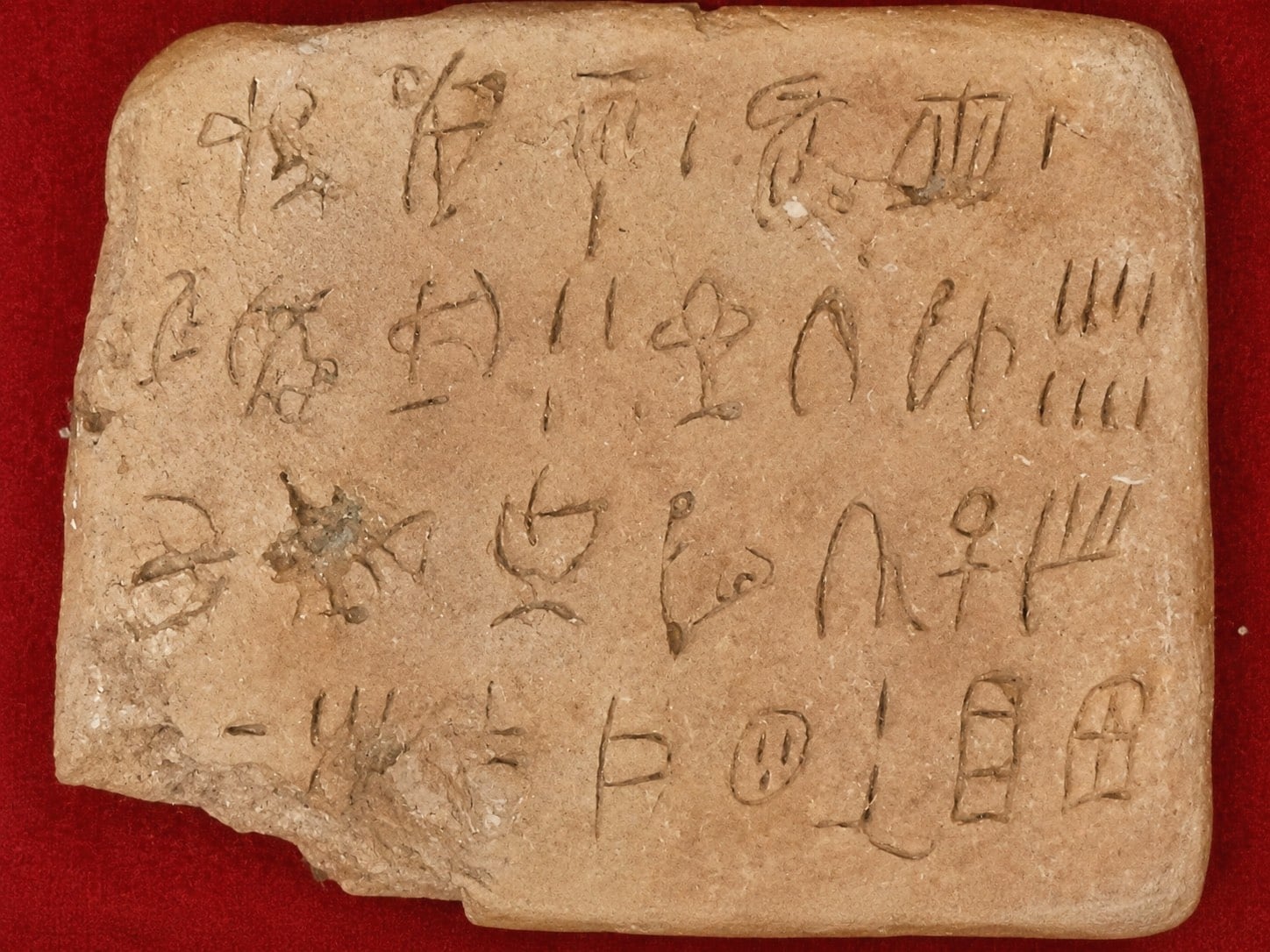
His proposed reading describes a speaker making herself a dwelling for a goddess, calling on a deity named “Diqqitu,” referring to righteousness and an assembled group of worshippers, and asking for the sacred service to be accepted. Di Mino divides the prayer into three main parts: an invocation, a presentation, and a final request.
He argues that the prayer is written in an early form of Semitic and says it may be the oldest known liturgical prayer in the Northwest Semitic tradition. According to his dating, the Minoan text would be older than surviving ritual texts from Ugarit and some of the earliest poetry preserved in the Hebrew Bible.
Unknown Linear A sign becomes key to proposed decipherment
One of the most important parts of the proposed decipherment concerns a Linear A sign known as *301, which does not have an agreed sound value. Di Mino proposes that the sign represented the sound “na.”
That reading allows him to interpret the opening sequence of the prayer through the Semitic root “n-w-y,” which is connected with dwelling or living in a place. He reads the opening as a statement in which the speaker makes herself a dwelling, which he interprets as an act of religious self-consecration.

Di Mino, being an AI engineer, also proposes that *301 could serve two purposes in Linear A. In some inscriptions, he says, it worked as a syllable with the sound “na,” while in others it may have acted as a symbol representing a word connected with a dwelling or temple.
Another major part of the study is the proposed identification of “JA-DI-KI-TU” as the name or title of a goddess. Di Mino reads it as “Diqqitu” and connects it with Mount Dikte or Dikti (Greek: Δίκτη), one of the most important sacred mountains in ancient Cretan tradition.
Diqqitu and Mount Dikti form part of the reading
In his interpretation, the prayer calls directly to Diqqitu as a divine figure associated with the mountain. He links the name with a Semitic root connected with small livestock, including sheep or goats, and points to later traditions describing Dikte as a mountain associated with goats.
The study argues that the Iouktas prayer was not an isolated text. Di Mino identifies versions of the same basic formula at several religious sites across Crete. He says the main sequence appears at least 15 times across seven sites, while related fragments can be found on 28 stone vessels from 11 locations.

His analysis shows that the wording changes from site to site while keeping the same basic religious structure. He argues that some of those differences reflect local dialects, changes in grammar, and the names of different deities worshipped at individual sanctuaries.
At other sites, Di Mino proposes readings connected with figures including Anat, Sukar, and Eshmun. He argues that this pattern suggests worshippers were using versions of a shared prayer while changing parts of it to address the deity associated with a particular sanctuary.
Repeated sanctuary texts support a shared prayer formula
The AI engineer’s Linear A research also argues that an ancient Semitic Minoan language can be identified through grammar, not only through words that resemble Hebrew, Akkadian, or Ugaritic terms.
Di Mino points to what he identifies as Semitic-style personal prefixes, reflexive verb forms, case endings, possessive forms, and other grammatical features. He argues that several of these features are especially old and may preserve forms that were later changed or lost in better-known Semitic languages.

One example is “U-NA-KA-NA-SI,” a sequence that appears in several inscriptions. Di Mino interprets it as a phrase meaning roughly “behold, my assembly.” He connects part of the word with the Semitic root k-n-s, which is associated with gathering or assembling people.
Another sequence, “I-PI-NA-MA,” is interpreted as a phrase connected with being in the presence or before the face of a deity. “SI-RU-TE,” which follows it in the Iouktas inscription, is linked by Di Mino to a Semitic root associated with sacred service or religious ministry.
Semitic grammar forms a central part of the argument
His study generally describes the language as an early Northwest Semitic language. In a proposed family tree, however, Di Mino places Minoan within the wider Central Semitic group and uses the name “Tinitic” for the branch he believes was spoken on Bronze Age Crete.
The paper also proposes that regional differences can be seen inside Linear A itself. Di Mino argues that inscriptions from Palaikastro in eastern Crete sometimes drop an initial “y” sound that appears in similar words elsewhere. He treats that pattern as possible evidence of a local dialect.
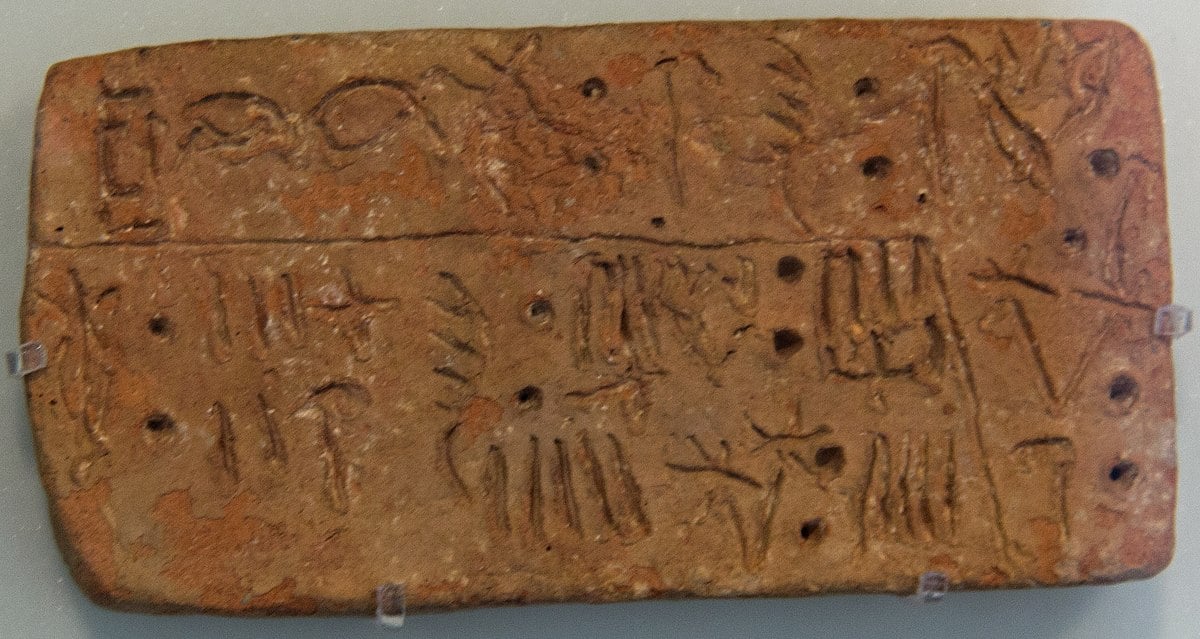
His research extends beyond the Linear A inscriptions found on Crete. In an appendix, Di Mino examines two spells written in what ancient Egyptian texts identify as the Keftiu language in the London Medical Papyrus.
He argues that the spells can also be read through Semitic vocabulary and grammar and identifies Keftiu with the language of Minoan Crete. If his interpretation is correct, he says all seven foreign-language spells in that section of the Egyptian papyrus could be understood as Semitic.
Keftiu spells extend the claim beyond Crete
The manuscript goes further by proposing historical links between Minoan Crete and later eastern Mediterranean cultures, including Phoenicians, Philistines, and groups associated with the Sea Peoples.
Di Mino presents those connections as part of a longer history in which elements of Minoan language and religion may have survived after Linear A disappeared from regular use.
Linear A was used on Crete during the second millennium B.C. and largely disappeared around the time Mycenaean power expanded on the island. Its related script, Linear B, was deciphered in 1952 and shown to record an early form of Greek.
Linear A has remained much harder to read because the language behind it has never been identified with broad scholarly agreement.
Wider acceptance still depends on independent testing
Di Mino’s new study attempts to change that by moving beyond individual word comparisons and presenting a complete grammatical and religious interpretation of the inscriptions.
AI engineer’s central claim is that Linear A recorded a Semitic Minoan language whose words, grammar, and religious formulas can still be recovered from the surviving texts.
The proposed decipherment remains Di Mino’s interpretation of the evidence. Its wider acceptance will depend on whether specialists can independently test the proposed sound values, grammar, and translations across the Linear A corpus.
See all the latest news from Greece and the world at Greekreporter.com. Contact our newsroom to report an update or send your story, photos and videos. Follow GR on Google News and subscribe here to our daily email!

