



Alexander the Great died in Babylon in June 323 BC at just 32 years old. He had spent little more than a decade transforming the ancient world. His armies had defeated the Persian Empire, crossed Central Asia, reached India, and established a realm stretching from Greece and Egypt to the Indus Valley. Then, almost as suddenly as it had appeared, his empire was thrown into uncertainty. But what if Alexander had not died? What if he had lived another twenty years or longer—long enough to reach his early fifties?
We can’t possibly actually know what would have happened, of course. Yet the question is unusually fascinating because Alexander left behind clues about his plans. He had not intended, as recorded by the Greek historian Diodorus of Sicily, to settle quietly in Babylon. In fact, he was planning another massive expansion.
Alexander had no intention of stopping

By 323 BC, Alexander had already accomplished what would have seemed impossible to earlier generations, but his ambition had not diminished. A contemporary Babylonian astronomical diary records his death, while later historians preserve accounts of the preparations underway in Babylon during the final months of his life. Evidence shows that Alexander was preparing for a campaign against Arabia. Arrian reports that a fleet was being assembled for operations against the Arabian tribes.
The campaign was apparently not a distant fantasy, and preparations had already been underway before his death. A Babylonian chronicle fragment also refers to preparations involving troops and the land of Arabia. If Alexander had survived, Arabia would almost certainly have been one of his immediate concerns, but it may have only been the beginning.
The next target may have been the Mediterranean
One of the most extraordinary accounts comes from Diodorus, who says that Alexander left written plans for projects to be carried out after his death, and they were enormous. Among them was a proposal to construct a thousand large warships in Phoenicia, Syria, Cilicia, and Cyprus. The intended campaign was against the Carthaginians and other peoples along the North African and western Mediterranean coasts, extending toward Iberia and Sicily.
Diodorus also recorded plans for a road along the North African coast, together with ports and shipyards needed to sustain such an expedition. If authentic, these plans radically change our thinking on Alexander’s final ambitions. He was not simply looking east. His attention was turning west.
Could Alexander have conquered Carthage?

This is where the historical evidence ends and speculation begins. Carthage was one of the most powerful states in the Western Mediterranean. It possessed wealth, colonies, experienced sailors, and a formidable commercial network. Alexander had never fought a war quite like the one a Carthaginian campaign would require. His greatest victories had largely been achieved through a combination of highly mobile land forces, siege warfare, and carefully coordinated cavalry and infantry.
Carthage would require a massive naval operation. Yet Alexander had already demonstrated that he could adapt. During his campaigns, he incorporated Phoenician, Cypriot, and Egyptian naval forces into his military system. His expedition into India also required the construction of a huge fleet, with Admiral Nearchus leading ships down the Indus and along the coast toward the Persian Gulf. A Mediterranean campaign was therefore not beyond his technological or organizational abilities. Whether it was politically or economically sustainable is another question.
What about Egypt?
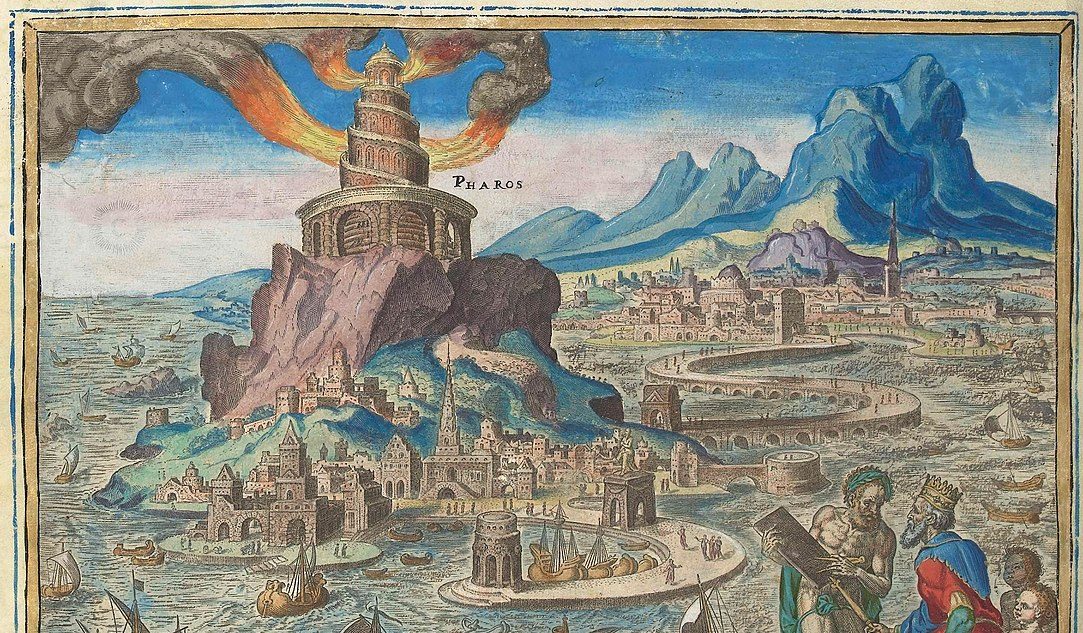
Egypt might have become even more important. Alexander had already founded Alexandria, which would become one of the greatest cities of the ancient world. Had he survived another two decades, he might have made the city an even more critical center of his empire. His ambitions also included enormous building projects.
Diodorus wrote of plans for major temples at places such as Delos, Delphi, and Dodona among other locations in addition to a monumental tomb for Alexander’s father, Philip II. Furthermore, he made mention of plans to establish cities and move populations between Europe and Asia in an effort to bind the empire together through intermarriage and closer relationships. This reveals something important about Alexander. He was not thinking only in terms of conquest. He was thinking about how to connect an enormous multicultural empire.
The Great Experiment might have continued had Alexander the Great lived longer

Alexander had already begun blending Macedonian, Greek, Persian, and Asian traditions. He adopted elements of Persian court ceremony and encouraged marriages between Macedonians and Persians. His famous mass wedding at Susa in 324 BC symbolized this policy. Thousands of Macedonian soldiers married Persian women, while Alexander himself married Stateira, daughter of Darius III.
His policies resulted in considerable resentment among some Macedonian officers. Had he lived another twenty years, that tension would probably have become one of the greatest challenges of his reign. Alexander could defeat armies. Keeping his own commanders loyal was another matter.
The biggest problem was succession
Ironically, the greatest threat to Alexander’s empire may never have been Rome, Carthage, or India. It may have been his own family. Alexander died without an adult heir capable of taking over his empire. His wife Roxana was pregnant, and his half-brother Philip III Arrhidaeus was unable to provide the kind of undisputed leadership necessary to hold Alexander’s conquests together.
Within a few years, Alexander’s generals were fighting one another in the Wars of the Diadochi. The empire fragmented. Had he lived another two decades or so, this entire political crisis would have been postponed. More importantly, he would have had time to establish a succession.
He might have even fathered additional children, formally designated an heir, reorganized his generals, and established institutions capable of surviving his death. That may have mattered more than any additional conquest.
Would Rome have become a superpower?

This is where the counterfactual becomes particularly intriguing. Rome was already expanding in Italy during Alexander’s lifetime, but it was not yet the Mediterranean superpower it would eventually become. If Alexander had conquered or neutralized major powers in the Western Mediterranean, Rome’s future could have been dramatically different. Instead of eventually facing the Hellenistic kingdoms one by one, Rome might have encountered a vast empire stretching from Macedonia and Egypt toward North Africa and possibly Iberia.
A surviving Alexander could have transformed the political balance of the Mediterranean before Rome had the opportunity to dominate it. But there is an important qualification. Alexander’s empire was already enormous and difficult to administer. Adding the Western Mediterranean would have increased the problem rather than resolved it. The question would no longer be, “Can Alexander conquer this territory?” It would be more about whether Alexander could govern it.
India might have been different, too, if Alexander had lived even longer
Alexander’s army had already reached the Indus, but his troops famously resisted continuing farther east. Had Alexander survived, another Indian campaign was possible, but it was far from inevitable. The experience of the Indian expedition had exposed the limits of Macedonian endurance. The march through the Gedrosian desert had inflicted terrible suffering on the army. Alexander therefore faced a strategic choice.
Continue east and risk exhausting his army again—or consolidate the enormous territories he already possessed. A wiser Alexander might have chosen consolidation, but the Alexander known to history was famously driven by ambition.
Twenty more years could have changed everything—or nothing at all—if Alexander the Great had lived longer
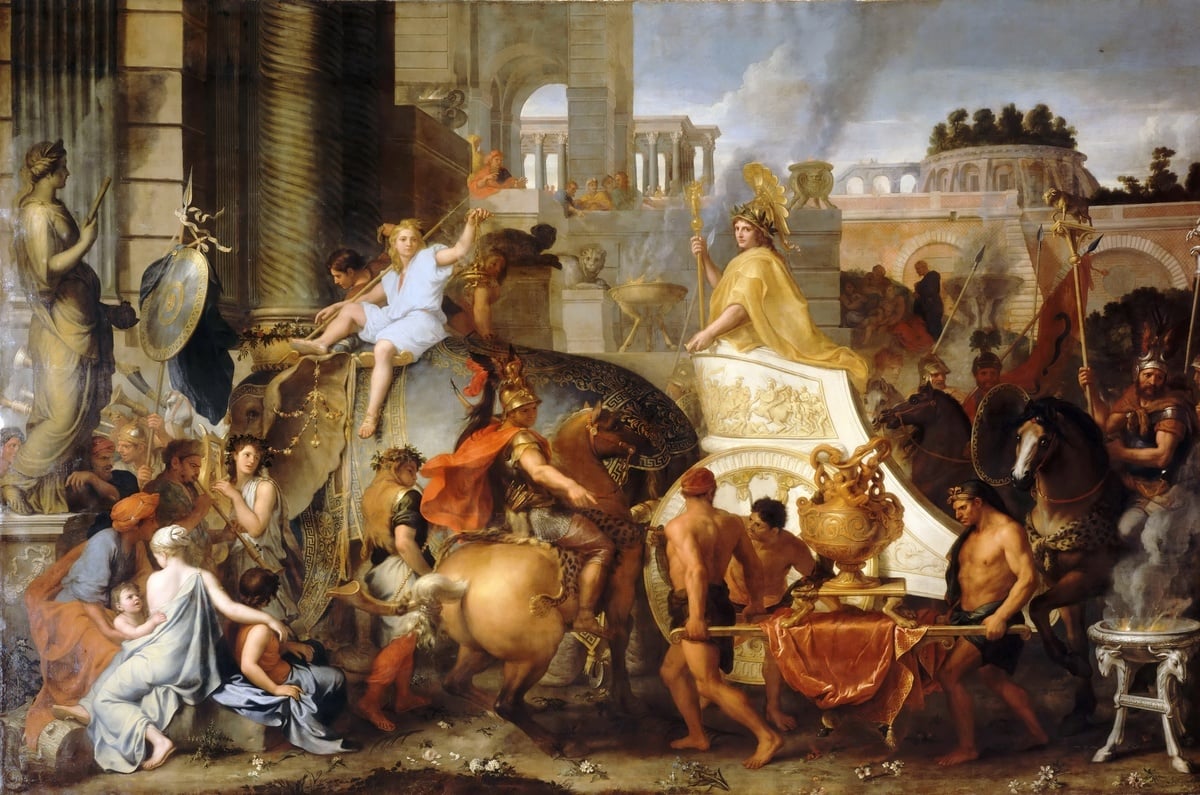
There is a temptation to imagine Alexander living until 52 and conquering the entire known world. History is rarely that simple, however. His own empire was already showing signs of strain. His generals disagreed with his policies, and Macedonian soldiers were exhausted. Governing Persian, Egyptian, Central Asian, and Indian territories required more than battlefield victories. And Alexander himself was not invincible.
His death at Babylon is recorded by a contemporary Babylonian astronomical diary, making it clear that whatever caused his illness, his death was a real historical event rather than merely a later legend. What we can say with greater confidence is that his plans were still expanding when his life ended.
Diodorus tells us that after Alexander’s death, his successors examined his memoranda and rejected the ambitious projects they found there as too costly and complex to accomplish. That decision may have changed history as much as Alexander’s death itself. Had he lived another twenty years, the ancient Mediterranean might have seen wars against Arabia and Carthage, enormous naval construction, new cities, new trade routes, and an even deeper blending of Greek and Asian cultures.
Nonetheless, the most vital difference could have been much simpler. Alexander would have had time to build something he never had the chance to finish: an empire designed to survive its creator. His most critical achievement was conquering an extraordinary amount of territory in a remarkably short time. His greatest unfinished challenge was turning that conquest into a lasting political order.
Had he lived another twenty years, we might remember Alexander not merely as the man who conquered the Persian Empire but as the founder of a political world that endured for centuries. Alternatively, perhaps his empire would have still collapsed. That is what makes the question so compelling.
Alexander had already demonstrated that he could change the map of the ancient world, but we will never know whether he could have impacted its future.
See all the latest news from Greece and the world at Greekreporter.com. Contact our newsroom to report an update or send your story, photos and videos. Follow GR on Google News and subscribe here to our daily email!

