



Consider how we’ve managed to gather so much knowledge about ancient times—long before books, printing presses, or permanent recordkeeping existed—and it’s truly remarkable. The Ancient Greeks had a system that has been relatively forgotten but was absolutely mind-blowing. In Ancient Greece, performers known as “rhapsodes” basically memorized entire epic poems—and these weren’t just fragments or summaries but the entirety of the Iliad and Odyssey—in other words, thousands of lines.
“Rhaptein” in ancient Greek means “to stitch” while “ode” means “song”—hence the classification for these professionals is pretty telling of what they did. Essentially, they wove together songs, serving as the entertainers of their time.
Rhapsodes: The master entertainers of Ancient Greece
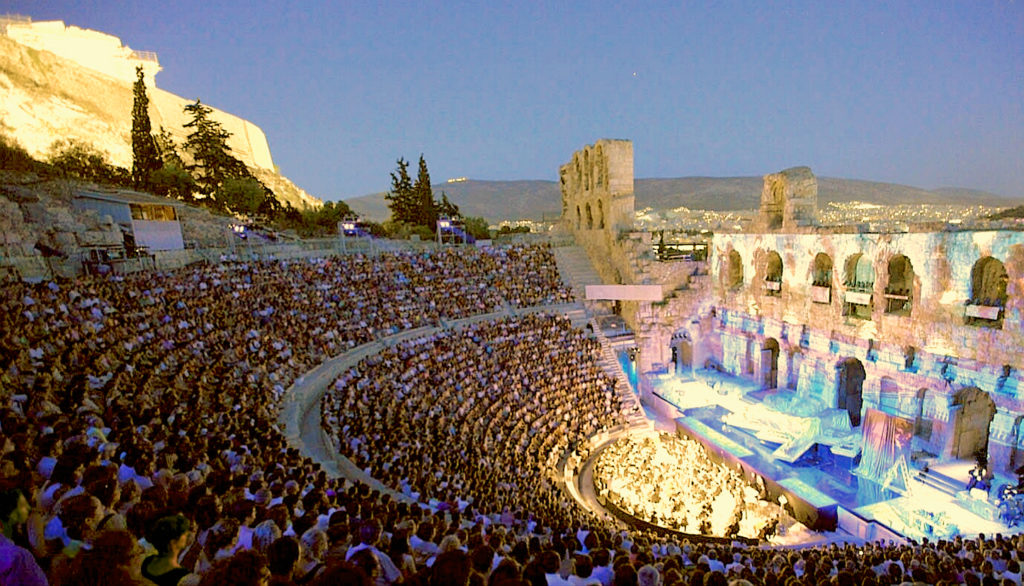
Imagine being at the Panathenaia festival in Athens with thousands of people packed into the agora. Suddenly, you spot a rhapsode. No microphone or amplification is on hand—just the power of his voice and the story he’s about to tell. His mission was to engage the attention of that crowd for hours, making people laugh, cry, and gasp at all the right moments. That takes serious skill, and the rhapsodes truly had plenty of that.
What was yet even more fascinating was how the role of the rhapsode changed over time. Early rhapsodes were probably part composer, part performer. They improvised right before their audiences, added their own touches, and maybe swapped out sections depending on the flow of the performance. However, as Greek society became all the more sophisticated and people started putting things into writing, rhapsodes evolved into what we might now consider classical performers. They focused on getting Homer exactly right, preserving epic poems as they had been passed down.
Still, even with written texts beginning to appear and circulate across Ancient Greece, live performances still proved most effective in captivating audiences. The rhapsode was characterized by elements the written word simply lacked—those of presence, emotion, and the communal experience of hearing a great story told by a master storyteller. It was prime entertainment in a world without movie screens or televisions.

What makes the rhapsode tradition of Ancient Greece important is that it hasn’t really disappeared. Sure, we don’t have wandering epic poets anymore, but consider any great performer who can mesmerize an audience with nothing more than their voice—stand-up comedians, spoken word artists, or even that friend at parties whose storytelling always draws a crowd. These all fulfill the same fundamental human need rhapsodes once served: a desire for connection and entertainment—or psychagogia, as the Greeks called it—the guidance or nourishment of the soul.
When later scholars devoted their careers to analyzing Homer— dissecting every metaphor and historical reference—they were, in essence, continuing the work of the rhapsodes: keeping these ancient stories alive and relevant across generations and cultures. The difference is that rhapsodes needed no footnotes or academic conferences. They made Homer matter by rendering him immediate, accessible, and impossible to overlook, transforming an ancient Greek literary tradition into a real-life spectacle.
There’s something nearly lost in that kind of directness, something we miss today without even realizing it. Now, layers stand between us and the stories we consume: screens, books, media companies. However, the rhapsode stood before a crowd and simply said so to say, ‘Listen. This matters.’ And somehow, they were right. The stories they preserved became the foundation of Western literature.
Rhapsodes of Ancient Greece: Beyond entertainment
Let us pause for a moment to consider the immense responsibility these performers bore—often without even realizing it. They were the custodians of Greece’s cultural memory. The values, heroes, and stories that shaped and defined what it meant to be Greek were kept alive in their voices and memories.
In a world where most people couldn’t read, the rhapsode served as a kind of history teacher, moral philosopher, and lifeline to the grand stories that explained people’s origins and what gave meaning to their mundane, everyday lives. It was a pretty heavy burden to carry for what, on the surface, might have seemed like just a way to make a living.
Today, we worry about cultural preservation—how to save old films, digitize books, and protect our heritage. The Ancient Greeks did this through their reliance on human memory and their belief in the power of performance. In some ways, that was more fragile than any digital archive.
However, in other ways, it was more impactful—and ultimately more enduring. These stories survived not because they were stored but because they mattered to people. They lived on because they were told and retold by each generation that made them matter anew.
Rhapsodes understood something we sometimes forget: the best way to preserve a story isn’t to store it on a hard drive. It is to tell it so vividly and compellingly that people can’t help but remember it and pass it on.
See all the latest news from Greece and the world at Greekreporter.com. Contact our newsroom to report an update or send your story, photos and videos. Follow GR on Google News and subscribe here to our daily email!

