



Ancient rocks found on the Greek island of Crete have given scientists their clearest picture yet of a tectonic journey that began roughly 130 million years ago. A new study published in Geological Magazine, led by Gernold Zulauf of Goethe-University Frankfurt in Germany, traces how a specific rock formation, known as the Preveli nappe, traveled from deep within the Earth to its current resting place in central Crete.
The Preveli nappe belongs to a group of rock formations called the Uppermost Unit, which sits at the top of Crete’s layered geological stack. These rocks originally formed from Permian and Triassic sediments and volcanic material, meaning their raw ingredients are between 250 and 300 million years old.
But the real story began during the Early Cretaceous period, when these rocks were dragged deep into the Earth through a process called subduction, where one tectonic plate slides beneath another.
Three minerals, three methods, one consistent Eohellenic age
To pin down exactly when this happened, researchers used multiple dating techniques on different minerals. Tiny grains of a mineral called rutile, extracted from blueschist rocks, returned ages of 132 and 135 million years.
A separate method applied to ferri-winchite, a blue amphibole mineral that grew along ancient shear zones during subduction, gave an age of 125 million years.
A third technique, applied to phengite, a pressure-sensitive white mica, confirmed an age of about 131 million years. All three results point to the same Early Cretaceous event, which geologists call the Eohellenic phase.
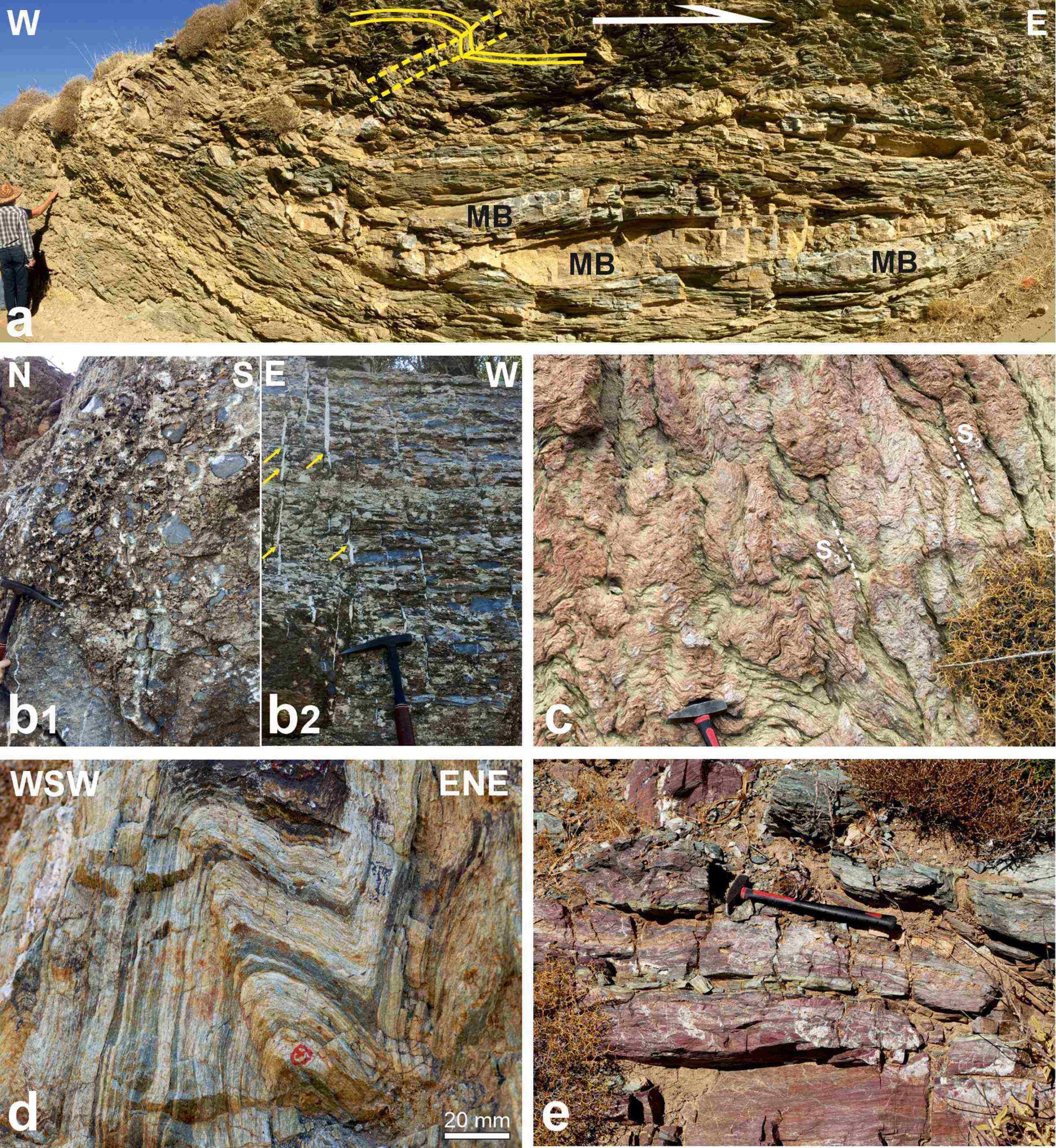
During subduction, the rocks were buried under conditions of extreme pressure exceeding 1.0 gigapascal at temperatures around 680°F. These conditions caused the rocks to deform in distinct stages. Researchers identified three main deformation phases.
The first involved brittle fracturing and mineral-filled veins forming before subduction peaked. The second, and most intense, involved deep ductile shearing directed toward the east-southeast, which produced the characteristic blueschist minerals and folded the older veins. The third brought west-directed folding at shallower, cooler levels during the final collision.
Phengite grew four times across 40 million years underground
One of the study’s most detailed findings concerns the phengite mineral. Rather than growing just once, phengite grew in at least four separate stages between 131 and 90 million years ago. Each younger generation contained higher amounts of the fluid-sensitive elements boron and lithium, and lower silicon content.
Zulauf and the team interpreted this pattern as evidence of repeated fluid-driven reactivation of the main rock foliation at still-deep structural levels, meaning the Preveli rocks stayed buried for more than 40 million years after peak subduction ended.
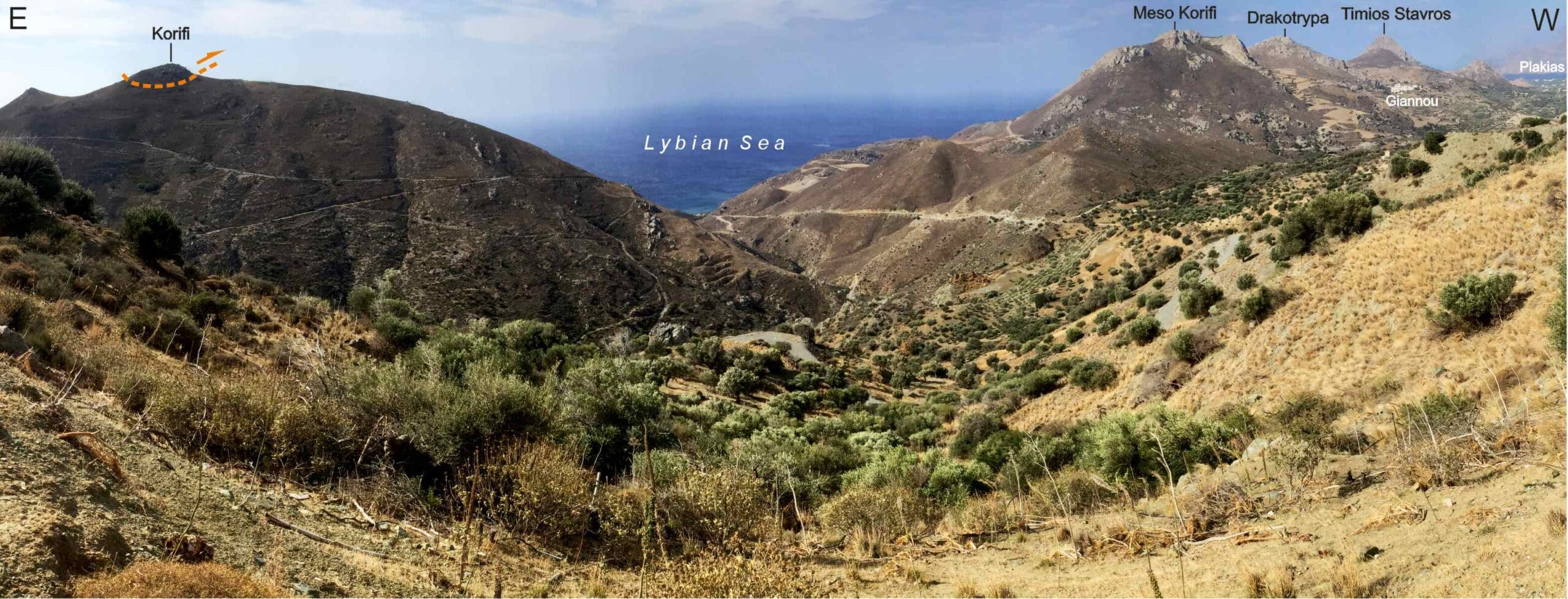
The rocks eventually rose and were thrust westward onto an adjacent formation called the Pindos Unit. Researchers dated calcite crystals that formed in pressure shadows and veins during this final collision event, obtaining an age of 31 million years ago.
This places the emplacement at the Eocene-Oligocene boundary, consistent with known sedimentary deposits found beneath the Preveli formation and with regional patterns of nappe stacking across Crete.
Tectonic forces finally bring Crete’s island rocks to rest
As for where these rocks originally came from, the study points to two possible source regions. The first is the Rhodope-Strandja domain spanning northern Greece and Bulgaria.
The second is the Sakarya Zone in northern Turkey. In either case, the rocks traveled an enormous distance, likely pushed southwestward by movements along the North Anatolian Fault Zone.
Along that journey, the tectonic evidence from Crete and nearby islands suggests the Preveli rocks passed through the Cyclades, where geologically similar formations are exposed on islands such as Andros, Tinos, and Anafi, before reaching their final position on Crete.
See all the latest news from Greece and the world at Greekreporter.com. Contact our newsroom to report an update or send your story, photos and videos. Follow GR on Google News and subscribe here to our daily email!

