



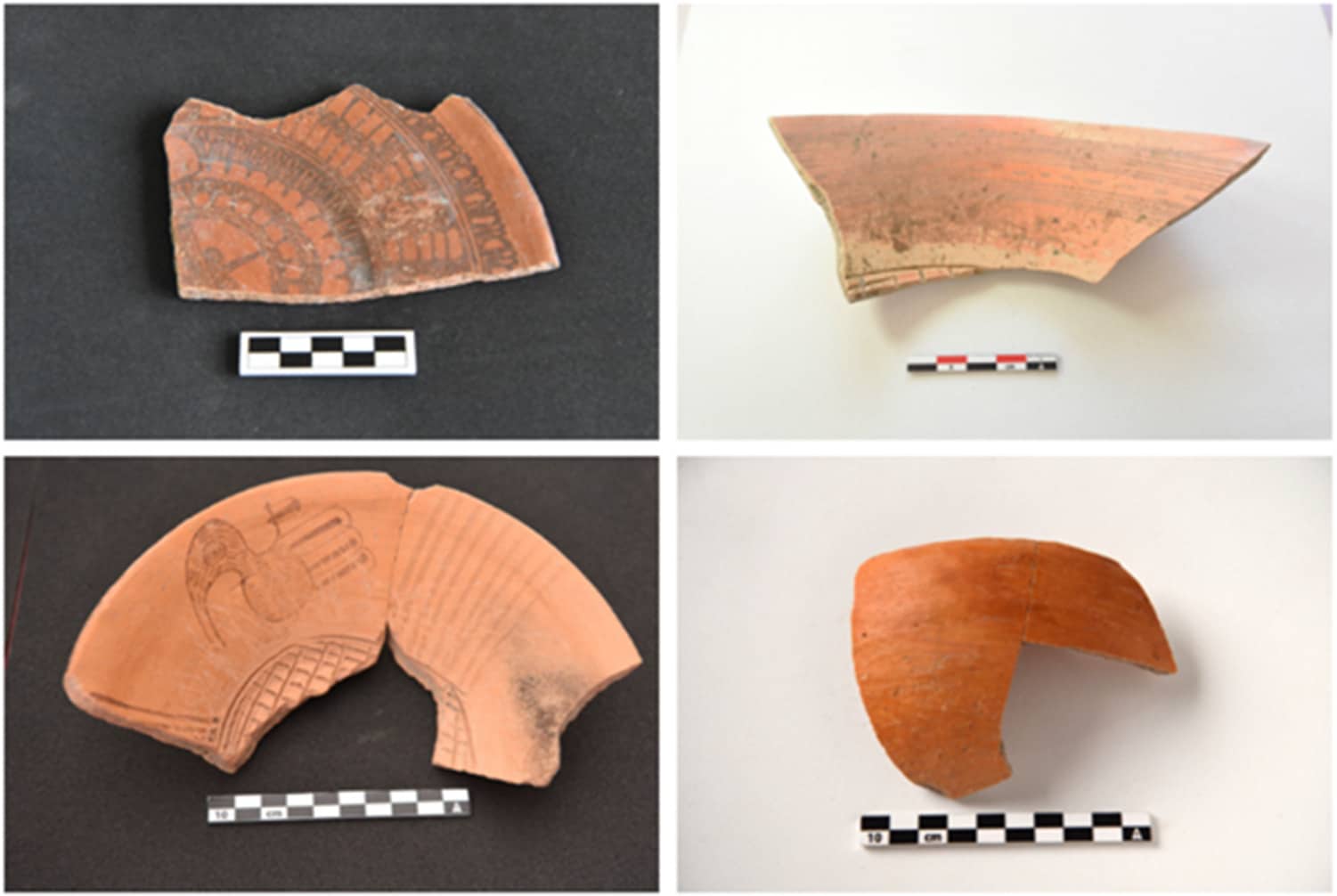
Ordinary people, not imperial rulers, drove the pottery trade under the Aztec Empire, according to a new study that challenges decades of assumptions about economic control in ancient Mexico.
The study, published in Ancient Mesoamerica, traces the origins of pottery found at a single commoner household in Xaltocan, a town that was conquered by the Mexica and later paid tribute to two of the empire’s three capitals.
Lead author Enrique Rodríguez-Alegría of the University of Texas at Austin and colleagues chemically analyzed 111 pottery fragments from Xaltocan, an island settlement about 35 kilometers (22 miles) north of Tenochtitlan.
Researchers used neutron activation analysis, a technique that identifies the chemical fingerprint of clay and pinpoints where pottery was made. The samples came from a Late Postclassic household, dating to the period between roughly 1428 and 1521, when Xaltocan was under Mexica domination.
Commoners drove pottery trade across the Aztec Empire
More than half of all samples, 58.6 percent, turned out to be locally made at Xaltocan. Cuauhtitlan, a city-state that had been Xaltocan’s enemy in a prolonged war just decades earlier, was the second largest source at 10.8 percent.
Tenochtitlan accounted for roughly 25 percent of the Black-on-Orange pottery. Texcoco, Otumba, Chalco, and the southern basin of Mexico contributed smaller portions.
The breakdown varied sharply by pottery type. Red Ware vessels, a type with a deep red slip, were overwhelmingly local. Of 20 samples analyzed, 17 came from Xaltocan, with only one each from Cuauhtitlan and Chalco.

Aztec Polychrome, another locally dominant type, showed 14 of 16 samples made at Xaltocan. All 10 fabric-marked salt basins tested were locally produced, suggesting Xaltocan both made and traded its own salt.
Local potters led the redware and salt basin supply
Black-on-Orange pottery told a different story. Aztec III and Aztec IV samples came from a broader mix of sites, including Tenochtitlan and, in the case of Aztec IV, Texcoco and Otumba.
Researchers noted that Texcoco appeared as a source for Aztec IV, a type not found from Texcoco in previous studies, which may reflect Xaltocan’s tribute relationship with Texcoco under Mexica rule.
The study also settled a long-running debate about the naturalistic motifs on Aztec IV pottery, including painted birds, flowers, and fish. Some scholars had attributed these designs to Spanish colonial influence.
But because all Aztec IV samples from the excavated household came from pre-conquest contexts, with no glazed ceramics, glass, or Old World animal remains present, researchers concluded the naturalistic designs were an Indigenous innovation.
Aztec IV’s naturalistic designs predated the Spanish colonial arrival
Rodríguez-Alegría argued that the evidence does not fit neatly into either of the two main economic models historians have used to explain the Aztec economy.
The “political economy model” holds that imperial elites controlled production and funneled goods through urban centers. The “market model” argues that a robust, politically independent market system drove trade.

The new findings suggest commoner potters and consumers made their own choices, sometimes producing local versions of urban pottery styles and sometimes preferring homegrown types over anything imported from the empire’s capitals.
The samples came from a single adobe household with no luxury goods, consistent with commoner status. Researchers noted that patterns at this household may not represent all of Xaltocan, and that different households likely had their own trade connections and preferences.
See all the latest news from Greece and the world at Greekreporter.com. Contact our newsroom to report an update or send your story, photos and videos. Follow GR on Google News and subscribe here to our daily email!

