


New research into the ancient cities of Syria has brought fresh attention to the Roman-Byzantine architecture that has endured for nearly 1,500 years.
The study, published in the Bulletin of the American Society of Overseas Research, centers on Ba’ude, one of nearly 700 deserted villages in northern Syria collectively known as the Dead Cities.
The settlements are distributed across seven mountain ranges in the Aleppo and Idlib governorates. Syriac-speaking Christian communities occupied them from the first through the seventh century AD, producing olive oil and wine that reached markets across the Mediterranean.

The villages emptied gradually between the eighth and tenth centuries, and that slow process left stone buildings standing for close to 1,500 years. UNESCO recognized 36 of the sites in 2011, placing them on its World Heritage List and dividing them into eight archaeological parks.
Ba’ude fieldwork uncovers sophisticated Roman-era building methods
Fieldwork at Ba’ude in 2024, led by Syrian archaeologist Dr. Afaf Laila, showed that residents sourced their building material from limestone deposits in the surrounding hills.
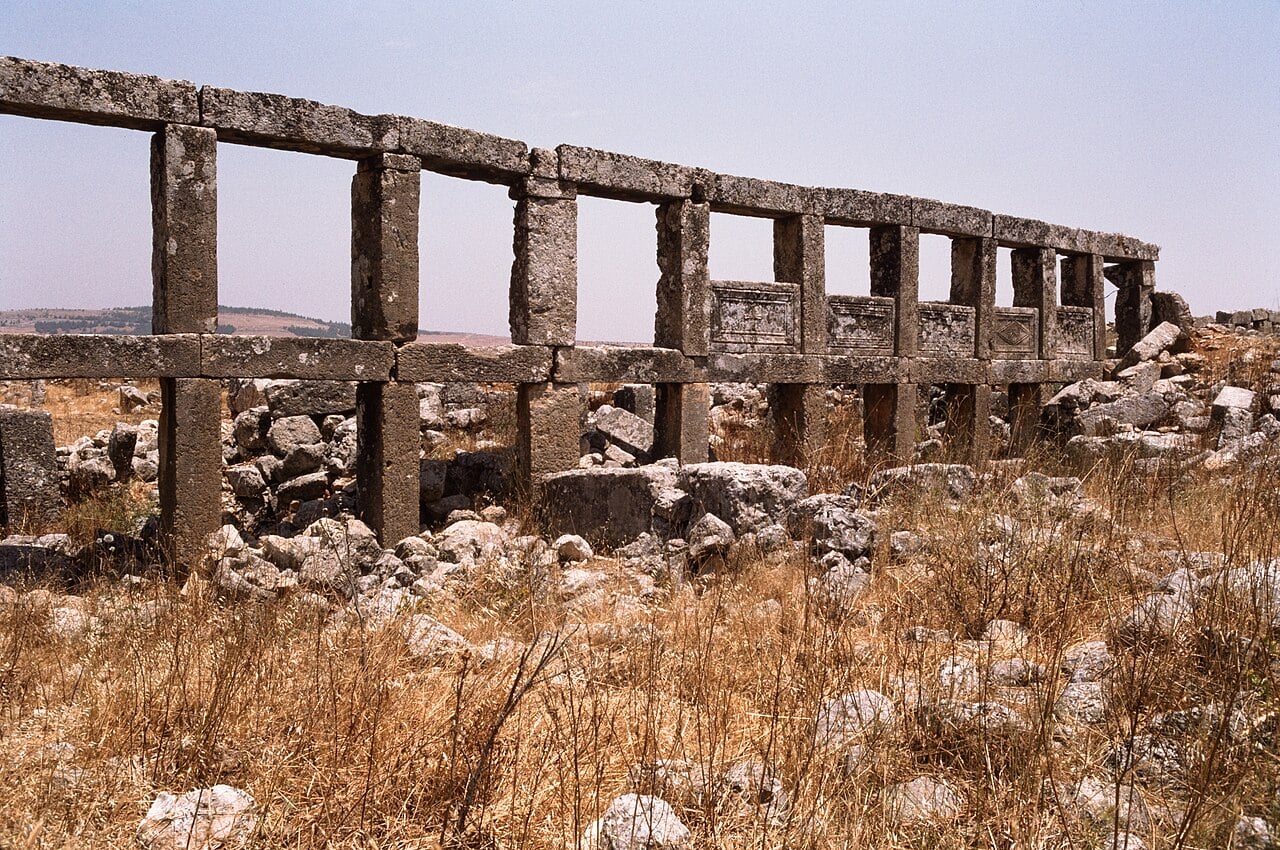
Homes rose to multiple stories, with facades carrying religious symbols, carved borders, and detailed stonework on doorframes and lintels. Covered walkways supported by columns served as formal entry points to many homes.

A courtyard at the center of many residences functioned as the main gathering space for household members. Some rooms were reserved for receiving guests, while others were used to process agricultural goods, including olive oil.
The research connects Ba’ude’s ancient architecture to the broader pattern seen across Syrian cities, pointing to communities that were culturally engaged and economically active within the wider Byzantine world.
Survey documents surviving ancient architecture across dead cities in Syria
Researchers examined 28 houses. Twelve retain enough of their structure for meaningful analysis. Three main entrances remain identifiable, each with a narrow entry passage set beneath an arch.
One covered walkway survived intact. Lower-level rooms have held up better over time, while the upper levels of most structures no longer exist.

The western part of the village contains a pyramidal tomb, an olive press, and a church. The tomb is well-preserved. The church has largely collapsed, and the press has fallen into disrepair.
War and agricultural clearing threaten Ba’ude’s stone structures
Dr. Laila described Ba’ude as a site where the built environment, the surrounding land, and the rhythms of daily community life were deeply intertwined. She said even limited further losses would seriously affect the overall historical record.
Threats include damage from Syria’s 14-year civil war, which ended in 2024, alongside agricultural clearing, unauthorized building activity, and the reuse of ancient stone for other purposes.

Prof. Maamoun Abdulkarim of the University of Sharjah, a co-author of the study, said the UNESCO listing carries an obligation to protect what survives, and that every loss makes the remaining record harder to recover.
The Gerda Henkel Foundation, a German non-profit, is the only international body currently engaged in preservation work at these sites. The authors are calling for wider institutional support.
See all the latest news from Greece and the world at Greekreporter.com. Contact our newsroom to report an update or send your story, photos and videos. Follow GR on Google News and subscribe here to our daily email!

