



A major genetic study has traced the DNA and origins of Albanians to Early Medieval inhabitants of the western Balkans, resolving one of Europe’s most debated historical questions.
Published in Nature Human Behaviour, the research shows present-day Albanians descend from a small ancestral population.That population lived in modern-day Albania as early as 800–900 CE, centuries before Albanians appeared in written records, and is genetically linked to many present-day Albanians.
Leonidas-Romanos Davranoglou of the University of Oxford led the team, which consisted of Alban Lauka, Aris Aristodemou, Zoltán Maróti, Gjergj Bojaxhi, Ardian Muhaj, Ilia Mikerezi, David Wesolowski, Brian D. Joseph and Alexandros Heraclides . Researchers analyzed more than 6,000 ancient genomes from across Western Eurasia alongside 74 newly collected DNA samples from ethnic Albanians, covering all major dialect groups.
The researchers traced Albanian ancestry to Bronze and Iron Age western Balkan populations, historically associated with the “Illyrians.” Early Medieval Albanians preserved roughly 68 to 84 percent of that ancient ancestry.
This happened even as surrounding populations absorbed massive genetic contributions from Eastern European and Anatolian migrants during the Migration Period.
The origins of Albanians and the Illyrians
Neighboring populations in Croatia, Montenegro, and Serbia absorbed between 40 and 86 percent Eastern European ancestry during that era. Albanian ancestors, by contrast, absorbed considerably less, averaging only 10 to 20 percent.
The highest concentrations appeared along the Albanian-Montenegrin border and in northeastern Albania, areas with the longest documented Albanian-Slavic linguistic contact.
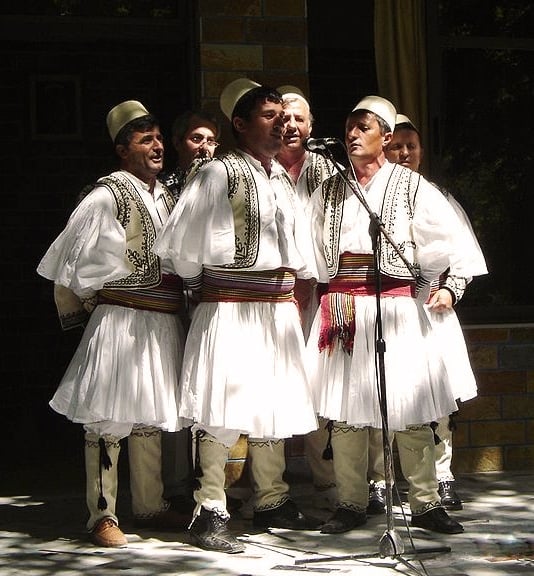
Researchers proposed that the proto-Albanian homeland spanned the mountainous regions of northern Albania, southwestern Kosovo, and parts of North Macedonia. This zone historically saw contact between “Illyrian” and “Dardanian” groups, both of which likely contributed to Albanian ancestry.
The study also produced a separate landmark discovery. Three individuals from the Barç site in Albania, previously believed to be of Central Asian origin, carried South Asian ancestry consistent with the Roma people.
Researchers identified this as the first ancient DNA evidence of Roma in Europe. Their genetic lineages traced back through the Caucasus region.
Albanian genetic trail and the communities present in Greece today
Additionally, an individual recovered from Roopkund Lake in India genetically clustered with present-day Greeks. This person shared DNA segments with medieval and modern Albanians. Researchers suggested the individual may have descended from Albanian-speaking communities of Greece.
The founding Albanian population numbered only around 8,000 to 11,000 individuals, yet showed no signs of inbreeding. Both major dialect groups, Gheg in the north and Tosk in the south, shared identical medieval ancestry despite centuries of linguistic divergence.
Researchers cautioned that genetic continuity alone cannot confirm linguistic continuity. They said further study is needed to fully explain how the Albanian language developed.
See all the latest news from Greece and the world at Greekreporter.com. Contact our newsroom to report an update or send your story, photos and videos. Follow GR on Google News and subscribe here to our daily email!

