



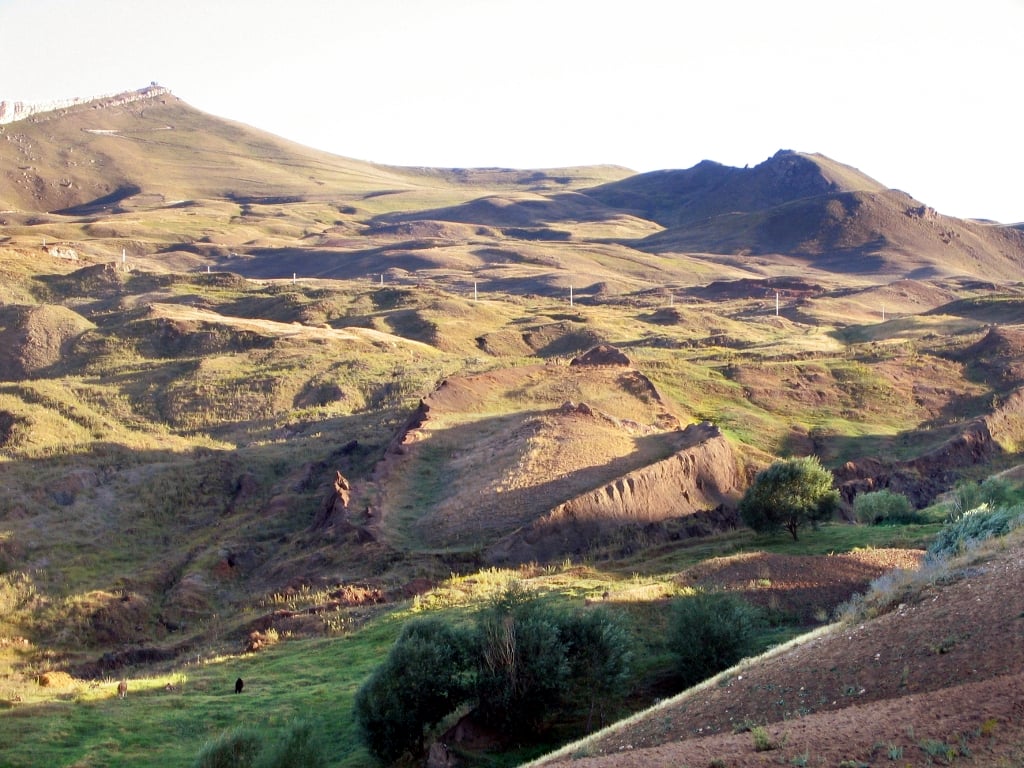
Underground scans and soil tests at a boat-shaped rock formation in Turkey point to the possible buried location of Noah’s Ark, a scientist recently said. The findings add new weight to a theory that has circulated for decades around a site on Mount Ararat.
Andrew Jones, founder of Noah’s Ark Scans, has spent years examining the formation. It sits about 6,500 feet above sea level and measures 515 feet in length. That matches the dimensions of the Ark as described in Genesis chapter six, calculated at 300 Egyptian cubits.
Turkey’s Mount Ararat formation aligns with Noah’s Ark measurements
Using ground-penetrating radar and infrared thermography, Jones and his team found what they believe is a vessel-shaped structure buried under the ground.
The scans also revealed a network of underground tunnels running through the center of the structure and along its inner edges. All of them connect to an interior open chamber that Jones has named the atrium.
He notes that the Bible describes the Ark as having three decks and says the detected layout is consistent with that account. He added that the space would have housed Noah, his family, and the animals brought aboard.

Soil testing added to the findings. In 2024, the team collected 88 samples from inside and outside the formation. Soil within the site showed three times more organic matter and 38 percent higher potassium levels compared to soil just outside the boundary.
Jones argues that a decayed wooden structure would leave behind exactly this kind of chemical difference over thousands of years.
He also observed that vegetation inside the formation takes on a duller, more yellowish tone during the fall season, which he considers another indicator of unusual soil conditions.
Marine fossils at high altitude support the researcher’s flood theory
Jones further cited fossil evidence at the site. Marine fossils, including coral and shells discovered at that altitude, suggest the area was submerged at some point in history, he says.
Scientists generally attribute such finds to the slow movement of tectonic plates that gradually raised former seabeds to their current elevation over millions of years.
The team’s next step is to send a remote-controlled robotic device into the tunnels to explore what lies beneath.
The formation was first identified in 1959. Whether it holds the remains of Noah’s Ark or turns out to be a natural structure, research at Turkey’s Mount Ararat is expected to continue.
See all the latest news from Greece and the world at Greekreporter.com. Contact our newsroom to report an update or send your story, photos and videos. Follow GR on Google News and subscribe here to our daily email!

