



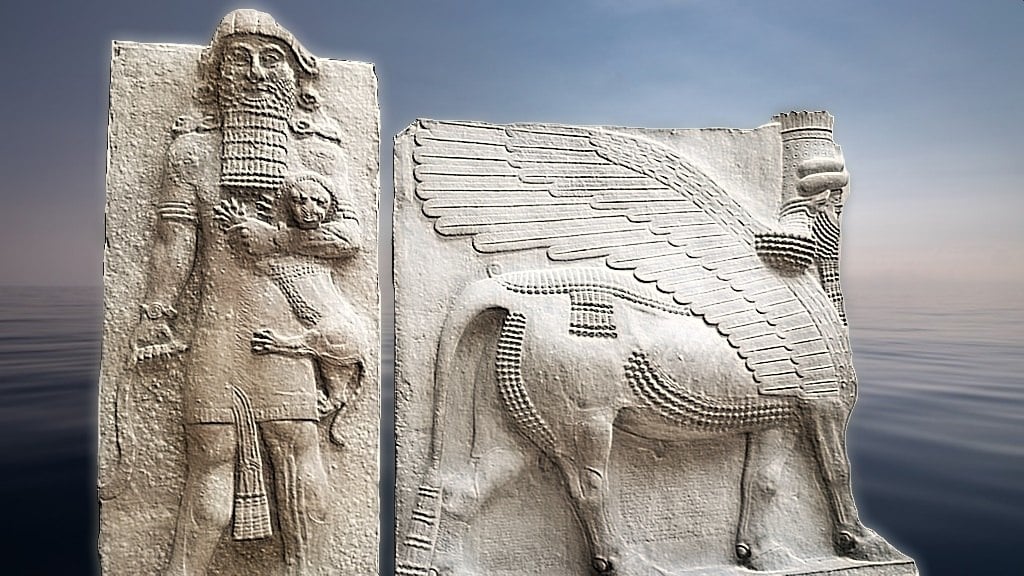
A collection of ancient cuneiform tablets at Denmark’s National Museum may offer rare evidence pointing to the historical existence of Gilgamesh, the Sumerian hero celebrated in one of the world’s oldest known stories.
Researchers from the National Museum and the University of Copenhagen recently completed the first comprehensive review of the collection through a project called “Hidden Treasures: The National Museum’s Cuneiform Collection.” The work involved examining, cataloging, and digitizing all the tablets.
One tablet carries a copy of a widely recognized king list that names both legendary and historical rulers. Assyriologist Troels Pank Arboll said the tablet is a school text recording kings who ruled during the late third millennium B.C.
He noted that other known versions of the list also name Gilgamesh, and that the Sumerian hero’s appearance on it makes this one of the few surviving documents supporting the possibility of his historical existence. Arboll said researchers had no prior knowledge that Denmark held a copy of the list.
Cuneiform king list links Sumerian hero Gilgamesh to real history
The collection also contains tablets recovered from the Syrian city of Hama, which Assyrian forces attacked and looted in 720 B.C., taking most materials back to their capital, Assur, in present-day Iraq. Several clay tablets were left behind and later acquired by the Danish museum.
Arboll said those texts, now close to 3,000 years old, are thought to have originated from what was likely a large temple library, and that almost no similar texts from that region and era have been found elsewhere.
The Hama tablets cover medical treatments and ritual practices. One describes a nightlong ceremony intended to shield an Assyrian king from threats to his rule, including political instability.
The ritual required burning small figures of wax and clay as an exorcist spoke a prescribed sequence of chants. Researchers said finding such a text in Hama was unexpected, given how far the city sat from the Assyrian capital and the main literary centers of Babylonia.
Tell Shemshara letters, beer receipts and a century of collection
Additional texts came from Danish excavations at Tell Shemshara in northern Iraq in 1957. They include letters between a local ruler and an Assyrian king from roughly 1800 B.C., along with administrative documents and an ancient beer receipt.
Researchers said such records reflect the practical needs that made cuneiform writing central to early complex societies.
This is what happens when a 5,000-year-old technology meets the digital age. Researchers from the National Museum of Denmark and the University of Copenhagen have analysed, identified and digitised a large collection of cuneiform tablets. Photo: Troels Pank Arbøll pic.twitter.com/wHkiPFGySS
— Tom Marvolo Riddle (@tom_riddle2025) April 16, 2026
The museum has built its collection over more than a century. Many tablets are more than 4,000 years old and written in extinct languages, including Sumerian and Akkadian. Thorkild Jacobsen, the first person to earn an Assyriology degree from the University of Copenhagen, donated a significant part of the holdings in 1939.
The project is led by Nicole Brisch of the University of Hamburg and Anne Haslund Hansen of the National Museum, with support from the Carlsberg Foundation, the Augustinus Foundation, and the Edubba Foundation.
See all the latest news from Greece and the world at Greekreporter.com. Contact our newsroom to report an update or send your story, photos and videos. Follow GR on Google News and subscribe here to our daily email!

