


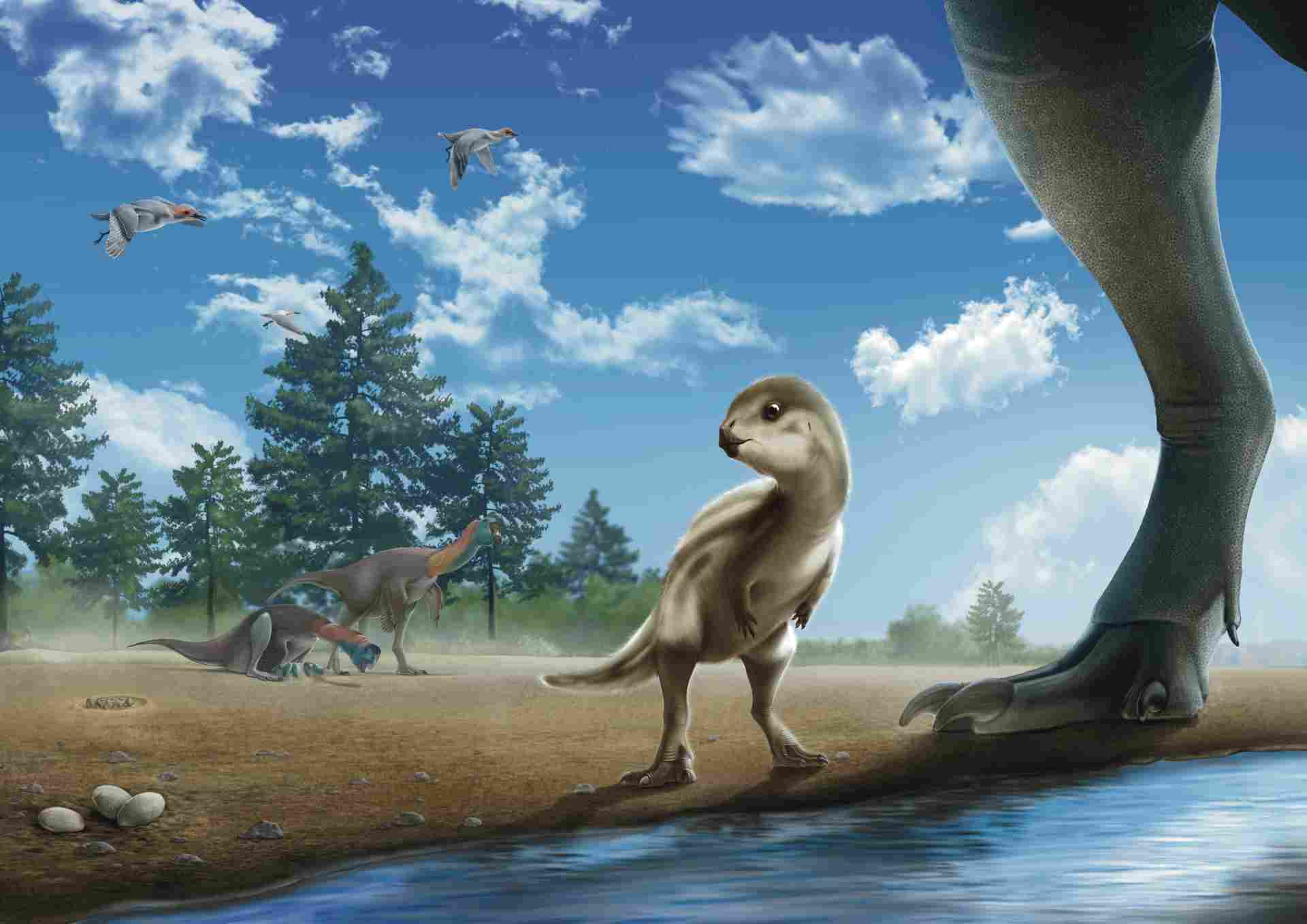
Scientists have identified a new dinosaur species in Korea for the first time in 15 years, adding a notable entry to the country’s thin skeletal fossil record. The animal, named Doolysaurus huhmini, was a small, two-legged plant-eater that lived between 113 million and 94 million years ago during the middle Cretaceous period.
The fossil was unearthed in 2023 on Aphae Island along the southwestern coast of the Korean Peninsula, from rocks belonging to the Ilseongsan Formation. The specimen includes skull bones, vertebrae, hind limbs and a collection of gastroliths, which are stones animals swallow to help break down food.
It is also the first dinosaur fossil from Korea to include portions of the skull, a detail researchers called especially meaningful given how incomplete past finds have been. Micro-CT imaging was used to study bone structures still embedded in rock, allowing scientists to examine internal anatomical features without damaging the specimen.
First skull bones ever recovered from a Korean dinosaur
Bone tissue analysis placed the animal at roughly two years of age at death. It was about the size of a turkey, though full-grown adults likely reached twice that size. The animal may also have had a fuzzy coat.
Doolysaurus huhmini belonged to the thescelosaurids, a family of bipedal neornithischian dinosaurs previously documented in East Asia and North America.
A new dinosaur has been discovered in South Korea
'Doolysaurus huhmini' is the first new species to be found in the country in 15 years pic.twitter.com/QUlyITMyKB
— Dexerto (@Dexerto) March 20, 2026
Dr. Jongyun Jung of the University of Texas at Austin and Chonnam National University said Korea’s dinosaur skeletal record has long been limited in both volume and preservation quality. Before this discovery, only two dinosaur species from Korea were known from partial skeletons, both dating to the Late Cretaceous: Koreaceratops hwaseongensis and Koreanosaurus boseongensis.
Professor Julia Clarke, also of the University of Texas at Austin, described the young animal as likely charming in appearance, comparing it loosely to a small lamb.
Gastroliths point to a broader dinosaur species diet
Jung said the team spotted leg bones and vertebrae first and had no reason to expect skull material or additional bones within the same rock block. The amount of material eventually found was a surprise to the team.
The gastroliths recovered with the specimen, considered alongside their size and estimated mass, led researchers to think the species may have followed a broader or even omnivorous diet compared to close relatives.
The team added a note of caution, pointing out that modern birds vary widely in how and whether they use gastroliths, which makes dietary conclusions harder to confirm.
The findings were published in the journal Fossil Record. The discovery suggests that dinosaur diversity during the Cretaceous in the region was likely greater than trace fossil evidence has previously indicated.
See all the latest news from Greece and the world at Greekreporter.com. Contact our newsroom to report an update or send your story, photos and videos. Follow GR on Google News and subscribe here to our daily email!

