



Christianity originated as a marginal movement in the eastern provinces of the Roman Empire, emerging from Jewish apocalyptic traditions in first-century Judea. Early Christians did not seek political power; however, their beliefs soon brought them into direct conflict with Roman law and custom.
Over the course of three centuries, this persecuted minority became the empire’s official religion. Such a transformation reshaped Roman society and permanently altered Mediterranean culture.
Why of all religions the Roman pagans predominately feared Christianity
Romans initially regarded Christians with suspicion rather than outright fear. Authorities often classified them as a Jewish sect. The historian Tacitus refered to them as Jews in his Annals, likely conflating Christians with Jewish-Christian or gnostic groups. He wrote that their customs ran counter to Roman values, observing that “everything sacred to us is profane to them.” He further claimed that Christians embraced practices Romans considered unlawful or impure. Such descriptions reflect Roman anxiety about cultural inversion and the perception of social threat.
Roman hostility did not arise from theology alone. Roman religion functioned as a public system closely tied to civic loyalty, as citizens honored the gods to secure divine favor for the state. Christians refused to participate in public sacrifice. They rejected the imperial cult and denied the divinity of the emperor. Romans interpreted this refusal as a sign of political disloyalty.
Roman law also prohibited secret assemblies, since authorities feared conspiracy and sedition. Christian gatherings often took place in private settings. They met in houses, cemeteries, and secluded areas. These meetings heightened suspicion. Roman officials believed such secrecy undermined social order. Pliny the Younger, a Roman official, described Christians meeting before dawn and reported this behavior with evident concern.
The spreading of Christianity in spite of persecutions
Many early Christian groups also promoted communal sharing and, in some cases, practiced forms of economic withdrawal. As a result, Roman authorities accused them of discouraging labor, while Roman philosophers such as Celsus claimed that Christians avoided military service and rejected oaths to the emperor. Consequently, this refusal conflicted directly with Roman expectations of civic duty.
Persecutions, however, did not remain constant. Instead, they varied by region and historical moment. Local governors often acted independently, and while some emperors ignored Christians entirely, others targeted them aggressively. Nero famously blamed Christians for the Great Fire of Rome and turned their executions into a public spectacle. Tacitus records this episode with evident contempt for both the persecutors and the victims.
Later persecutions intensified under emperors such as Decius and Diocletian. These rulers sought unity through traditional religion and demanded universal sacrifice. Christians who refused faced imprisonment, torture, or death. Confiscation of property often followed, while churches and scriptures were destroyed. The state increasingly treated Christianity as a threat to imperial stability.
Despite these pressures, Christianity continued to spread. Missionary activity played a central role, as Christian networks followed established trade routes and concentrated in urban centers. Converts included slaves, women, and merchants. Christian communities offered mutual aid, cared for the poor, and ensured the burial of their dead. These practices proved especially attractive during periods of crisis.
Christian theology also appealed to many from the empire, promising salvation to all social classes and offering moral clarity amid instability. It explained suffering through divine purpose. As the empire faced mounting economic and military strain, Christianity gained ground, and its universal message resonated powerfully within a global empire.

Constantine turns Christianity into the official state religion
Constantine altered the course of Roman history. He rose to power amid civil war, and before the Battle of the Milvian Bridge, he reportedly embraced the Christian God, attributing his victory to divine support. In 313 AD, Constantine issued the Edict of Milan, which legalized Christianity, restored confiscated property, and ended official persecution.
Constantine’s actions were not motivated solely by personal faith. Monotheism suited imperial needs, as a single god mirrored centralized authority, while Christianity offered ideological unity across diverse provinces. The church provided an existing structure and hierarchy, and bishops could assist imperial administration. Christian moral teaching also encouraged obedience and social order.
Over time, imperial favor transformed Christianity itself. The once-persecuted faith acquired power, wealth, and land. Christian leaders gained influence over law, while emperors convened councils to enforce doctrine. Dissenters increasingly faced punishment, and Orthodoxy replaced earlier religious diversity.
After Constantine, repression reversed direction. Christian emperors restricted pagan worship, destroyed temples, banned sacrifices to the traditional gods, and confiscated sacred property. Laws criminalized long-established rituals, philosophers lost patronage, public festivals declined, and pagan priests were stripped of status.
Christianity’s rise within the Roman Empire did not end with legalization. Instead, it persisted through the systematic repression of older religions. Once imperial authority aligned with Christian doctrine, the state redirected its coercive mechanisms against pagan populations. Consequently, this transition reshaped religious life across the Mediterranean and marked the end of classical religious pluralism.
Constantine’s sons intensified this process. Constantius II, in particular, pursued aggressive anti-pagan legislation. He banned animal sacrifice, ordered the closure of temples, and demanded the removal of cult statues. As a result, traditional worship was criminalized across much of the empire. Although local officials enforced these laws unevenly, fear nevertheless spread widely.

Persecution of pagans and Christianity in the Roman empire
Constantius’ brothers and successors remained steadfast with these policies. Valentinian I adopted a more cautious stance in the West; however, he permitted repression to continue in the East. Valens supported anti-pagan legislation while also targeting non-Nicene Christians. The state no longer tolerated religious neutrality, and the law increasingly favored Christian orthodoxy.
Theodosius I marked a decisive turning point. He declared Christianity the official religion of the empire and issued a series of edicts between 380 and 392 AD. These laws outlawed both public and private sacrifice. They criminalized incense offerings and banned household rituals. Theodosius framed pagan worship as treason against both divine authority and imperial order.
Violence followed legislation. Christian mobs attacked temples with imperial tolerance, and Alexandria witnessed repeated clashes. Pagan sanctuaries fell, and sacred objects were systematically destroyed. During Theodosius’ reign, massacres occurred in several cities. The Massacre of Thessalonica exposed the brutality of imperial authority, and although it was directed at civilians rather than pagans alone, it reflected the state’s readiness to govern through terror.
Emperor Arcadius persisted with his father’s policies. He strengthened bans on temples and festivals, while officials confiscated sacred lands and stripped pagan priests of legal recognition. Many fled or converted under pressure, while others faced imprisonment or execution. Paganism ceased to exist as a protected religious category within imperial law.
Under these emperors, repression extended beyond religious practice. Authorities also targeted philosophy and education. Neoplatonist thinkers faced surveillance and punishment, and Hierocles of Alexandria endured torture for his philosophical teachings. Officials accused him of promoting forbidden doctrines, and his case ultimately illustrates the criminalization of intellectual paganism.

Persecution against pagans intensifies
The murder of Hypatia stands as a defining moment. She was a Neoplatonist who taught philosophy and mathematics in Alexandria. In 415 AD, a Christian mob brutally killed her. Her death symbolized the collapse of philosophical freedom, and although imperial orders did not directly command the killing, the prevailing climate of intolerance made such violence possible.
Meanwhile, other philosophers suffered similar fates. Maximus of Ephesus, an advisor to Emperor Julian, faced execution under Valentinian’s successors. Authorities accused him of practicing magic, a charge that in the particular climate often encompassed astrology, divination, and ritual science. The state increasingly treated these disciplines as subversive threats.
Over time, imperial policy more explicitly equated pagan knowledge with criminality. Laws punished astrologers with exceptional severity, and in several regions, authorities even established detention facilities for suspected practitioners. Justinian intensified repression further during the sixth century. In 529 AD, he closed the Academy of Athens, an institution that had preserved Platonic philosophy for centuries. He outlawed pagan teaching entirely, ordered forced conversions, and exiled philosophers who resisted.
Justinian also targeted remaining cult centers. He suppressed mystery religions, permanently banned the Eleusinian Mysteries, and shut down the sanctuary of Samothrace. Initiatory rites ceased, as the state dismantled ritual infrastructure and fragmented religious memory.
Oracles suffered a similar fate. Officials put an end to operations at Delphi, while the oracle of Apollo at Miletus disappeared, and the oracle of Ammon Zeus in Chalcidice was destroyed. These sites had shaped Mediterranean religious life for centuries, and their closure severed long-standing channels of divine consultation.
Sporting institutions did not escape repression. Authorities banned the Olympic Games and suppressed the Pythian Games at Delphi. They also abolished the Actian Games, while Christian leaders condemned athletics as idolatrous, associating nudity and physical excellence with pagan immorality.
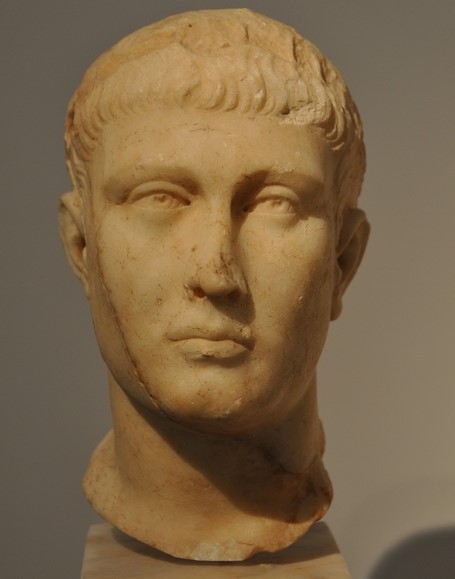
Persecution of philosophers and athletic ideals
Such hostility toward physical culture marked a profound cultural rupture. Greek athletic ideals celebrated the harmony of body and mind, but Christianity redefined virtue through asceticism. Imperial bans eliminated public festivals that had reinforced communal identity, leaving civic life stripped of ritual cohesion.
Massacres accompanied these policies. Several occurred during Theodosius’ reign, with others following under Justinian. Pagan resistance often provoked violent reprisals, and Christian chroniclers such as John Malalas frequently justified these killings as righteous cleansing. Pagan voices largely disappeared from the historical record.
The sack of Rome by Alaric further added complexity. Although Alaric identified as Christian, his forces destroyed many pagan sites. The resulting chaos accelerated religious transformation, as war weakened traditional institutions and allowed Christianity to fill the emerging power vacuum.
Persecution extended to local priesthoods. Authorities executed temple guardians, confiscated priestly property, and erased hereditary cult roles. This strategy dismantled continuity, severing the intergenerational transmission of pagan practices.
Justinian’s campaign reached its symbolic climax with the closure of the Neoplatonic Academy of Athens in 529 AD. This institution represented the last organized center of pagan philosophical education. Figures such as Damascius, Simplicius, Priscian of Lydia, Olympiodorus, and their circle had preserved Platonic and Aristotelian traditions, stretching back nearly a millennium. Justinian’s edict outlawed pagan teaching entirely, leaving these philosophers with no legal space in which to operate. Facing forced conversion or silence, several fled eastward to the court of Persian King Khosrow I.
Their exile marked the final rupture between classical philosophy and the Roman state. Although some later returned under limited guarantees, the intellectual continuity of pagan philosophy had already collapsed. The closure of the Academy did not merely end a school—it extinguished the last institutional voice of Hellenic religious philosophy within the empire.

Cultural adaptation and ritual continuity
Despite repression, Christianity did not rely solely on violence. Cultural adaptation proved equally effective. The Church absorbed pagan symbols, repurposed sacred dates, and Christianized temples. Saints replaced traditional gods, and ritual continuity eased the psychological transition for converts.
Christian authorities rebranded festivals. Spring fertility rites, for example, merged with Easter, while local deities were transformed into holy figures. Through this process, Christianity gradually penetrated collective memory.
Language also played a key role. Christian theologians adopted Greek philosophical concepts, such as the Logos, to shape doctrine, and Neoplatonic metaphysics informed theological reasoning. Christianity spoke in familiar terms while simultaneously rejecting the original pagan meanings. As a result, conversion often occurred without conscious rupture. People retained existing habits while adopting new interpretations. Christianity entered the subconscious through familiarity, ensuring its long-term dominance.
The religion spread by absorbing and reshaping existing pagan customs rather than erasing them entirely. This approach allowed Christianity to integrate into everyday life without disrupting social continuity. Popular religion did not vanish; instead, it transformed its language, symbols, and divine figures.
Many major Christian feasts replaced earlier pagan celebrations. Easter, for instance, absorbed elements from older spring fertility rites, including Adonia, which commemorated death and rebirth through ritual mourning and renewal. The Christian narrative reframed these themes within resurrection theology while preserving seasonal timing and emotional resonance.
Similarly, the winter solstice became Christmas, replacing Saturnalia and the Roman festival of Sol Invictus, the Unconquered Sun. The designation of Christmas on December 25 aligned Christ with solar symbolism already familiar across the empire, easing acceptance among populations accustomed to solar cults and imperial sun worship.
Local divine protectors also underwent systematic replacement. Pagan cities and villages, which had once relied on gods, heroes, or daimones for protection now reassigned these roles to saints and angels.

From pagan gods to Christian saints: Rebranding the sacred landscape
Goddess Athena offers one of the clearest examples of this process. She once served as the protector of Athens and later of Constantinople. Over time, Christian devotion replaced her civic role with the Virgin Mary. Constantinople increasingly identified Mary as its divine guardian, particularly during sieges and military crises.
Moreover, the Parthenon itself was converted into a church dedicated to Mary, symbolizing both continuity and transformation. Across the Roman Empire, Christian churches were built atop former pagan temples, preserving sacred geography while redefining its meaning.
Saints often assumed the attributes of older gods. Saint George replaced Apollo in regions such as Arachova and Corfu, inheriting martial and protective qualities. In Thessaloniki, Saint Demetrius took on roles once associated with Demeter, including civic protection and seasonal celebrations. Likewise, Saint Nicholas replaced Poseidon as guardian of sailors and coastal communities. Consequently, seafarers transferred prayers, offerings, and rituals to a Christian figure without abandoning earlier expectations of divine intervention.
These substitutions succeeded because they respected existing religious habits. People continued to seek protection, healing, and fertility through familiar patterns. Christianity did not destroy popular religion but redirected it. Sacred springs became holy wells, pagan festivals gained Christian saints, and local myths acquired biblical language.
This strategy proved far more effective than coercion alone. Violence and legal suppression weakened institutional paganism, but cultural adaptation ensured mass conversion. Christianity succeeded not only through the power of the Roman Empire but through ritual continuity. By occupying familiar religious spaces, Christianity penetrated the subconscious of Greek, Roman, and provincial populations alike.
As a result, ancient religion survived beneath Christian form. The gods vanished from official worship, yet their functions endured. Saints, angels, and martyrs inherited the roles once held by Olympians and local spirits. This continuity explains the remarkable durability of Christianity across diverse cultures.
See all the latest news from Greece and the world at Greekreporter.com. Contact our newsroom to report an update or send your story, photos and videos. Follow GR on Google News and subscribe here to our daily email!

