



In the First Book of The Republic, the Ancient Greek philosopher Plato examines the concept of justice and critiques the notion of tribal justice through Socrates’ dialogue with Polemarchus.
Socrates asks, “What is justice?” and Polemarchus responds by quoting Simonides, the lyric poet, who offers a tribal perspective: justice consists of benefiting one’s friends and harming one’s enemies. Socrates challenges this view, arguing that a just person should never harm anyone and should act for the common good.
On the surface, this seems to reject the moral traditions of Ancient Greece. Yet Simonides’ dictum reflects a deeply rooted tribal ethic that shaped social life in the region for centuries. Its influence appears in literature, historical practice, and philosophical debate, providing important context for understanding Plato’s innovative arguments.
The Ancient Greek tribal meaning of friendship and justice
The phrase “benefit your friend, harm your enemy” reflects the reality of Ancient Greek communities, which were organized around kinship, clan, and tribe. In Homeric epics such as The Iliad and The Odyssey, moral obligations revolve around loyalty to family and comrades. Warriors gain honor by defending their allies and punishing rivals: Achilles withdraws from battle when Agamemnon dishonors him, while Hector protects Troy and his household. Justice in this context is relational, not abstract—it consists of fulfilling duties to one’s group while opposing external threats.
In Ancient Greece, the term “friend” (philos) carried a specific tribal meaning. It referred not merely to acquaintances or chosen companions but to one’s closest social circle, organized hierarchically: parents first, then siblings, followed by cousins and extended family, and only then allies or friends outside the family. The moral obligation to benefit friends began with the household, extended to the clan, and ultimately encompassed the city-state and the nation, reinforcing a layered, tribal understanding of justice.
City-states acted as extended families or tribal networks, forming alliances based on loyalty and punishing enemies. Justice was understood practically: it preserved the community, maintained honor, and deterred rivals. Legal codes and customary practices reinforced these priorities, establishing a moral universe in which social approval derived from defending friends and harming enemies.
Literary and historical evidence of Ancient Greek tribal justice
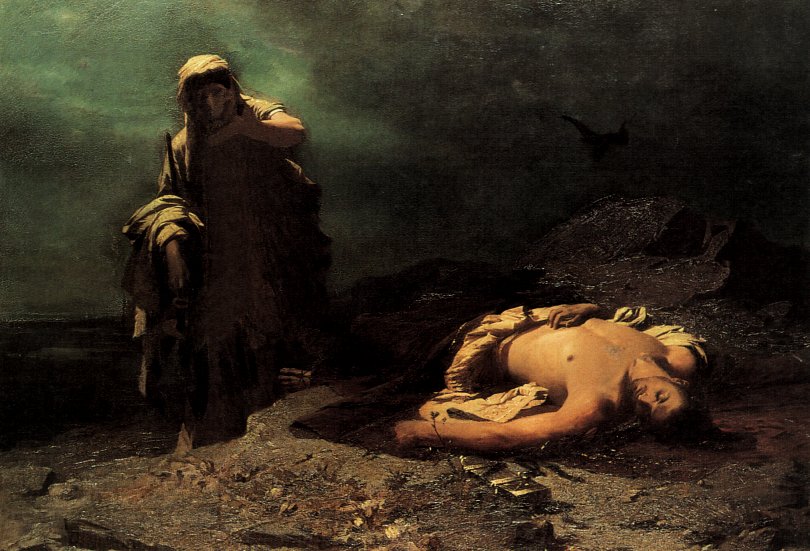
This tribal perception continued into Classical Greek literature and historiography. Sophocles dramatizes the tension between family loyalty and civic duty in Antigone. Creon, the king, emphasizes the importance of state authority over private ties. Yet his speeches reveal traces of the older tribal principle. He tells his son Haemon:
“It is for this that men pray … to sire and raise in their homes children … who will requite their father’s enemy with evil, and honour whom their father loves.”
He further warns: “But he whose issue proves unprofitable … Begets what else but sorrow to himself / And store of laughter to his enemies.”
For Creon, a “good son” blesses the family by defending its friends and punishing its foes, while a disobedient son brings shame and ridicule. These statements reflect a society where honor (timē) and shame (aidōs) structure morality. Individual worth depends on loyalty to family, clan, and polis. In Ancient Greece, honor governed social behavior, and ethical value derived from fulfilling obligations to one’s in-group rather than following an internal conscience.
Historians such as Thucydides document similar patterns. For instance, Pericles, in his epitaphy, brags about Athens’ audacity and the power it wielded over foes: “Our audacity has carved us a path by force over land and over sea, raising imperishable monuments to itself for good as well as evil.” The statement exemplifies the tribal ethic: justice and honor were measured in the ability to protect one’s people and inflict harm on enemies, and this earned lasting prestige.

Plato’s philosophical critique
Plato’s Socratic critique in The Republic directly confronts the tribal worldview of Ancient Greece. Socrates argues that justice should never harm anyone, even enemies because causing harm only perpetuates wrongdoing. Justice, he contends, benefits all. He introduces a philosophical framework in which morality is not contingent on social bonds but is grounded in reason and universal principles. By rejecting Simonides’ maxim, Socrates attempts to move beyond the shame-based ethic of tribal loyalty toward a principle of rational, impartial justice.
Plato’s later works, including Philebus and The Laws, demonstrate his nuanced approach. In Book III of The Laws, he remarks on the Persian invasion of Greece under Xerxes, noting that the Athenians maintained respect for their laws because fear of the enemy strengthened their adherence to civic rules. Plato observes that external threats among the Ancient Greeks reinforced social cohesion, showing that even in an advanced city-state, tribal instincts—loyalty to one’s group and fear of foes—shaped the practical functioning of justice. Thus, while philosophically critiquing the ethic of harming enemies, Plato acknowledges that fear and honor could influence human behavior.
From honor-based ethics to universal justice
The tension between tribal and philosophical justice mirrors broader cultural transformations in Ancient Greece. Early Greek ethics relied on honor, shame, and reciprocity. Moral actions were validated through public recognition rather than personal reflection. Socratic philosophy introduced introspection, reason, and universality, shifting ethics from protecting immediate social bonds to guiding conduct for the benefit of all. Plato’s critique represents a fundamental transformation, seeking to elevate a practical, relational ethic into a moral ideal.
Despite Plato’s philosophical challenge, the tribal ethic persisted for centuries. Greek political rhetoric, inscriptions, and legal documents continued to reflect the importance of in-group loyalty. Even Aristotle engaged with the tension between familial, civic, and universal obligations. When literature, history, and philosophy are considered together, a coherent pattern emerges: tribal ethics provided the structural foundation of Ancient Greek society, while philosophical reflection gradually abstracted principles of justice beyond immediate social interests.
See all the latest news from Greece and the world at Greekreporter.com. Contact our newsroom to report an update or send your story, photos and videos. Follow GR on Google News and subscribe here to our daily email!

