



A major step toward establishing a vital new energy corridor between Greece and Egypt was completed on Monday with the signing of a key trilateral Memorandum of Understanding (MoU) for the GREGY-ELICA Interconnector project.
The MoU was formally signed by the electricity transmission operators of Greece and Egypt—IPTO and EETC—along with the project promoter, ELICA Mediterranean Electrical Interconnection S.M. S.A., a member of the Copelouzos Group. This agreement greenlights the next phase of studies for the massive submarine linkage, underscoring the commitment of all parties.
Strategic significance of Greece-Egypt energy deal
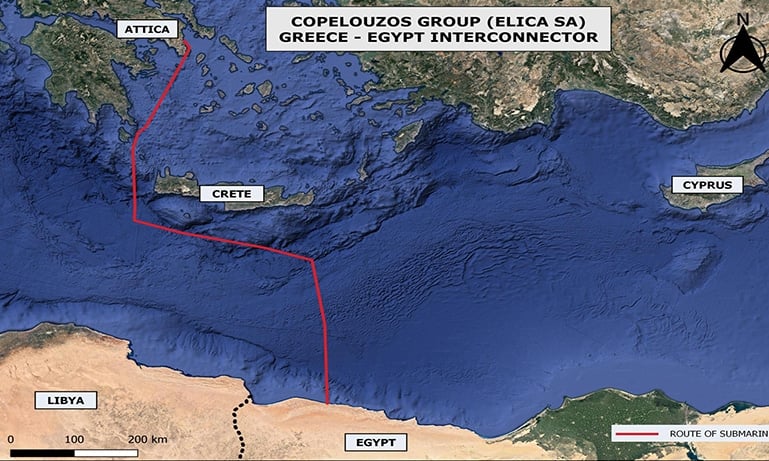
The GREGY project is not just a regional undertaking; it is viewed by Athens and the European Union as a matter of strategic geopolitical importance. It is already included in the EU’s prestigious Projects of Common Interest/Projects of Mutual Interest (PCI/PMI) list and the Global Gateway program for critical infrastructure.
Commenting on the event, Environment & Energy Minister Stavros Papastavrou emphasized the project’s broad impact, saying that GREGY is:
“…of strategic importance for both countries and the entirety of the EU. This interconnection comes under Greece’s wider strategy on new energy corridors to the North and South, in full alignment with the direction presented recently by European Commission President Ursula von der Leyen.”
The Minister further underscored that the project will:
“…upgrade Greece’s geopolitical role as an energy hub in Southeast Europe, boost energy security in the greater region, and highlight the great opportunities our bilateral relations afford us.”
A 100 percent green energy corridor
The GREGY-ELICA Interconnector is being developed as the only direct link connecting Egypt with mainland Greece without intermediate landing points. With an expected budget of €4.2 billion, the project centers on a submarine electricity cable with bi-directional power transmission capacity.
Crucially, the 3,000 megawatts (MW) of electricity transferred by GREGY will be 100 percent green energy, produced exclusively from vast renewable energy plants in Egypt.
This clean energy profile offers transformative environmental and economic benefits:
- Environmental impact: The project is expected to replace 4.5 billion cubic meters (bcm) of natural gas per year and reduce CO2 emissions by ten million tons annually.
- Economic impact: The transferred green energy is expected to be highly competitive in relation to current energy prices, providing a stable, affordable, and clean supply.
Greece as a green energy hub
The vision for GREGY, initially conceived by Dimitris Copelouzos in 2008, directly addresses the dual challenge of the 21st century: the need for cheap and green energy. By transporting clean electricity, GREGY is set to accelerate Greece’s transition to a greener economy and significantly enhance its geopolitical standing.
Approximately one-third will be consumed in Greece, while another one third will be exported to neighboring EU countries.
The final one-third will be used in Greece for the production of green hydrogen, the majority of which will also be exported to other EU nations.
See all the latest news from Greece and the world at Greekreporter.com. Contact our newsroom to report an update or send your story, photos and videos. Follow GR on Google News and subscribe here to our daily email!

