



Greece approved plans for the construction of a museum at Faliro, south of Athens, that will exhibit a group of 78 shackled skeletons, believed to have been executed in the 7th century BC.
These remains, known as “Desmotes Falirou,” were initially excavated in 2016 at the Esplanade of the Stavros Niarchos Foundation Cultural Center (SNFCC) in Faliro Bay. The skeletons, arranged in three clusters, provide a glimpse into an ancient mystery.
The museum will be built on the SNFCC grounds and funded by the Recovery Fund at six and a half million euros. In addition, the design of the open-air museum has been released.
The proposed shell includes a basement area for safeguarding the skeletal material and a ground-level space for supervisory and visitor areas, aiming for harmony with the SNFCC Esplanade environment.
For universal accessibility, the ministry plans to create an immersive experience, allowing visitors to comprehend the historical significance of the shackled skeletons.

The project marks a significant step towards preserving and showcasing these ancient artifacts, inviting the public to connect with the mysteries of the past.
Shackled skeletons of Athens may belong to rebels
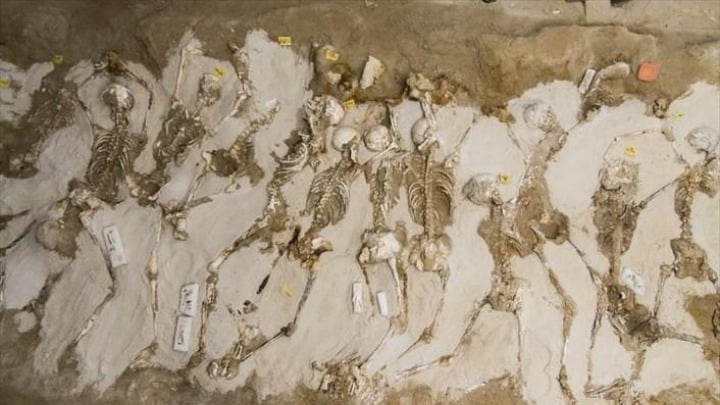
The skeletons of people with their hands shackled behind their backs in mass graves are considered important in understanding the policies of Athens at the time and how the city-state was established.
These were found buried in a variety of ways, but most were interred in simple pit graves. Nearly one third were infants and children buried in large jars. About five percent of the remains found are of cremations complete with funeral pyres, and there are a few stone-lined cist graves. One person was found buried in a wooden boat utilized as a coffin.
The shackled skeletons have puzzled researchers, as there are very few shackled deaths in the ancient world. The shackles could indicate punishment, including capital punishment, and slavery.
Some researchers believe the skeletons may be followers of Cylon, a tyrant who attempted to take over Athens in the 7th century BC.
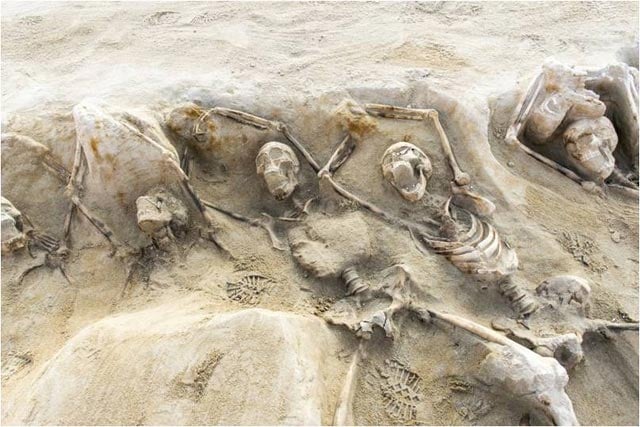
Two small vases found among the shackled skeletons allowed scientists to date the grave to between 650 and 625 BC, an era that ancient historians say was full of turmoil for Athens. The teeth of the skeletons show that they were mostly from younger people in good health. That supports the theory that they were political rebels who attempted to take over Athens.
According to accounts by ancient historians Plutarch and Thucydides, Cylon was an athlete at the 640 BC Olympic Games. His victory there secured him an elevated status and the hand of the daughter of the nearby tyrant of Megara.
Over the next decade, there was discontent in Athens due to poor harvests and social inequality. With the help of his father-in-law’s soldiers, Cylon began a coup in 632, hoping the people of Athens would rise up and join him. Some did, but most did not.
Instead, Cylon escaped the city, and his rebels took shelter at the Acropolis. Eventually, they began to starve, and the city archon Megacles promised them safe passage, but when they exited the temple, he slaughtered them.
See all the latest news from Greece and the world at Greekreporter.com. Contact our newsroom to report an update or send your story, photos and videos. Follow GR on Google News and subscribe here to our daily email!

