



The world’s largest religions shape cultures, guide moral values and influence billions of people. They offer answers to life’s fundamental questions: Why are we here? What happens after death? How should we live?
Religions differ in beliefs and practices. Some follow one God, while others worship multiple deities or spiritual forces. Some emphasize personal enlightenment, while others focus on faith, community and service.
Despite their differences, major religions share common themes: compassion, morality and the search for meaning. Their sacred texts, rituals and traditions continue to shape societies worldwide.
6. Sikhism
Followers: About 25-30 million
Founded: 15th century, India
Sacred Text: Guru Granth Sahib
Sikhism was founded by Guru Nanak in 1469 in the Punjab region of South Asia. At its core, Sikhism emphasizes the belief in one God and the equality of all people, regardless of caste, gender or background.
God is considered the eternal, formless, and all-pervading creator of the universe. Sikh teachings emphasize God is beyond human comprehension but can be experienced through devotion, truthful living, and meditation.
The Guru Granth Sahib, the Sikh holy book, contains hymns and teachings on love, humility and justice. The book describes God as Ik Onkar (One Supreme Reality), which signifies the unity and oneness of God.
Sikhs worship in Gurdwaras, where they practice a unique tradition known as Langar, a community kitchen that provides free meals to all visitors, regardless of faith. They follow the principle of Seva, or selfless service, dedicating themselves to helping others without expecting anything in return.
The Khalsa, a community of initiated Sikhs established by Guru Gobind Singh, upholds a strict code of conduct that includes wearing the Five Ks—distinct symbols of Sikh identity including uncut hair, a steel bracelet and a ceremonial sword.
Throughout history, Sikhism has been closely tied to the struggles of the Punjab region, particularly during the Mughal era, when Sikh Gurus, including Guru Arjan and Guru Tegh Bahadur, were persecuted for defending their faith.
5. Folk Religions

Followers: About 430 million
Founded: Various times across the world
Sacred Texts: Oral traditions, local scriptures
Folk religions represent a diverse collection of traditional beliefs practiced by millions of people around the world. These religions are often deeply connected to nature, spirits, and ancestor worship and do not always have formal scriptures or centralized authority.
In China, folk religions blend elements of Confucianism, Taoism, and local spiritual traditions, with many people honoring ancestors through rituals and festivals.
In Africa, traditional religions emphasize the power of nature and spirits, with shamans and spiritual leaders playing important roles in healing and guidance.
In Native American and Indigenous traditions, harmony with nature is central, and rituals, songs and dances are used to communicate with the spiritual world.
Many folk religions have blended with major world religions over time, creating unique cultural expressions of faith. Rituals and ceremonies remain a vital part of these traditions, preserving the history and identity of communities around the world.
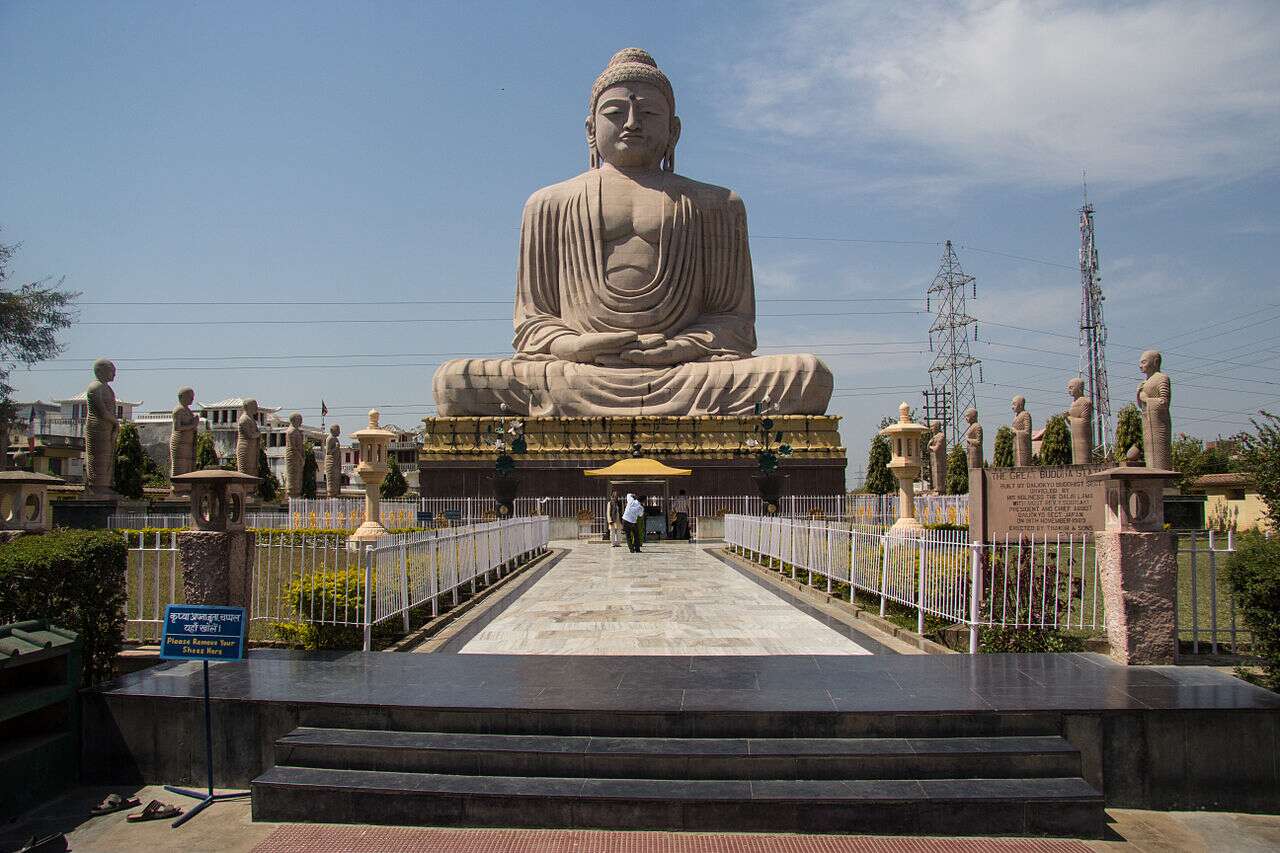
4. Buddhism
Followers: About 510 million
Founded: 5th century BCE, India
Sacred Texts: The Tripitaka, Sutras
Buddhism was founded in the 5th century BCE by Siddhartha Gautama, later known as the Buddha. Born a prince, he renounced his royal life in search of deeper truth, ultimately attaining enlightenment.
His teachings emphasize the Middle Way, a balanced approach to life that avoids extremes of indulgence and self-denial. Central to Buddhism are the Four Noble Truths, which explain the nature of suffering and how it can be overcome, and the Eightfold Path, a set of ethical and meditative practices that lead to wisdom and peace.
Meditation and mindfulness play a crucial role in Buddhist practice, helping followers cultivate awareness and inner tranquility.
Over time, Buddhism developed into different schools, each with its own interpretations of the Buddha’s teachings.
Theravāda Buddhism focuses on self-discipline and meditation, emphasizing the monastic life. Mahāyāna Buddhism promotes compassion and the idea that enlightenment is accessible to all. Vajrayāna Buddhism, found mainly in Tibet, incorporates esoteric rituals and chants.
Buddhism spread from India to China, Japan and Southeast Asia, where it continues to thrive today.
3. Hinduism

Followers: About 1.1 billion
Founded: Over 4,000 years ago, India
Sacred Texts: The Vedas, Upanishads, Bhagavad Gita
Hinduism is one of the oldest religions in the world, with roots stretching back over 4,000 years. Unlike many religions, Hinduism has no single founder but evolved through a vast collection of beliefs and traditions.
Hindus believe in Brahman, the ultimate, formless, eternal reality that is the source and essence of everything in the universe. It is often described as infinite, all-pervading, and beyond human comprehension.
Brahman is not a personal god but rather the fundamental, unchanging reality behind all existence.
However, the deities Brahma, Vishnu, and Shiva are part of the Trimurti, which represents three aspects of the cosmic functions of Brahman (the ultimate reality). They are not separate from Brahman but are manifestations of its different aspects:
- Brahma – The Creator
- Vishnu – The Preserver
- Shiva – The Destroyer (or Transformer)
Hindus also believe in avatars, such as Krishna and Rama. Divine incarnations of deities who descend to Earth to teach and help humanity, and to restore cosmic order.
Practices like yoga and meditation are deeply rooted in Hindu spiritual life, offering paths to self-realization and inner peace.
A key aspect of Hindu life is dharma, the moral and religious duties that guide a person’s actions. Concepts such as karma (the law of cause and effect) and reincarnation play a central role in Hindu philosophy, influencing how one’s actions shape future lives.
Hinduism also has a rich tradition of philosophical thought, with schools such as Advaita Vedanta that teaches non-dualism, meaning that the ultimate reality (Brahman), is the only true existence, and everything else is an illusion (maya).
According to Advaita Vedanta, the individual self (atman) is not separate from Brahman but is actually one with it. The goal of life is to realize this unity through knowledge (jnana), meditation, and self-inquiry. Once a person understands that their true self is Brahman, they attain liberation (moksha) and are freed from the cycle of rebirth (samsara).
This philosophy differs from other Hindu traditions that believe in a personal god or that the soul and God are distinct. Instead, Advaita Vedanta teaches that distinctions are illusions created by ignorance (avidya), and true wisdom leads to seeing everything as one.
2. Islam

Followers: About 1.97 billion
Founded: 7th century CE, Arabia
Sacred Text: The Quran
Islam was founded in the 7th century CE. It teaches the belief in one God (Allah) and follows the teachings of Prophet Muhammad, whose revelations are recorded in the Quran.
Muslims observe the Five Pillars of Islam, which include faith in one God, daily prayers, charitable giving, fasting during Ramadan and pilgrimage to Mecca.
Islamic law, known as Sharia, is based on both the Quran and the Hadith, the recorded sayings and actions of the Prophet Muhammad. The concept of Ummah, or the global Muslim community, emphasizes unity and brotherhood among followers.
1. Christianity

Followers: About 2.38 billion
Founded: 1st century CE, Middle East
Sacred Text: The Bible
Christianity is the largest religion in the world It is based on the life and teachings of Jesus Christ, whom Christians believe is the Son of God. His message of love, forgiveness and faith continues to inspire millions.
The Bible, Christianity’s sacred text, is divided into the Old Testament, which shares roots with Judaism, and the New Testament, which details Jesus’ life and teachings.
A core Christian belief is the Trinity, the idea that God exists as Father, Son and Holy Spirit. Many Christians observe sacraments, such as baptism and communion, which hold deep spiritual significance.
Christianity has developed into many traditions over time, including Catholicism, Eastern Orthodoxy and Protestantism, each with unique customs and interpretations of scripture.
Beyond religious practice, Christianity has profoundly influenced Western art, literature, and music, inspiring masterpieces such as Michelangelo’s paintings, Bach’s compositions and Dante’s Divine Comedy. Today, Christianity remains a powerful force, shaping cultures and communities across the world.
See all the latest news from Greece and the world at Greekreporter.com. Contact our newsroom to report an update or send your story, photos and videos. Follow GR on Google News and subscribe here to our daily email!

