



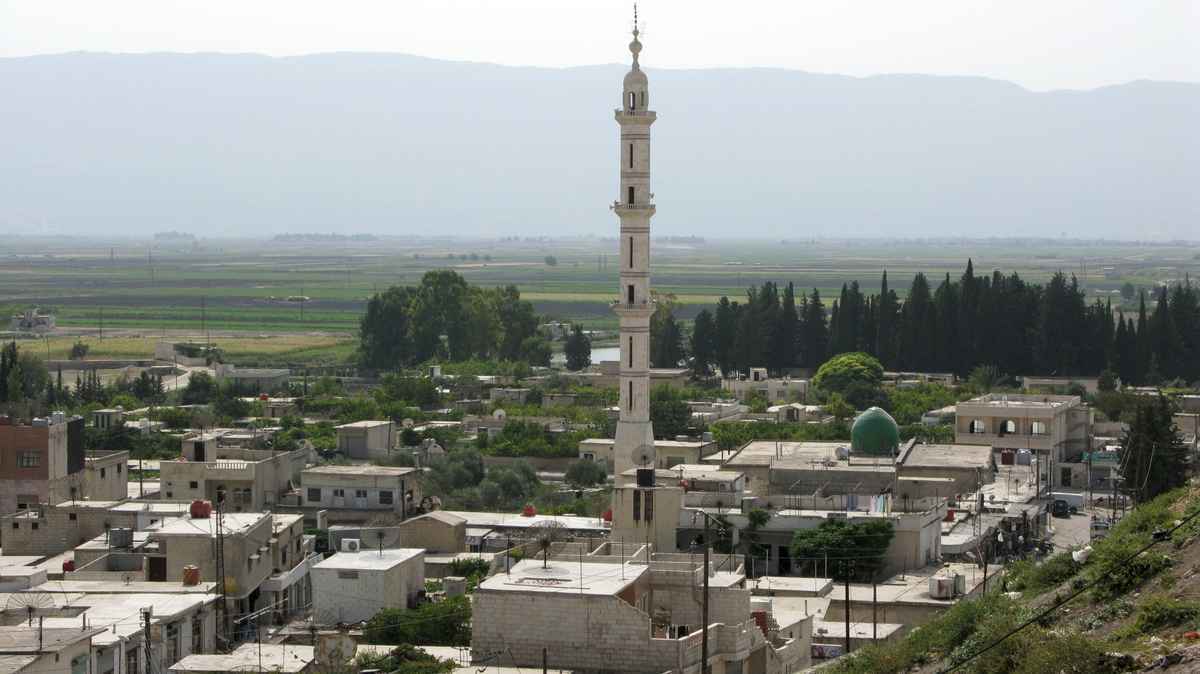
Gunmen opened fire at homes in Syria’s predominantly Greek Orthodox(Rum) Christian town of Al-Suqaylabiyah on October 3, according to a Catholic charity. An Orthodox priest escaped unharmed, while the town’s Greek Orthodox parish priest urged residents to reject retaliation.
The violence followed an earlier assault on the same community in March 2026. That attack damaged Christian homes, shops, and vehicles in the town, which lies in Hama province. Residents subsequently marched through the streets, demanding accountability.
Priest escapes gunfire as dispute escalates
Aid to the Church in Need (ACN) described the latest sectarian violence in its October 8 report. Local sources traced the confrontation to an altercation involving young people from Al-Suqaylabiyah and neighboring Al-Qalaa, also called Qalaat al-Madiq. Armed men then entered Al-Suqaylabiyah, fired at houses, and damaged property, those sources told the charity.
An Orthodox priest told ACN that gunmen fired at him and his vehicle. A bullet narrowly missed him. The charity withheld his identity for security reasons. Its account does not establish the attackers’ affiliations or demonstrate that religious hostility motivated the October violence.
Greek Orthodox priest calls for protection, not revenge
Father Fadi Sankari, the town’s Greek Orthodox parish priest, called for “security, justice and accountability, not vendettas,” according to ACN. He urged residents to remain united without answering violence with violence.
Sankari defended their right to safety and dignity within their homes. He also warned that further bloodshed would neither repair the damage nor secure their future.
The March assault continued into the early hours of March 28. Associated Press reporting described scores of men arriving on motorcycles from nearby Qalaat al-Madiq and attacking Christian property. Government forces eventually brought reinforcements into the town and calmed the violence.
The US Commission on International Religious Freedom also documented that attack in its May 2026 country update. It described armed men terrorizing residents and damaging or destroying homes, businesses, and vehicles following a personal dispute that ended up in sectarian widespread violence.
According to the commission, authorities subsequently made arrests and organized a reconciliation council to prevent retaliatory violence. Those measures preceded the latest reported attack by several months.
Violence reaches beyond one community
The March unrest affected Christian observances beyond Al-Suqaylabiyah. Churches in Damascus curtailed celebrations, and worshippers attended a subdued Palm Sunday service, AFP reported on March 29. The Greek Catholic Patriarchate announced that Easter celebrations would consist of prayers inside churches.
Families described their concerns about security while attending services. Security personnel guarded the cathedral compound, while the usual outdoor processions and musical celebrations gave way to quieter observances.
Other attacks have also struck Syria’s Greek Orthodox faithful. In June 2025, an attack on Mar Elias Greek Orthodox Church in Damascus killed at least 25 people. The US religious freedom commission documented that bombing separately from the violence in Al-Suqaylabiyah. Its report also described continuing threats against religious minorities and their places of worship.
Following the collapse of Bashar Al Assad in December 2024 and the rise of the Islamist HTS in power, sectarian violence against Syria’s minority communities—including Christians, Alawites, Druze, Ismailis, and Shias—has become alarmingly widespread. Despite explicit promises from interim leader Ahmed al-Sharaa to protect these populations and hold the perpetrators of human rights abuses accountable, targeted attacks, abductions, and assassinations continue to terrorize locals.
Compounding the crisis, regional witnesses report that members of the newly formed “security” forces routinely dismiss the grievances and safety concerns of minority victims.
Most distressingly, reports indicate that rather than acting as a stabilizing force, members of these same security detachments actively participated in the severe massacres carried out against Alawite communities in March 2025 and the Druze population in July 2025.
See all the latest news from Greece and the world at Greekreporter.com. Contact our newsroom to report an update or send your story, photos and videos. Follow GR on Google News and subscribe here to our daily email!

