



High in the Karakoram mountains of northern Pakistan lies Hunza, a principality where tradition says that its ruling dynasty and people are of Alexander the Great descent.
The region is famous for its dramatic landscape, the ancient settlements and its distinctive Burushaski language. Hunza has a remarkable political history. For centuries, it existed as a small but strategically important mountain principality ruled by hereditary Mirs. Among the most fascinating traditions associated with its ruling dynasty and people is the claim that they descend from the great Greek conqueror who passed through Central and South Asia in the fourth century BC.
The tradition that the Hunza people are of Alexander the Great descent has attracted historians, anthropologists, linguists, and geneticists. Yet the question remains: is the connection historical fact, or is it a powerful legend that developed over centuries?
The geographical position of Hunza helps explain why such traditions developed. The valley lies between the great mountain systems of the Karakoram, the Hindu Kush, and the Pamirs, close to historic routes connecting Central Asia with the Indian subcontinent and China. Before the modern era, its isolation made Hunza difficult for outsiders to reach. The people of Hunza, generally known as the Burusho or Hunzakut, speak Burushaski, a language whose origins remain uncertain and which has not been convincingly demonstrated to belong to any major neighboring language family.

The language identification approach
The early British journalist and linguist Emily Lorimer described Burushaski as a language “of so great antiquity” that its relationship to other known languages had not been established.
However, the Alexander tradition itself is exceptionally persistent. Anthropologist Homayun Sidky, who conducted research among the people of Hunza, recorded that a local tradition claimed that the ancestors of the Hunzakut were five soldiers of Alexander’s army, accompanied by their Persian wives. According to this account, these men settled in Hunza and established the settlements of Baltit, Altit, and Ganesh. Sidky characterized the tradition as “persistent, though improbable,” an important formulation because it captures the tension between cultural memory and historical evidence.
The tradition is not confined to ordinary folklore. Historical accounts indicate that the rulers of Hunza and neighboring Nagar were associated with Alexander descent. Sidky notes that the British officer and ethnographer David L. R. Lorimer recorded Alexander traditions in Hunza during the 1920s and 1930s. Another British officer, Reginald Schomberg, reported that the Mir of Hunza and the ruler of neighboring Nagar claimed descent from the Greek king.
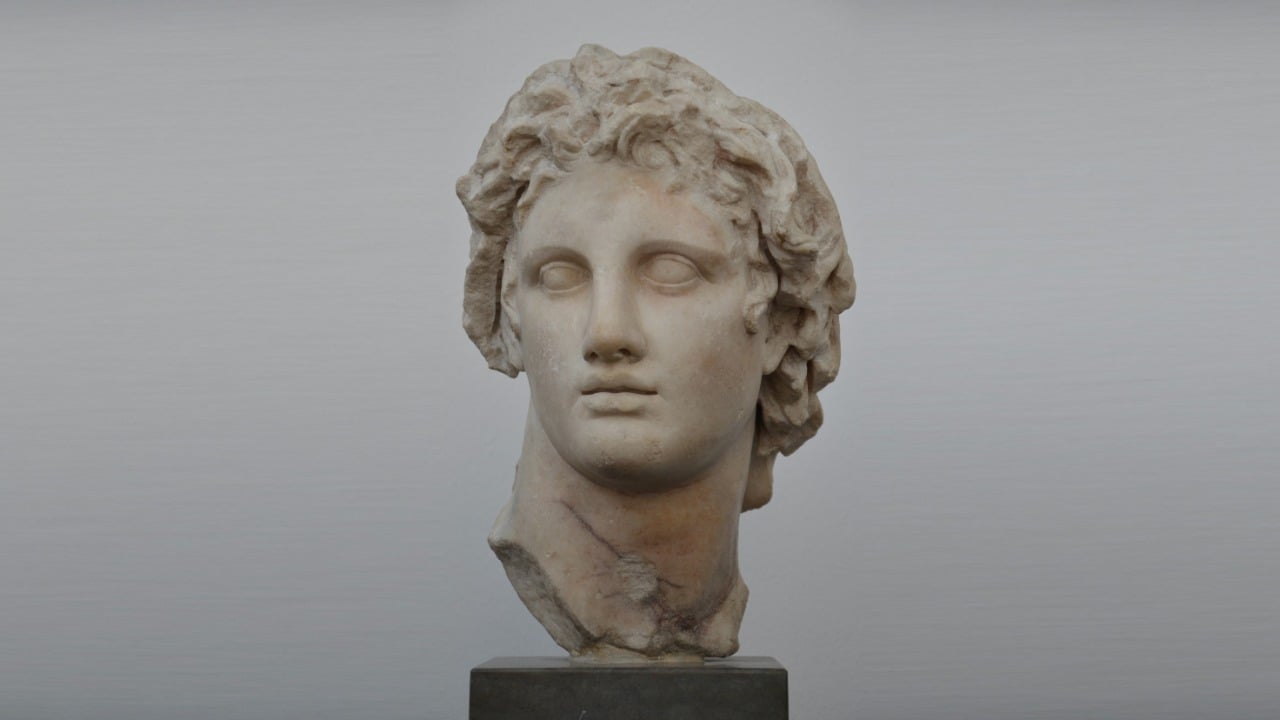
The broader phenomenon is significant. Alexander the Great became one of the most influential legendary figures across Central and South Asia. His conquests reached from Macedonia through Persia and Central Asia to the Indus Valley, and later generations transformed him from a historical conqueror into a semi-mythical cultural hero. Historian William W. Tarn, one of the major scholars of Hellenistic history, observed that “both flanks of the Hindu Kush were once full of chieftains who claimed descent” from Alexander. Tarn specifically included Hunza, Gilgit, Nagar, and Chitral among the regions where such traditions appeared.
Genetic Study
The widespread claim is actually one reason historians are cautious about accepting the Hunza tradition literally. If numerous ruling families throughout Central Asia claimed descent from Alexander, the existence of such a claim cannot by itself prove biological descent. Sidky points out that Alexander-descended genealogies could emerge through several mechanisms. Some may have originated among Greek or Graeco-Bactrian populations, while others may have developed during the Islamic period, when Alexander—known in Islamic tradition as Dhu’l-Qarnayn, or “the Two-Horned One”—became an important legendary figure.
There is also a chronological problem. Alexander’s campaigns brought him into the region in the late 4th century BC, but there is no surviving ancient Greek or Persian evidence establishing that Alexander left a group of soldiers who founded the ruling dynasty of Hunza. The story therefore cannot presently be treated as a documented genealogy. Indeed, Sidky explicitly regarded the Hunza tradition as improbable when he first encountered it. The earliest securely documented history of the Hunza polity is separated from Alexander by many centuries.
Nevertheless, the possibility of some Greek genetic contribution cannot simply be dismissed. A 2004 genetic study by Atika Mansoor and colleagues, involving Burusho, Kalash, Pathan, and Greek populations, investigated precisely these traditions. The researchers reported that the Burusho and Pathan populations were genetically close to one another and also showed affinity with the Greek population examined, while the Kalash were genetically distinct. Importantly, however, such genetic similarity does not demonstrate direct descent from Alexander himself. Population genetics can identify patterns of relatedness, but it cannot ordinarily establish that a particular historical individual was the ancestor of a modern population.
The mystery allure
The story must also be understood within the context of British colonial fascination with Hunza. British explorers and administrators encountered a remote mountain society and frequently represented its inhabitants as unusually mysterious, ancient, physically distinctive, and somehow connected to Europe. Historian Shafqat Hussain, in his study Remoteness and Modernity, argues that British exploration helped construct an image of Hunza as an exceptionally exotic and mysterious place. He notes that British accounts even portrayed the inhabitants as possible ancestors of both Indians and Europeans.
Thus, the Alexander story became more than a question of genealogy. It became part of Hunza’s identity in the imagination of outsiders and, to an extent, within the region itself. Its appeal is understandable. Alexander is perhaps the most famous conqueror to enter the history of Central and South Asia, while Hunza possesses an unusually strong sense of historical distinctiveness. Linking the two creates a narrative connecting a remote Himalayan-Karakoram kingdom with the classical Mediterranean world.
The former Hunza State also possessed a genuine and fascinating political history independent of the Alexander legend. Ruled by the Mirs, it maintained considerable autonomy in the mountainous frontier between South and Central Asia. Its strategic position brought it into contact with Kashmir, Chinese Turkestan, Afghanistan, and British India.
The British conquest of Hunza in 1891 ended much of its traditional independence, although the Mir continued to rule under British dominance. Shafqat Hussain emphasizes that after the conquest the Mir consolidated his authority under British rule, demonstrating that Hunza’s political history was much more complex than the romantic image of an isolated ancient kingdom.
A piece of cultural history
Ultimately, the claim that the people or rulers of Hunza descend from Alexander the Great should be regarded as a historically important tradition rather than an established genealogical fact. The tradition is old, widespread, and deeply embedded in the cultural history of the region. Scholars such as Lorimer, Tarn, and Sidky documented it seriously, while modern genetic research has investigated whether populations of northern Pakistan possess Greek-related ancestry. Yet no convincing chain of documentary or genetic evidence demonstrates that the Mirs of Hunza were direct descendants of Alexander.
The real importance of the story therefore lies not only in whether it is true, but in what it reveals about Hunza itself. The Alexander legend reflects centuries of movement, migration, intermarriage, political ambition, and cultural exchange across the mountains of Central and South Asia. Hunza was never simply an isolated valley. It stood at a crossroads where peoples, languages, religions, and empires met. The claim of Alexander descent is consequently best understood as part of Hunza’s rich historical memory—an enduring legend where history and collective identity can become intertwined.
See all the latest news from Greece and the world at Greekreporter.com. Contact our newsroom to report an update or send your story, photos and videos. Follow GR on Google News and subscribe here to our daily email!

