



Few ancient Greek philosophers that were critics of Christianity remain as fascinating as Celsus. He wrote against Christianity during the second century. His work carried the title The True Word(Logos Alēthēs). The original text disappeared from history. Yet, early Christian theologian and ascetic Origen preserved extensive passages while answering Celsus point by point.
Celsus therefore survives through the words of his greatest Christian opponent. This unusual survival gives us a remarkable window into pagan intellectual criticism. It also reveals how Christianity appeared to an educated Greek observer.
Very little remains certain about Celsus personally. Origen places him in the reign of Hadrian. He also identifies him with an Epicurean philosopher. Yet Celsus’s surviving arguments contain strong Platonic elements. He speaks positively about divine providence, the soul, reason, and the transcendent God.
Origen accused Celsus of hypocrisy. He argued that Celsus presented Platonic ideas while hiding his Epicurean identity. However, this accusation does not settle the question. Celsus could have changed his philosophical position during his lifetime. Alternatively, Origen could have confused him with another Celsus. The pagan British philosopher Thomas Taylor has also questioned whether Origen correctly identified his opponent.
A Christian movement under suspicion
Celsus begins with Christianity’s organization and public position. He particularly objects to the Christians’ secret associations and compares them with associations that Roman law prohibited.
He also describes the Christian love-feasts. These gatherings strengthened relationships among believers. Celsus believed their common danger helped create this unusual solidarity and that this and not the teachings of Jesus was what created their love.
In his interpretation, persecution itself strengthened Christian unity. Christians faced danger together and their suffering created powerful bonds among them.
Celsus did not argue that Christians deserved persecution. He recognized that religious devotion formed part of human nature. He believed the human soul possessed a divine connection and one shouldn’t be punished for it because human beings naturally sought God and the divine.
Yet Celsus insisted that people should examine religious claims critically. For him, faith without rational examination created an obvious danger: people could accept false teachings because they wanted to believe them. He eventually distinguished religious piety from irrational religious doctrines.
Christianity and the Greek intellectual tradition
Celsus considered Christianity foreign to the Greek intellectual tradition. He described its Jewish foundations as barbarian in origin although he did not simply dismiss every barbarian contribution. Instead, he granted the ancient peoples important discoveries. He then gave the Greeks a special role since according to the philosopher, Greeks excelled at examining, refining, and applying ideas from foreign peoples and considered Christianity deficient in philosophical reasoning. Its teachings, he argued, appealed too strongly to the mob and lower class people rather than to intelligent ones.
Celsus particularly mocked Christianity’s appeal among the poor and uneducated. He compared Christian teachers with people who sought audiences among simple crowds but could never match wise and educated people.
Celsus believed a serious doctrine required intellectual examination and did not consider popular acceptance as evidence of truth.
In this respect, his criticism resembles the older Greek philosophical tradition. Philosophers repeatedly distinguished knowledge from popular opinion.
Celsus also compared Christian faith with other mystery religions that he regarded as superstitious, such as the cult of Cybele, Hecate, Sabazius, and other divine figures.
He believed irrational religious enthusiasm could produce visions and supernatural claims and compared Christian claims with other forms of religious superstition.
His criticism focused especially on the demand for belief without sufficient rational examination. He regarded this approach as dangerous because deception could easily enter religion.
Celsus accused Christian teachers of adapting their arguments whenever critics challenged them.
He even claimed that Christians altered their texts during disputes and associated these practices with attempts to answer objections after the fact.
His accusation resembles questions that later scholars such as Johann Albert Fabricius would raise about textual development and spurious texts. Celsus was the first to regard the Sibellic prophecies as spurious.
The miracles of Jesus
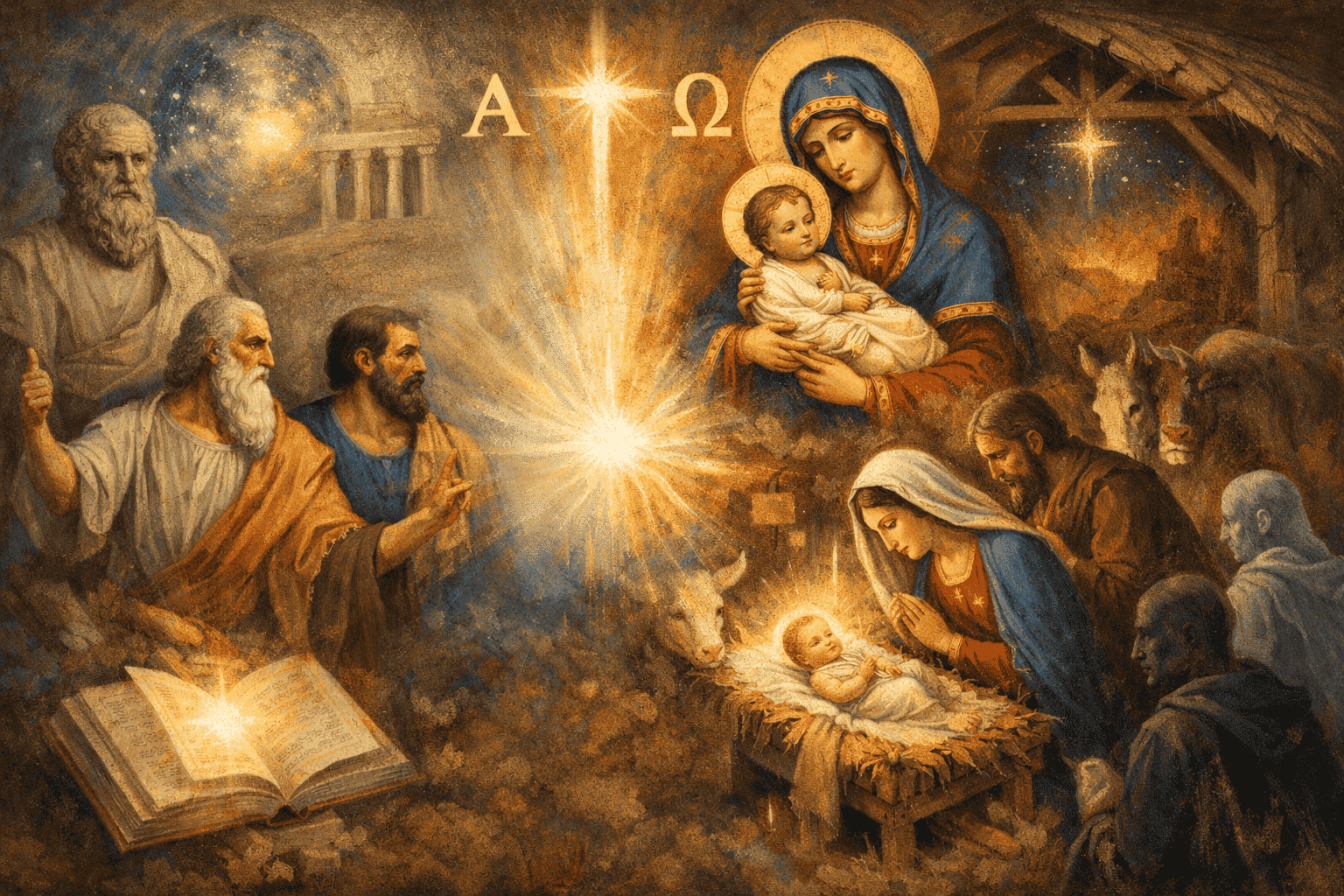
Celsus also challenged the miracles attributed to Jesus. His criticism remains one of the most memorable parts of his argument.
He did not simply deny that extraordinary events occurred but instead questioned their interpretation.
Celsus compared Christian miracles with feats attributed to Egyptian magicians. He referred to sorcerers who claimed to expel demons, cure diseases, and produce spectacular illusions.
That implies that even an extraordinary event did not automatically prove divine status.
Celsus also questioned the scale of the miracles. He considered some miracles unworthy of the supreme God.
Origen reports that Celsus accepted the possibility of reported cures or other extraordinary events for argument’s sake. He then compared them with magical performances.
This created a fundamental philosophical problem:
How could someone distinguish a divine miracle from magic?
For Celsus, Christians needed to provide a rational answer. Simply calling an extraordinary event divine did not establish its divine origin.
The attack on the virgin birth
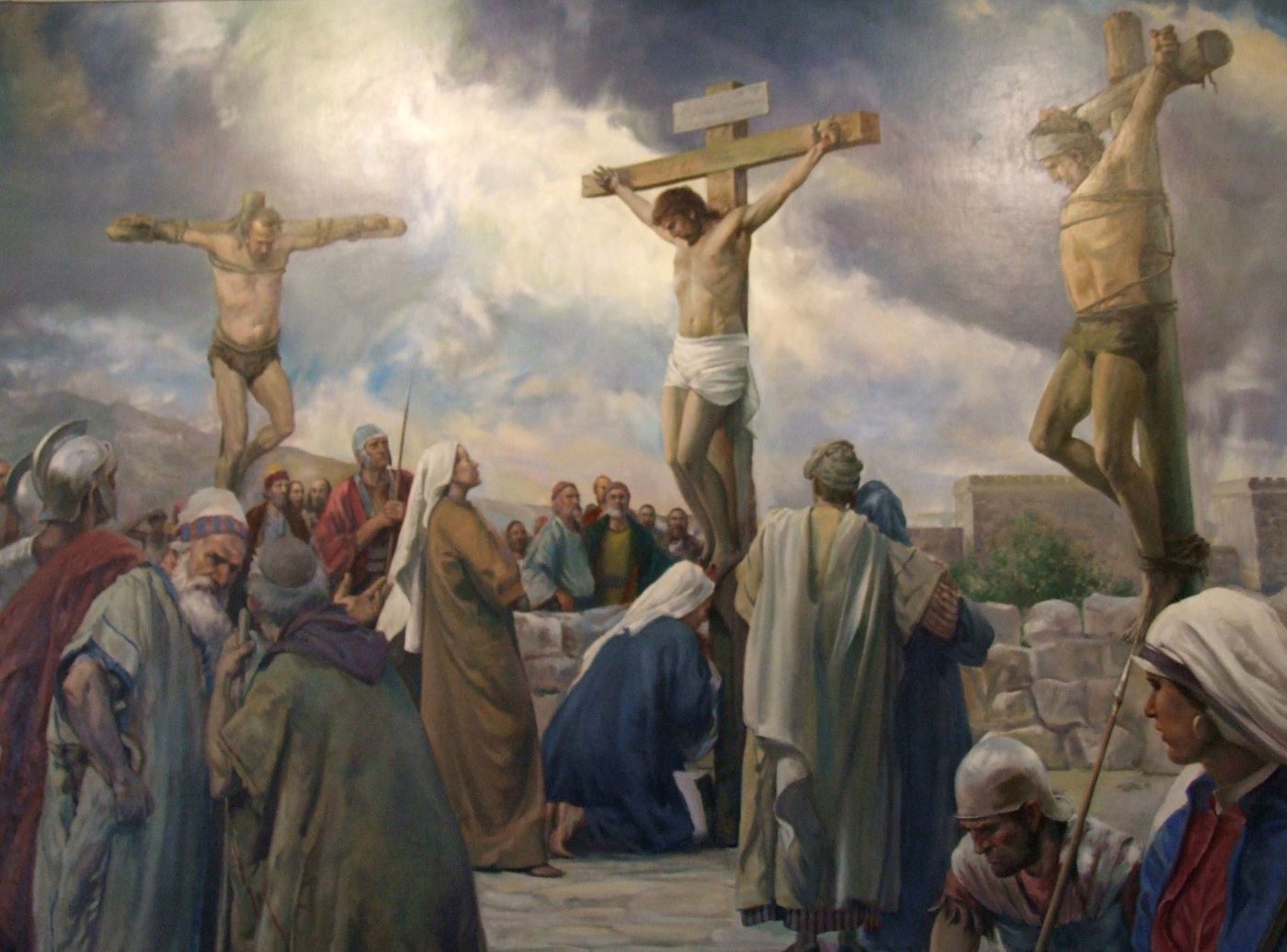
Celsus also attacked the Christian account of Jesus’ birth. Here he introduced a Jewish interlocutor into his argument.
This fictional Jewish critic accused Mary of adultery. He claimed that Jesus’ biological father was a Roman soldier named Panthera.
Celsus used this polemic to challenge the virgin birth.
He also compared the Christian story with Greek myths involving divine births. The story of Danaë and Perseus provided an obvious comparison.
Greek mythology already contained stories about gods producing extraordinary offspring. Celsus questioned why Christians should consider their own story uniquely credible.
He also mentioned figures such as Pythagoras and Aristeas within discussions about extraordinary claims of death and resurrection. These examples allowed him to place Christianity within a broader landscape of superstitious and mythical traditions before dismissing it.
His method was simple but effective. He asked Christians to apply the same standards to their own traditions that they applied elsewhere.
Jesus and the problem of Divine suffering
Furthermore Celsus attacked Christian theology through the suffering of Jesus.
For Celsus, like for most Greek philosophers, the supreme God could not resemble a vulnerable mortal. He considered hunger, thirst, fear, suffering, and death incompatible with divine perfection.
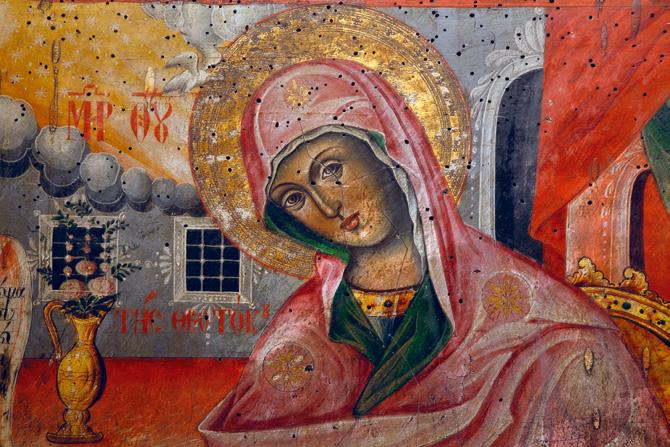
The crucifixion presented an even greater difficulty.
Celsus asked why a divine being would willingly undergo humiliation and death. He compared Jesus with figures from Greek history who faced death with philosophical courage like Socrates showing how much more bravery mere mortals showed over their death.
His argument focused particularly on the Gospel accounts of Jesus’ distress. He saw the prayer at Gethsemane as evidence of human weakness.
From his perspective, a God should remain above mortal passions.
Celsus’s criticism reveals an important philosophical disagreement. The question concerned the nature of divinity itself: could the supreme divine principle enter the material world, suffer and die?
Celsus answered no because that would imply it entered in a state of vice which would be unnatural for the absolute Good that is God.

The Greek philosopher’s critique of Christian morality
Celsus also rejected Christian claims to moral originality.
He argued that Christians had not invented most of their moral teachings. Greek philosophers like Plato had already discussed self-control, justice, moderation, virtue, and contempt for excessive wealth.
Plato had criticized excessive attachment to material possessions. Earlier philosophers had also criticized luxury and moral corruption.
Celsus therefore regarded Christian morality as an exaggerated presentation of older philosophical principles.
He believed Christianity transformed philosophical teachings into extreme popular slogans. For example he objected to its condemnation of wealth.
For Celsus, a wealthy person could still possess virtue. Poverty did not automatically make someone morally superior.
This argument challenged the tendency of Christianity to emphasize poverty and misery as sources of happiness and also allowed Celsus to present Greek philosophers as the older intellectual source for many Christian ethical teachings.
Celsus also reversed the Christian accusation of idolatry.
Christians accused pagans of worshipping statues. Celsus responded by discussing the philosophical meaning behind religious images.
He distinguished the physical representation from the divine reality it represented. The statue itself did not necessarily constitute the god.
This distinction had deep roots in ancient religious and philosophical thought.
Celsus criticized Christians for attacking images without understanding their symbolic purpose.
He also pointed to Greek philosophers who had already moved beyond simplistic interpretations of divine images.
In his view, philosophical pagans could understand divine reality more deeply than Christians assumed.
The Jewish God and creation
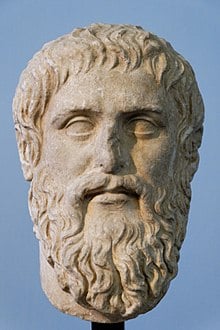
Celsus did not limit his criticism to Christianity. He also attacked Jewish theology.
He rejected the idea of creation from absolute nothingness. For him, the universe had no beginning in which nothing existed.
Instead, he regarded the cosmos as eternal. Change could occur within the universe, but existence itself did not begin from absolute nonexistence.
He also criticized anthropomorphic descriptions of God.
The biblical account of God resting on the seventh day troubled him. Celsus considered divine rest unnecessary for a perfect being.
He also questioned the chronology of creation. He pointed to the appearance of the sun after earlier creative stages.
From his philosophical perspective, these details revealed an excessively human picture of God.
Celsus wanted to elevate God far beyond human physical conditions.
Celsus also criticized the Christian hierarchy of creation.
He believed Christians and Jews paid insufficient attention to the sun, moon, stars, and planets. He regarded these celestial realities as worthy of greater religious consideration.
His argument reflected ancient Greek cosmological traditions. Many Greek philosophers regarded the heavens as divine or as manifestations of divine order and Origen reports Celsus asking why Christianity and Judaism respected angels while neglecting the celestial bodies.
Judaism acknowledged spiritual beings while rejecting the divine significance of the visible cosmos.
For pagan thought, the heavens revealed divine order more clearly than personal spirits of even humans.

Animals and the human claim to superiority
One of Celsus’s most interesting arguments concerns animals.
He rejected the assumption that humans occupied the absolute center of creation.
Animals, he argued, possessed organization, communication, social structures, and forms of intelligence. Some animals also appeared capable of anticipating natural events.
This means that human beings should not automatically claim superiority.
Celsus also questioned the idea that the earth existed exclusively for humans.
Origen preserves an extended discussion of this argument where Celsus argued that nature provides for animals just as it provides for humans.
This argument has a distinctly philosophical character.
Celsus wanted to examine humanity’s place within the entire cosmos.
He rejected a narrow anthropocentric worldview and instead viewed humans as one part of a much larger natural order.

Judgment, punishment, and Divine perfection
Celsus also attacked Christian ideas about divine judgment. He questioned why a perfect God would need to repeatedly correct his creation. If God created the world perfectly, Celsus argued, its fundamental problems should not exist.
He challenged the idea that God would repeatedly intervene to repair humanity. He also criticized the fear of punishment after death.
Celsus believed that morality should arise from reason and understanding. Fear alone could produce obedience, but it could not create genuine wisdom.
He regarded religious terror as especially dangerous when it replaced philosophical examination. Yet Celsus did not reject morality, neither did he dismiss the idea that virtuous people should be rewarded and evil ones punished. However, he believed human beings should pursue virtue through knowledge and rational understanding.

Who are the idolaters?
Perhaps Celsus’s most provocative argument concerned idolatry.
Christians accused pagans of worshipping matter. Celsus reversed the accusation.
He argued that Christianity placed excessive importance upon the physical body of Jesus and according to the Greek philosopher this amounted to a deeper form of material fixation. The philosophical tradition had already taught that divine reality transcended physical senses. Celsus believed pagan philosophy possessed a more sophisticated understanding of divine immateriality.
The Greek philosopher regarded Christianity’s insistence upon incarnation as a regression toward the physical.
See all the latest news from Greece and the world at Greekreporter.com. Contact our newsroom to report an update or send your story, photos and videos. Follow GR on Google News and subscribe here to our daily email!

