



Archaeologists have described 18 hominin fossils from South Africa that offer new evidence about the early history of Homo erectus and the evolution of another ancient human relative.
The fossils come from Drimolen Main Quarry in South Africa’s Cradle of Humankind. The region has produced some of the most important evidence of early human evolution, including South African fossils that have challenged previous timelines for ancient human ancestors.
Adult fossil adds to Homo erectus record
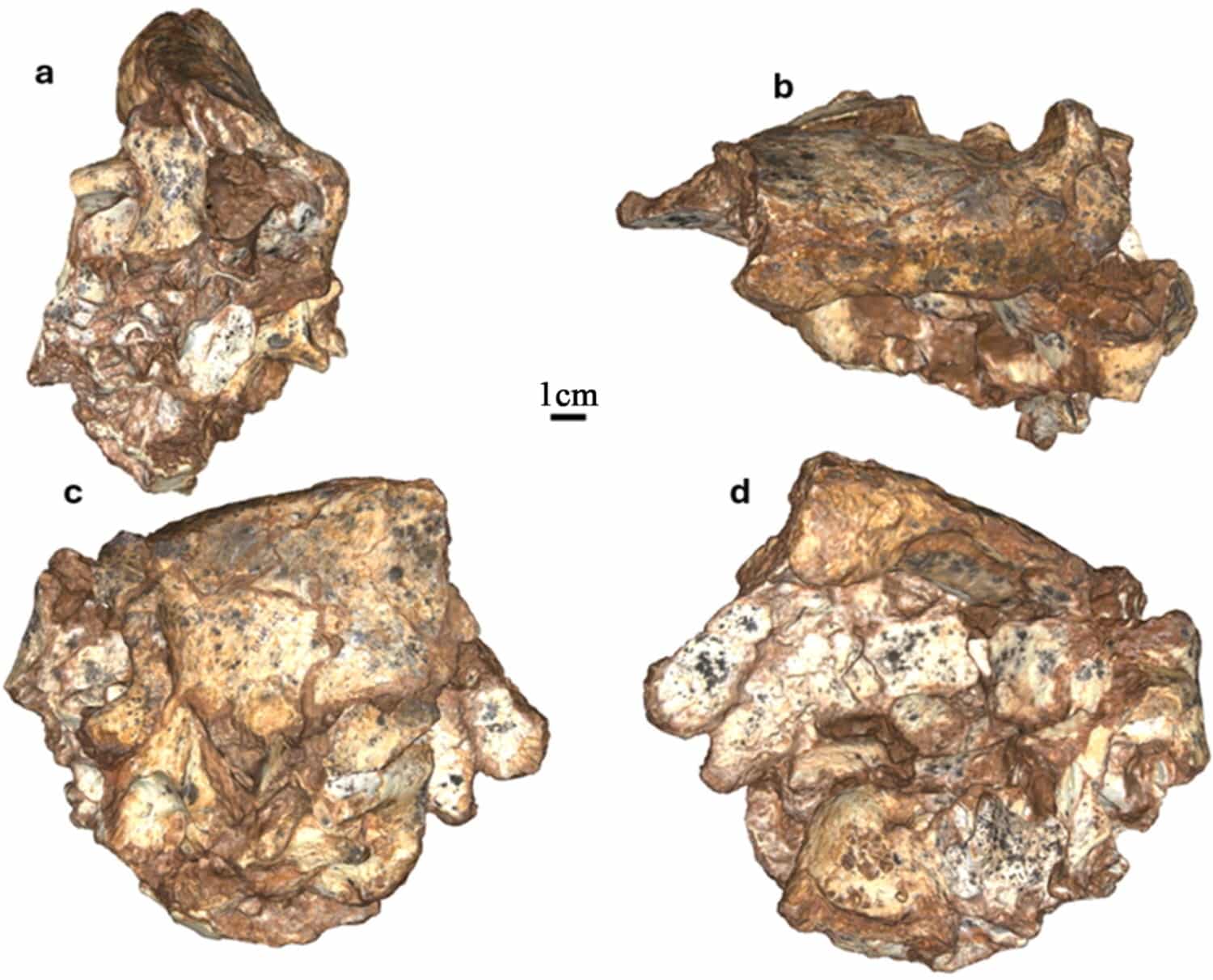
The study, published in Annals of Human Biology, describes the first adult Homo erectus fossil identified at Drimolen. Known as DNH 127, the skull fragment dates to about 2 million years ago.
Researchers say the fossil supports evidence that Homo erectus was already living in southern Africa at that time. It is about 200,000 years older than adult Homo erectus fossils from Dmanisi in Georgia, which date to around 1.8 million years ago. Those fossils have played an important role in research into early human migrations out of Africa.
Researchers say the fossil provides evidence that Homo erectus was already living in southern Africa at that time. It is about 200,000 years older than adult Homo erectus fossils from Dmanisi in Georgia, which date to around 1.8 million years ago. Those fossils have played an important role in research into early human migrations out of Africa.
Other recent discoveries are also reshaping the history of the species. Research on 1.77-million-year-old Homo erectus skulls from China has raised new questions about how quickly early humans spread across Asia.
Drimolen had previously produced a 2-million-year-old Homo erectus skull known as DNH 134. However, that fossil belonged to a child between 2 and 4 years old. The adult specimen gives researchers another way to examine what this early population looked like. Lead researcher Jesse Martin said the new fossil strengthens evidence for the presence of Homo erectus in southern Africa 2 million years ago.
Two species took different evolutionary paths
The fossils also reveal changes in Paranthropus robustus, another hominin that shared the landscape with Homo erectus. Researchers compared the Drimolen fossils with P. robustus remains from Swartkrans Cave dating to about 1.8 million years ago. Scientists recently used fossilized teeth from the same site to determine the sex of 2-million-year-old hominins using ancient proteins.
The new study found that over roughly 200,000 years, P. robustus developed larger molars and stronger chewing muscles. Martin said the species maintained a brain only slightly larger than that of a chimpanzee while developing powerful jaws for processing tough foods. Homo erectus, meanwhile, evolved larger brains and smaller molars, changes researchers say may have been associated with increased meat consumption.
Despite their later evolutionary histories, P. robustus was far more common at Drimolen. Its fossils outnumber those of Homo erectus by more than 10 to one.
Rare look at evolutionary change
Hominin fossils are scarce, often leaving major gaps that make gradual evolutionary changes difficult to trace. Drimolen’s unusually large fossil collection gives researchers a rare opportunity to examine such changes over time. Similar discoveries in Africa continue to fill gaps in the human evolutionary record. Fossils from Morocco, for example, recently provided new evidence about the lineage that eventually gave rise to Homo sapiens.
The new Drimolen fossils also support the recognition of the site’s distinct P. robustus population as the subspecies Paranthropus robustus ukusa. Scientists from La Trobe University and institutions in South Africa and the United States contributed to the research.
See all the latest news from Greece and the world at Greekreporter.com. Contact our newsroom to report an update or send your story, photos and videos. Follow GR on Google News and subscribe here to our daily email!

