



Ancient Babylonian tablets about gods reveal that students learned far more than reading and writing. School exercises from the first millennium BC show that young scribes studied divine names, myths, temples, and proper behavior toward the gods as part of their formal education.
The research, led by Shana Zaia, examines religious education in Babylonia during the Neo- and Late Babylonian periods. Religion was not taught as a separate subject. Instead, religious ideas appeared throughout the curriculum used to train scribes, priests, healers, diviners, and other specialists.
There was no single sacred text at the center of this education. Students learned through god lists, hymns, prayers, myths, wisdom literature, and descriptions of sacred places. These lessons formed part of the broader Mesopotamian tradition of cuneiform writing.
Students memorized hundreds of divine names
Religious learning began with a basic scribal skill: writing the names of gods. Students copied lists of deities while practicing cuneiform. One early text, known as the An list, contained more than 200 entries. A more advanced work, An = Anum, preserved nearly 2,000 divine names across seven tablets. The exercises taught students Sumerian and Akkadian divine names and sometimes included titles or relationships between gods.
Some listed deities whose cults were no longer active. The tablets therefore preserved religious knowledge extending beyond the gods worshipped in a student’s own community. More advanced exercises included prayers, hymns and myths. These taught students about individual gods, their powers and their place within the pantheon.
Marduk and Babylon dominated many lessons
In much of Babylonia, the curriculum strongly emphasized Marduk, the patron god of Babylon. Students copied Enūma eliš, the Babylonian creation epic. The story describes Marduk defeating Tiāmat and rising to leadership among the gods. School exercises preserve passages from all seven tablets of the composition.
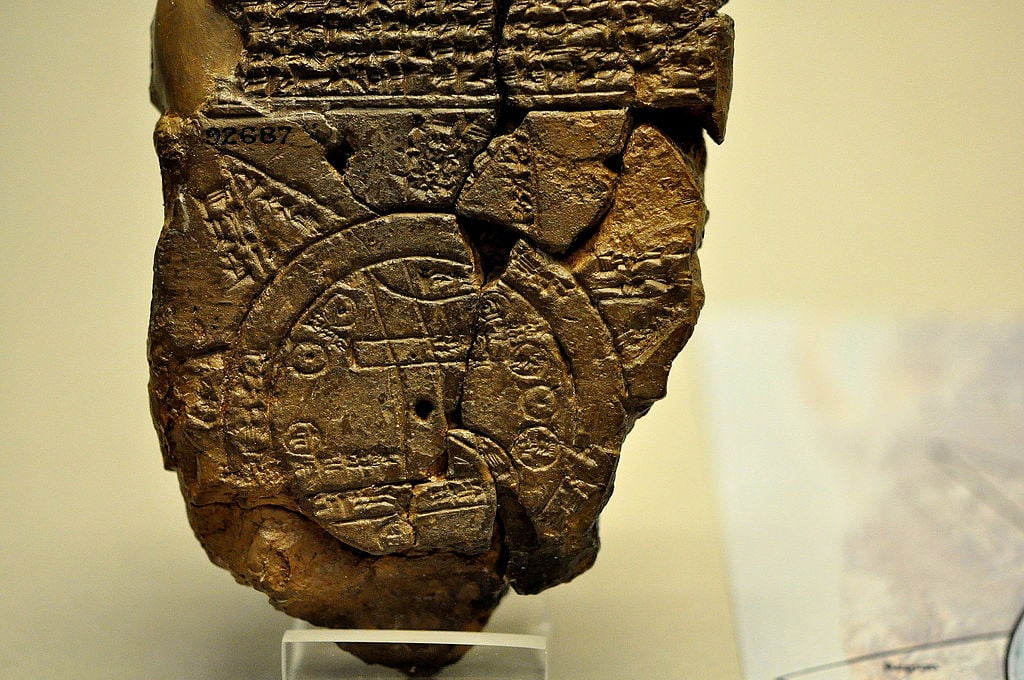
Other texts presented Babylon itself as a sacred center. Babylonian ideas about the wider world are also preserved in the ancient Babylonian map of Mesopotamia, a cuneiform tablet depicting Babylon within a larger geographical and mythological landscape. Students also studied Tintir, a composition containing ceremonial names for Babylon as well as its temples, shrines, gates, and streets. The text presented the city as an important religious center.
The curriculum was not identical across Babylonia. Students in Nippur placed greater emphasis on Ninurta and local traditions instead of the Marduk-centered material common in northern Babylonia. The contrast shows that formal education could also preserve distinct local religious traditions.
Students offered school tablets to the gods
Some school exercises became votive offerings. Students prepared clay tablets containing exercises and prayers and deposited them in temples, often for Nabû, the god associated with scribal knowledge. Thousands of fragments of such tablets have been found at a temple of Nabû in Babylon. Some accounts describe students collecting clean clay from sacred locations. Rituals and incantations could accompany the process. The student then inscribed the tablet and took it to a temple as an offering.
Writing and temple worship remained closely connected in Babylonian elite culture. Cuneiform cylinders linked to Nebuchadnezzar II similarly record royal temple restoration and devotion to the gods. Researchers suggest that depositing a school tablet may have marked an important stage in a student’s education.
Texts taught proper behavior toward the gods
Advanced students also copied works dealing with suffering, morality, and divine punishment. One was Ludlul bēl nēmeqi, often called the “Tale of the Righteous Sufferer.” It tells of a man who experiences illness and social ruin after losing divine favor before eventually recovering through Marduk’s intervention.
Another text, the “Counsels of Wisdom,” offered more direct guidance. It encouraged prayer, offerings, and reverence for the gods. It also warned against excessive drinking, gossip, laziness, and mistreating others. The works connected religious belief with everyday conduct and showed students how their actions could affect their relationships with both gods and other people.
Zaia’s study suggests scribal education served two purposes. It trained young people for professional careers while passing religious knowledge and social expectations to a new generation. Those lessons continued into adulthood. Scribes, priests, and scholars later used the traditions they had learned as students to preserve, interpret, and sometimes reshape Babylonian religious life.
See all the latest news from Greece and the world at Greekreporter.com. Contact our newsroom to report an update or send your story, photos and videos. Follow GR on Google News and subscribe here to our daily email!

