



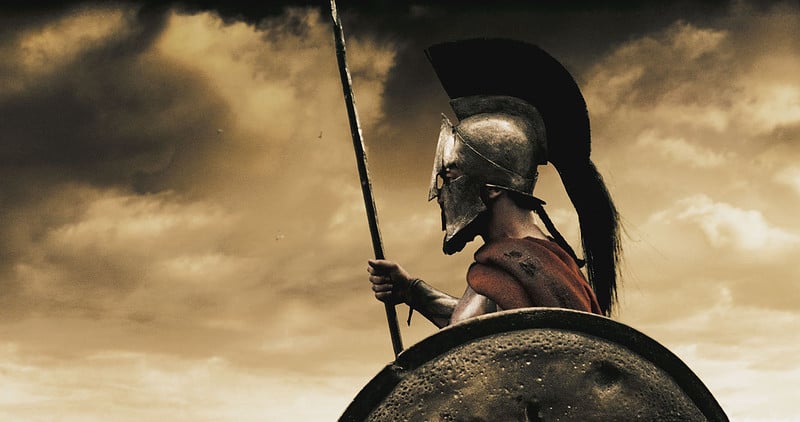
Among the thousands of ancient Greeks who faced the invading army of the mighty Persians at the Battle of Plataea in 479 BC was a commander from Sparta, Amompharetus—the son of Poliades—who stubbornly refused to retreat, thus changing the course of the battle. Although little is known about the Spartan, Herodotus preserved an extraordinary passage about his actions during the final hours before one of ancient Greece’s most decisive victories.
Amompharetus was a Spartan officer whom Herodotus described as the leader of the Pitanate battalion. He served under Pausanias, the Spartan commander who led the allied Greek forces against the Persian army of Mardonius following Xerxes’ withdrawal from Greece.
By the time the armies faced each other near Plataea in Boeotia, Persian cavalry had made the Greek position increasingly difficult. Their access to water had been disrupted and their supply lines threatened. The Greek commanders therefore decided to withdraw during the night to a more secure position.
Amompharetus, the Spartan who would not budge
There was one problem, however—Amompharetus refused to go. According to Herodotus, he had not attended the council at which the withdrawal was agreed and interpreted the order as an act of surrender and therefore cowardice. He declared that he would not flee from the Persians or bring disgrace upon Sparta.
Pausanias and another Spartan commander, Euryanax, repeatedly attempted to persuade him. Amompharetus remained stubbornly unmoved. The dispute eventually produced one of the most striking scenes in Herodotus’ account of the Persian Wars. Amompharetus lifted a large stone with both hands and threw it at Pausanias’ feet, declaring it to be the pebble with which he “voted against fleeing” from the enemy. Pausanias reportedly responded by calling him a madman (“μαινόμενον”). Eventually, the rest of the Spartan force began withdrawing without him. Only after realizing that Pausanias really intended to leave did Amompharetus order his men to follow.
The delay was consequential. Persian cavalry soon discovered the Greek movement, while Mardonius interpreted the withdrawal as evidence that his opponents were fleeing. The Persians advanced, helping set in motion the decisive confrontation at Plataea.
Amompharetus died fighting at Plataea
Amompharetus survived his confrontation with Pausanias, but not the battle that followed. The Greeks ultimately crushed Mardonius’ army at Plataea, effectively ending the Persian attempt to conquer mainland Greece. Herodotus later ranked Amompharetus alongside Posidonius and Philocyon among the Spartans who distinguished themselves for their courage in the fighting. His body was buried among the honored Spartan dead. Centuries later, Plutarch also recorded Amompharetus’ stubborn refusal to retreat in his account of the battle (Life of Aristides 17).
His refusal to withdraw may have been militarily reckless, but the episode preserved something rarely seen in accounts of Sparta: the personality of an individual Spartan warrior. For Amompharetus, the commander from Sparta, even a tactical retreat from Plataea apparently looked too much like running away.
See all the latest news from Greece and the world at Greekreporter.com. Contact our newsroom to report an update or send your story, photos and videos. Follow GR on Google News and subscribe here to our daily email!

