



Ten years after COSCO became the controlling shareholder of the Port of Piraeus, the Chinese shipping giant can point to a transformation that has helped make Greece’s largest port one of the Mediterranean’s most important maritime hubs.
However, the anniversary also comes at a time when Piraeus has become part of a much larger geopolitical story. Just west of Athens, the revival of Elefsina is being supported by American financing and a broader effort to develop new shipbuilding, logistics, and energy capabilities. The project is not simply another investment in Greek maritime infrastructure. The US government has explicitly linked it to concerns over China’s growing influence in the region.
The result is a new strategic dimension to the story of COSCO’s decade in Greece. Piraeus reflects the scale of China’s success in establishing a foothold in European infrastructure, while Elefsina is emerging as part of an effort by the United States and its partners to build an alternative center of maritime and industrial capacity.
Ten years of COSCO in Piraeus
COSCO entered Piraeus before becoming the dominant shareholder in Piraeus Port Authority, having already taken over the operation of container terminals at the port. In 2016, the Chinese state-owned shipping group acquired its initial 51 percent stake in Piraeus Port Authority as part of a broader agreement that eventually gave it a 67 percent holding.
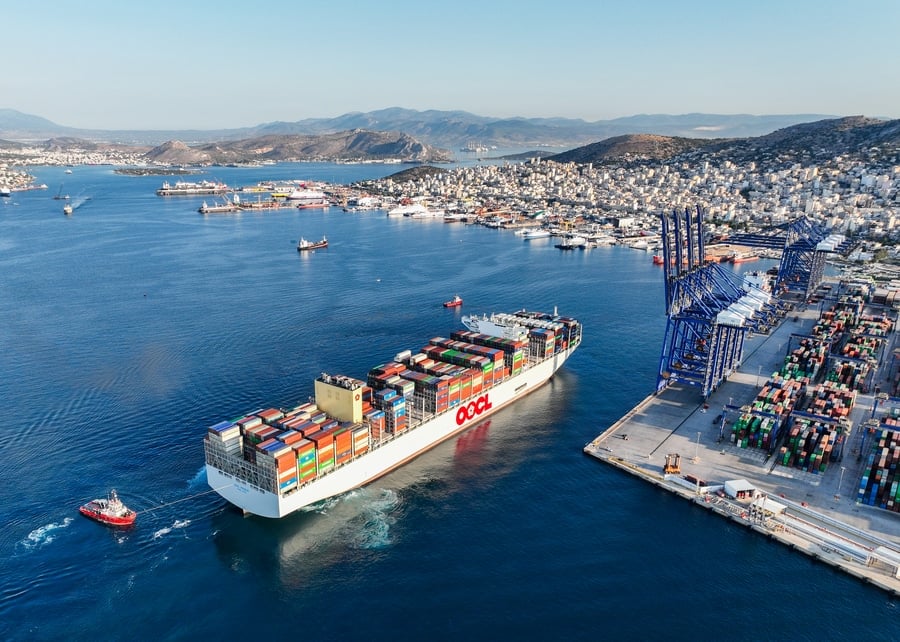
Over the following decade, Piraeus expanded its activities across container shipping, cruise operations, ferry services, ship repair, and vehicle transport. The port strengthened its position as a major transshipment hub connecting Asia, Europe, and the Mediterranean, while also remaining Greece’s principal gateway to the islands.
For COSCO, Piraeus became one of the most visible examples of Chinese investment in European infrastructure. For Greece, the investment brought capital, development, and a higher international profile for a port whose strategic location had long been recognized but whose potential had not been fully realized.
Yet the very success of COSCO’s investment also attracted increasing attention in Washington.
Washington’s concerns over Chinese influence
As competition between the United States and China increasingly extended beyond trade and technology to ports, supply chains, energy, and strategic infrastructure, Piraeus became a symbol of Beijing’s growing presence in a region of particular importance to Washington. Those concerns have recently been voiced publicly by US Ambassador to Greece Kimberly Guilfoyle.
In comments reported by Greek Reporter, Guilfoyle described COSCO’s acquisition of the Port of Piraeus as an “unfortunate event” and suggested that there were “ways to bypass this.” Her remarks came as discussions over the development of Elefsina as a new maritime and logistics center gained momentum.
The comments brought into the open what US policy documents had already indicated: Washington sees the development of alternative maritime infrastructure in Greece as having strategic importance. That is where Elefsina enters the story.
America’s bet on Elefsina

The US International Development Finance Corporation committed a $125 million loan to ONEX Elefsis Shipyards and Industries to support the acquisition, rehabilitation, and expansion of the Elefsina shipyard.
The DFC has been unusually direct about the strategic rationale behind the investment. In its description of the project, the agency noted that COSCO had acquired a majority interest in Piraeus and stated that its support for Elefsina “countered efforts by the Government of China to expand its influence in the region.”
A DFC public information summary went further, saying the investment would help ensure that the Elefsina shipyard remained controlled by an investor aligned with US interests and would counter a potential acquisition by entities affiliated with the Chinese government. The financing was therefore about more than restoring a struggling Greek shipyard.
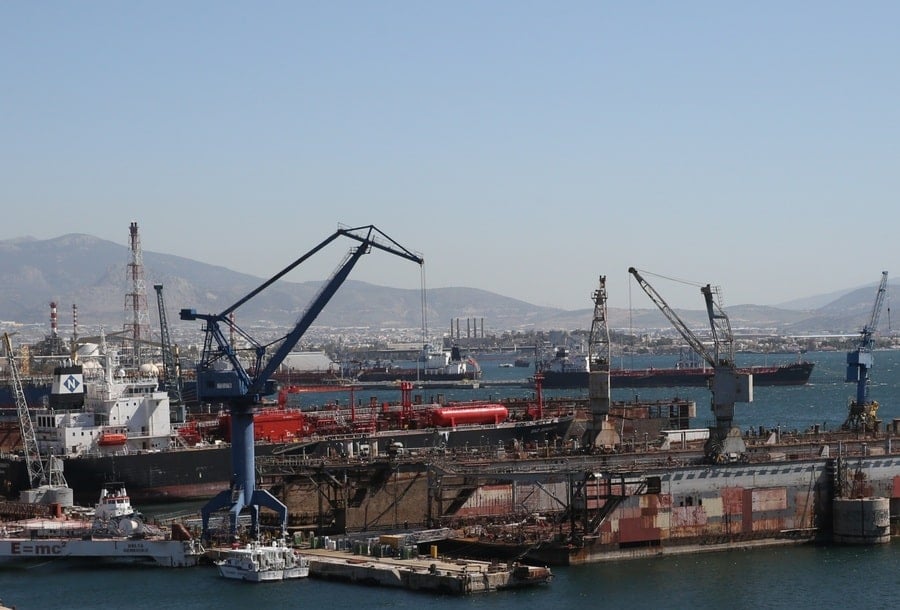
The US envisioned Elefsina as a strategically vital maritime and energy hub, particularly because of its location near major shipping routes and its proximity to the Revithoussa LNG terminal. The modernization plan includes expanded capacity for ship repair and upgrades, including vessels involved in the energy sector. Located roughly twelve miles from Piraeus, Elefsina occupies a strategic position within the same broader maritime landscape that COSCO helped reshape over the past decade.
A different role than Piraeus
Elefsina should not, however, be presented simply as a replacement for Piraeus. The two facilities serve different functions. Piraeus is one of Europe’s major commercial ports, handling containers, cruise ships, ferries, and millions of passengers while serving as a central transshipment hub.
Elefsina’s emerging role is more closely connected to shipbuilding, ship repair, energy infrastructure, and potentially wider logistics and defense activities. That distinction is important. The story is not necessarily about one port replacing another but about Greece developing another major maritime asset with the backing of a different set of international partners.
The DFC itself has described Elefsina as a maritime and energy supply hub capable of supporting LNG shipping and regional energy security. The project is intended to expand shipyard capacity while supporting broader US and Greek strategic interests in the Eastern Mediterranean.
Greece between two investment powers
This creates a delicate but potentially advantageous position for Greece. Athens has no immediate reason to abandon COSCO’s investment in Piraeus. The Chinese company remains the dominant shareholder in Piraeus Port Authority, and the port continues to play an important role in Greece’s shipping and transport economy.
At the same time, Greece has deepened its strategic relationship with the United States and welcomed American-backed investment in Elefsina. Rather than a simple choice between Beijing and Washington, Greece is increasingly developing maritime infrastructure through multiple international partnerships.
Piraeus represents the legacy of Chinese investment during the previous decade, while Elefsina represents a newer effort involving American financing and a broader Western strategic interest in rebuilding Greek industrial and maritime capacity. The geopolitical competition surrounding the two facilities also reflects a larger change in the way ports are viewed.
Ports are no longer seen simply as commercial gateways. They are increasingly tied to supply chains, energy security, military mobility, shipbuilding, and national security. For Washington, Chinese control of a strategically located European port raises questions that extend far beyond container traffic.
Piraeus remains a highly visible example for Beijing of its ability to establish a significant commercial presence at one of Europe’s most strategically located maritime crossroads. For Greece, the challenge—and the opportunity—is to benefit from both Piraeus and Elefsina while preserving its own strategic interests.
The next decade
Ten years after COSCO’s investment changed the trajectory of Piraeus, Greece’s maritime future is entering a new phase. The first decade demonstrated how foreign investment could help transform a major but underdeveloped port into an internationally important hub.
The next decade may be defined by the question of whether Elefsina can emerge as another major pillar of Greek maritime power, built around shipbuilding, energy, logistics, and strategic cooperation with the United States and other allied partners. Piraeus and Elefsina are not identical projects, nor are they necessarily destined to become direct competitors.
Nonetheless, their development tells a larger story about Greece’s growing importance in the geopolitical contest over infrastructure, supply chains, and control of the Mediterranean’s strategic gateways. Ten years after COSCO transformed Piraeus, America is betting that Elefsina can help shape Greece’s next maritime chapter.
See all the latest news from Greece and the world at Greekreporter.com. Contact our newsroom to report an update or send your story, photos and videos. Follow GR on Google News and subscribe here to our daily email!

