



Among the most memorable conversations preserved in Plutarch’s Life of Pyrrhus stands the dialogue between Pyrrhus, the ancient Greek king of Epirus, and his trusted adviser and Epicurean philosopher, Cineas. Their exchange illuminates the restless nature and the paradox of human striving.
Pyrrhus, driven by the desire for expansion, envisioned a campaign against Rome. Cineas, celebrated for his wisdom, asked the questions that clarified the purpose behind the king’s determination. What emerges is a historical glimpse into the psyche of one of the era’s greatest warriors.
The dialogue: Pyrrhus’ vision and Cineas’ questions
The historian Plutarch recounts that as Pyrrhus outlined his plans to invade Italy, his advisor Cineas pressed him with practical questions. When Pyrrhus spoke confidently of conquering Sicily, then Carthage and Libya, and eventually dominating Greece, Cineas asked what would come after all that. Pyrrhus replied with a smile that they would rest, drink wine, and enjoy conversation.
Cineas challenged him further: why not enjoy those pleasures now, without danger or effort? Pyrrhus did not dismiss the point, acknowledging its logic, but he did not abandon his goals.
The dialogue preserves both perspectives: Cineas’ practical reasoning and Pyrrhus’ deeper understanding of desire and the human drive toward achievement.
Pyrrhus’ perspective on ambition
To begin with, Pyrrhus embodies the restless energy of conquest. Unlike Cineas, he valued not just the outcome but the journey itself. To him, victory was a stage in a larger narrative rather than the conclusion. He was aware that the experience of travel, planning, and challenge was significant in and of itself. Conquest offered meaning and identity to kingship.
His response to Cineas shows awareness without renunciation. He accepted the practical truth that leisure and pleasure could be attained without campaigns, yet he understood that ambition drives action. The pursuit, campaign, and very motion toward a goal, was central to his existence. Rest and leisure without effort would feel hollow to him. Pyrrhus’ perspective reflects a historical reality: Hellenistic rulers measured life by deed, success, and exertion of power and not merely by comfort. The dialogue of the king with the philosopher mirrors the practical dilemmas of this period’s rule.
This insight also explains his later campaigns. Pyrrhus continued to pursue glory despite being aware of the risks.
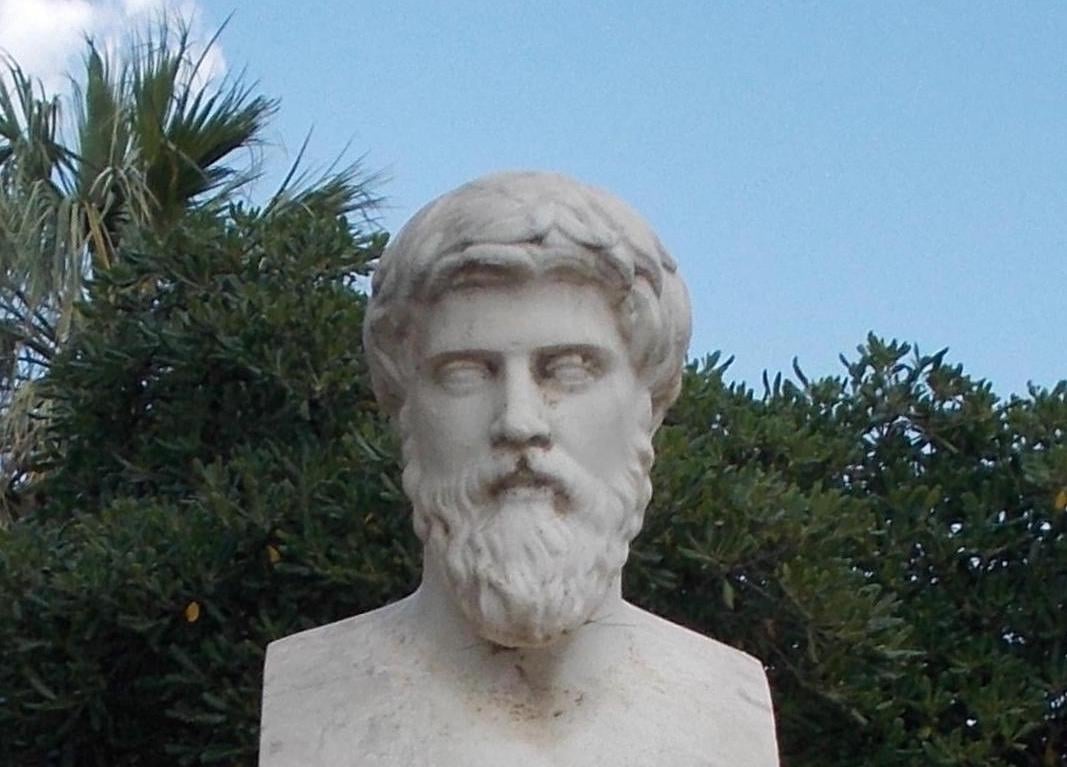
Cineas and the philosophy of questioning
Cineas embodies a different dimension of leadership—one grounded in reflection, foresight, and the weighing of risk. His inquiry about the possibility of enjoying peace and leisure in the present serves less as skepticism than as a philosophical challenge. Through this, he conveys the appeal of prudence and the idea that fulfillment can be found in contentment in the present rather than in distant ambition.
Yet, historically, Cineas is not portrayed as morally superior. In fact he even followed Pyrrhus in his campaigns. Plutarch includes the exchange to reveal the tension between reason and desire.
At its heart, the conversation underscores the human side of leadership. Cineas’ probing questions expose the anxieties that accompany command—the cost of war, loss of men, and uncertain meaning of victory. Pyrrhus’ replies, by contrast, reveal both his acceptance of these risks and his conviction that action itself is what gives life meaning.

Ambition, process, and the historical context: The dialogue between Pyrrhus and Cineas
The dialogue between Pyrrhus and Cineas captures the enduring tension between immediate satisfaction and purposeful action. Cineas advocates for efficiency and rest, while Pyrrhus values motion, challenge, and experience. In many ways, Pyrrhus’ outlook anticipates later reflections on human striving—the idea that the journey itself can hold as much meaning as the destination.
Pyrrhus’ own life embodies this balance. He won great victories yet suffered devastating losses. He confronted the cost of ambition and the fragility of human effort, yet continued to pursue action and engagement with the world. In this sense, the dialogue between king and adviser is not merely philosophical. It is deeply rooted in the historical reality of Pyrrhus’ choices.
His campaigns in Italy and Sicily proved his brilliance as a commander. At Heraclea and Asculum, he defeated the Romans with tactical ingenuity, employing war elephants and disciplined phalanxes in ways unfamiliar to his enemies. His victories, though costly, revealed a mind of daring strategy and restless thirst for glory. Even when fortune turned, Pyrrhus retained the admiration of contemporaries such as Hannibal, who ranked him among history’s greatest generals.
See all the latest news from Greece and the world at Greekreporter.com. Contact our newsroom to report an update or send your story, photos and videos. Follow GR on Google News and subscribe here to our daily email!

