



Few institutions from Ancient Sparta have attracted as much fascination as the Crypteia (also Krypteia). Modern descriptions often portray it as a secret force that hunted slaves (Helots) throughout the countryside. While this image stems from a fundamental ancient tradition, it does not reveal the full complexity of the institution.
The Crypteia may have served several purposes. As part of Sparta’s rigorous training system, it taught young Spartans to endure hardship while developing stealth, independence, and military cunning. Over time, Sparta may have adapted these same skills for purposes of political control.
The meaning of the Crypteia and training in Sparta
The name “Crypteia” comes from the Greek word kryptos (κρυπτός), meaning “hidden” or “concealed” and reflects the institution’s emphasis on secrecy and concealment. A “trainee” was expected to remain out of sight while quietly traversing unfamiliar terrain. Discovery resulted in punishment and signaled a failure to complete the challenge successfully. The Crypteia of Sparta therefore involved training in awareness, patience, resourcefulness, and self-control.
Spartan education typically prepared young men for life within a collective society. The agoge emphasized discipline, obedience, and cooperation, while the Crypteia introduced a different kind of challenge. Young Spartans entered the countryside alone or with limited support. Removed from the security of their households, the boys had to find food and shelter while avoiding detection. This resembled a controlled form of exile. The city temporarily withdrew its protection from the boys, yet Spartan expectations continued to shape their actions and behavior.
Classical description of Spartan endurance and the Crypteia
The philosopher Plato provides one of the earliest surviving references to the Crypteia. In the dialogue Laws (Nomoi), the Spartan speaker Megillus describes the training practices that prepared Spartans to endure hardship and pain. Megillus initially mentions physical contests and other forms of harsh exercise in Sparta prior to introducing the Crypteia as an especially demanding training institution.
His description offers a vivid picture of Spartan endurance. Young men traveled through the countryside during winter without shoes, walking barefoot across cold ground and challenging terrain. They also lacked proper covering for their bodies and, according to the description, sometimes went completely naked. The exercise therefore exposed them directly to rain, wind, cold, and unpredictable weather conditions. They could not depend on warm clothing or comfortable shelter. Instead, they learned to endure physical discomfort without complaint.
Megillus also explains that the youths had no servants to assist them. They were responsible for their own needs, carried their own burdens, and traversed regions both by day and night. The training demanded constant alertness. A young Spartan could not assume he was safe after sunset or rely on others for food and assistance. Each participant faced the same basic conditions. He depended on his own physical abilities, judgment, and discipline.
This also prepared young Spartans for the realities of war. Soldiers often marched through difficult terrain, while scouts had to operate without supplies and avoid detection. Commanders needed men capable of surviving beyond familiar territory. Warriors could be exposed to cold, hunger, and exhaustion during campaigns. The Crypteia therefore provided a form of training to young men in Sparta that would prepare them to respond efficiently even under the most trying of circumstances, ensuring that hunger would not overcome them and cold would not bring them to their knees.
The art of concealment in the Crypteia of Sparta
An ancient commentator on Plato, preserved by the scholar David Ruhnkenius in his Scholia in Platonem, explains the Crypteia through the themes of concealment and survival. According to this account, a young man left the city for a period of time and wandered through mountainous terrain while staying hidden. He could not sleep without fear, as discovery by others remained a constant threat. The young man carried no regular provisions and relied on no servants. Instead, he survived through theft and practical strategies.
The commentary also describes another form of the exercise in which Spartan youths spent an entire year outside the city, relying on theft and military cunning to survive while avoiding detection. If they were discovered, their instructors punished them. This aspect of the Crypteia resembled another well-known element of Spartan education. Young Spartan boys were permitted to steal food as part of their training, but they were punished when they carried out the theft poorly or allowed themselves to be caught.
The lesson was not intended to praise dishonesty for its own sake. Rather, it developed stealth, adaptability, and practical intelligence. The Crypteia extended this principle further. The young Spartan was expected to obtain food without assistance, observe his surroundings, assess danger accurately, and conceal his movements.
The commentary ultimately presents the Crypteia as an extension of skills associated with reconnaissance and irregular warfare.

A temporary departure from social norms
The Crypteia also contained an unusual element. it placed young Spartans outside the normal conditions of civic life. Sparta demanded strict obedience, with citizens expected to follow rigid social and military rules. Yet the Crypteia required youths to survive through methods that ordinary society normally prohibited.
They stole food, moved secretly, and lived without direct supervision, relying largely on their own judgment. This temporary departure from conventional norms may have been a deliberate part of the training. The young Spartan learned how society functioned when ordinary protections were removed. He experienced hunger, uncertainty, and isolation while learning to act without immediate guidance.
The exercise created a controlled encounter with harsher conditions and tested whether a youth could maintain discipline even without external authority or support. In this sense, the Crypteia trained young Spartans to operate in a world governed by necessity and adaptation.
Nonetheless, the Crypteia did not eliminate discipline. Rather, it transformed discipline from something imposed externally into something carried within the individual.

The darker side of Spartan training
The biographer Plutarch presents a much darker account of the Crypteia in his Life of Lycurgus. He explains that selected young Spartans entered the countryside with limited supplies, hiding during the day and on the move at night. According to this tradition, they killed Helots whom they encountered.
Plutarch also states that they occasionally entered fields during daylight and targeted strong and capable Helots. This account gives the Crypteia a political dimension: Sparta depended heavily on Helot labor, with Helots working the land and sustaining the Spartan economy. However, their large population also resulted in a constant source of anxiety among the Spartan ruling class. A secret institution could monitor the countryside, intimidate communities, and target individuals whom Spartan leaders viewed as potential threats. The Crypteia may therefore have served as a tool of internal security and social control.
Yet Plutarch does not accept every tradition without question. He reports that the philosopher Aristotle connected the violence against Helots during the Crypteia with Lycurgus, the legendary lawgiver of Sparta. Plutarch expresses serious doubt, arguing that such cruelty did not align with Lycurgus’ character. He instead suggests that these practices evolved later on, particularly after a devastating earthquake weakened Sparta and contributed to a major Helot and Messenian uprising. This observation changes the historical narrative.
The brutal side of the Crypteia may not have belonged to its earliest form. Sparta may have adapted an older survival and endurance exercise into a tool of political control during a period of crisis.

Survival training and political control of Sparta
The Crypteia may have originally emerged as one of the most demanding stages of Spartan education. Young men learned to fend for themselves, travel without support, and remain concealed. Over time, Spartan authorities may have adapted this training institution for political purposes. The same skills that cultivated endurance and stealth could also be applied to surveillance. A young Spartan operating in secret could observe Helot communities, identify potential leaders, and report signs of unrest.
During periods of crisis, Sparta may have employed the Crypteia more aggressively. Targeted violence could have been directed against Helots whom authorities viewed as potential organizers of resistance. Such actions would have served both to intimidate communities and reinforce Spartan control. The Crypteia may therefore have represented a combination of military training and political authority.
Modern accounts sometimes portray the Crypteia as a system of continuous mass violence against the Helot population. However, the surviving ancient evidence does not present such a detailed or conclusive picture. Plutarch does not describe a systematic effort to destroy the entire Helot population. He provides no numbers and does not portray the killings as ongoing campaigns of extermination. Therefore, the available evidence does not necessarily support an interpretation of indiscriminate destruction.
Instead, the Crypteia may have focused on specific individuals. Strong or influential Helots may have attracted suspicion because Sparta viewed them as potential leaders of resistance. Such violence would nonetheless have created fear and strengthened Spartan authority. However, targeted political violence is distinct from a policy of universal destruction.
The institution likely evolved over time in response to Sparta’s changing circumstances. As the city faced different threats throughout its history, the Crypteia may have adapted to serve new purposes.
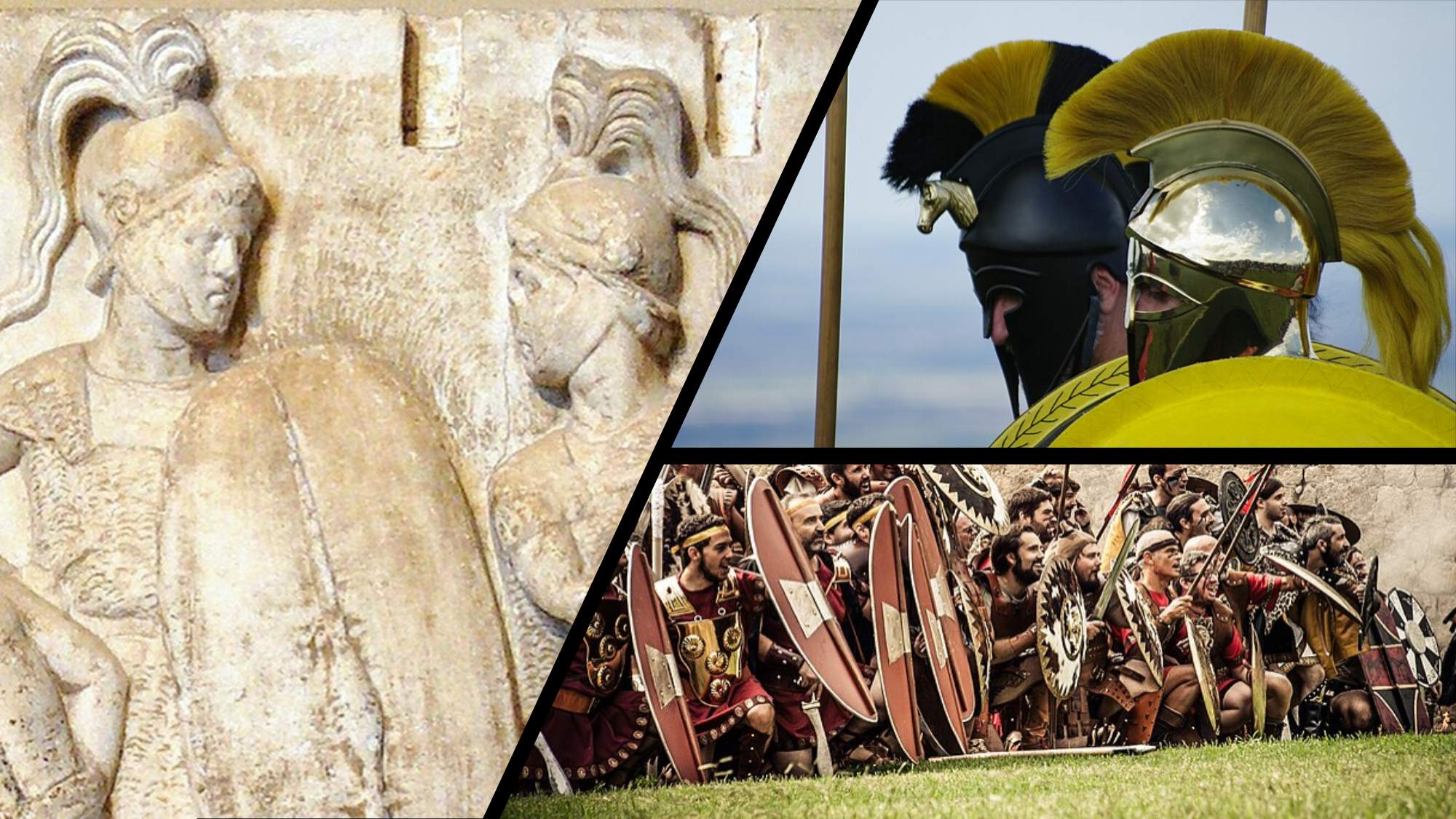
Sparta’s Crypteia: Between education and war
Sparta valued order, obedience, and collective discipline. Yet the city also required warriors capable of acting independently when circumstances demanded it. The Crypteia taught young Spartans obedience through self-reliance, while strengthening civic loyalty through a temporary separation from the community.
It developed individual abilities within a larger collective system and encouraged self-sufficiency without weakening loyalty to the state. Through the experience, the young Spartan learned that success depended not only on physical strength but also on intelligence, adaptability, and judgment. The Crypteia therefore represented a transition between education and warfare. The youth moved beyond ordinary training and entered a harsher environment that reflected the challenges of military life.
At the same time, he confronted the boundaries between law and survival while living under the harsh demands of nature. Within the exercise, survival sometimes required actions that ordinary society discouraged. Yet Sparta viewed those same actions as valuable when they contributed to military effectiveness.
The Crypteia deserves neither romantic celebration nor simple condemnation. It was not merely a harmless wilderness exercise, as Plutarch preserves traditions describing violence against Helots, while Sparta’s dependence on Helot labor created lasting political tensions. Nonetheless, it was also more than a secret police force or an instrument of violence, and the institution likely evolved over time. Its earlier form may have focused on testing young men through hardship and survival, but later Spartan authorities possibly expanded its role by incorporating political and security functions.
The Crypteia may therefore have served two purposes. Firstly, it trained Spartan youths to endure extreme conditions and survive without support. Secondly, it provided Sparta with individuals skilled in secrecy, surveillance, and internal security. Ultimately, the Crypteia of Sparta stood between the wilderness and city, rigorously training young men to survive beyond ordinary norms while placing those abilities in service of the Spartan state.
See all the latest news from Greece and the world at Greekreporter.com. Contact our newsroom to report an update or send your story, photos and videos. Follow GR on Google News and subscribe here to our daily email!

