



Stoicism and Christianity have stood side by side in intellectual discussions for nearly two thousand years. Both traditions emphasize virtue, self-control, endurance, moral discipline, and the pursuit of a higher life. Their similarities often surprise modern readers. Early Christians frequently engaged with Greek philosophy, while Stoic ideas helped shape the moral vocabulary of the Roman world in which Christianity emerged.
Beneath these similarities, however, lies a profound difference. Stoicism and Christianity offer two distinct visions of reality, humanity, suffering, and the relationship between God and mankind. Stoicism seeks the perfection of the human soul through alignment with the divine order of the cosmos, while Christianity strives for the transformation of humanity through communion with the personal God revealed in Christ.
The shared love of virtue and discipline in Christianity and Stoicism
Virtue is central to both Stoicism and Christianity. The traditions reject the idea that wealth, social status, pleasure, or physical comfort can provide true happiness.
The Stoics taught that virtue alone is a genuine good, and external circumstances remain outside human control. Therefore, a wise person should not allow fortune to rule the soul. Christianity likewise teaches that earthly possessions cannot provide lasting fulfillment. The New Testament repeatedly warns against attachment to worldly riches and encourages believers to seek spiritual treasures.
Both traditions also emphasize self-control. Stoics trained themselves to master fear, anger, desire, and grief, while Christians practice fasting, prayer, and spiritual discipline to overcome disordered desires.
Because of these similarities, some Christian writers admired Stoic philosophers. John Leland, an 18th-century Christian scholar, praised the Stoics for their moral severity. However, he argued that Stoicism lacked essential elements of Christian spirituality, particularly repentance, humility, and dependence on divine grace.
The divine element within humanity
The greatest difference between Stoicism and Christianity concerns the nature of God. Stoicism developed within the religious world of ancient Greece and remained deeply connected to Greek polytheism. The Stoics were devout philosophers who worshiped and revered the divine order of the cosmos. Zeus represented the highest expression of divine reason, governing and animating the universe. The gods of Greek tradition remained part of this divine reality.
Ancient Greek religion did not possess a single dogmatic system comparable to later religious traditions. Instead, it encompassed a wide range of myths, rituals, local cults, and philosophical interpretations. Yet Greek thought generally understood gods and humans as existing within the same cosmic order. The boundary between humanity and divinity was not as absolute as it later became in Judeo-Christian theology.
This idea appears throughout Greek tradition. Ancient poets such as Homer and Hesiod described relationships between gods and humans, while mythology included heroes who received divine honors after death. Hesiod’s description of the Golden Age, along with the broader Greek mythological tradition, presents humanity and divinity as belonging to a shared genos. Philosophers also explored the possibility that exceptional humans could become godlike. Likewise, Heraclitus famously wrote, “Gods are mortal men, and men are immortal gods.”
Stoicism further developed these ideas. Since human beings possess reason, and reason participates in the divine Logos, the perfected individual could approach the condition of the gods through virtue. This helps explain why Stoic writers described the sage in almost divine terms. The Roman Stoic philosopher Seneca wrote that “a good man differs from God only in time.”
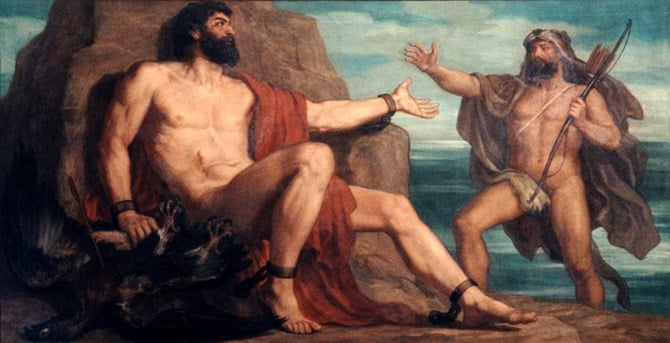
Christianity and Stoicism: Two different understandings of God
Christianity introduced a fundamentally different understanding of the divine. It teaches that God exists apart from creation as its Creator. Humans can participate in divine life, but they never become gods by nature or become equal to God in power, essence, or existence in any way. It is through divine grace that humans can unite with God so that their souls may be rescued from damnation while participating in His life. Eastern Christianity expresses this idea through the concept of theosis, or deification.
Nonetheless, this never allows for the elimination of the distinction between the Creator and creation. Christian theosis therefore differs from the Stoic ideal of becoming “godlike” through the perfection of reason. The Stoic seeks to realize the divine rational principle within himself, while the Christian seeks the salvation of the soul through communion with the transcendent and personal God.
Stoics held an exceptionally high view of human dignity and believed that human reason plays a role in the universal Logos that governs the cosmos. The rational soul contains a divine element, and human beings achieve excellence when they fully realize the rational nature. This belief explains why Stoic philosophers occasionally described the wise person in almost divine terms. Seneca famously summarized this view by stating that virtue brings the human being as close to the divine as possible, leaving time as the only distinction. This statement reflects the Stoic belief that complete morality brings human beings into harmony with divine reason.
Christianity teaches that humanity’s greatness comes from being created in the image of God. Human beings do not discover an independent divine identity within themselves; rather, they receive life and grace from God. Therefore, the Stoic path moves toward self-realization through reason, while the Christian one moves toward salvation through relationship with God.
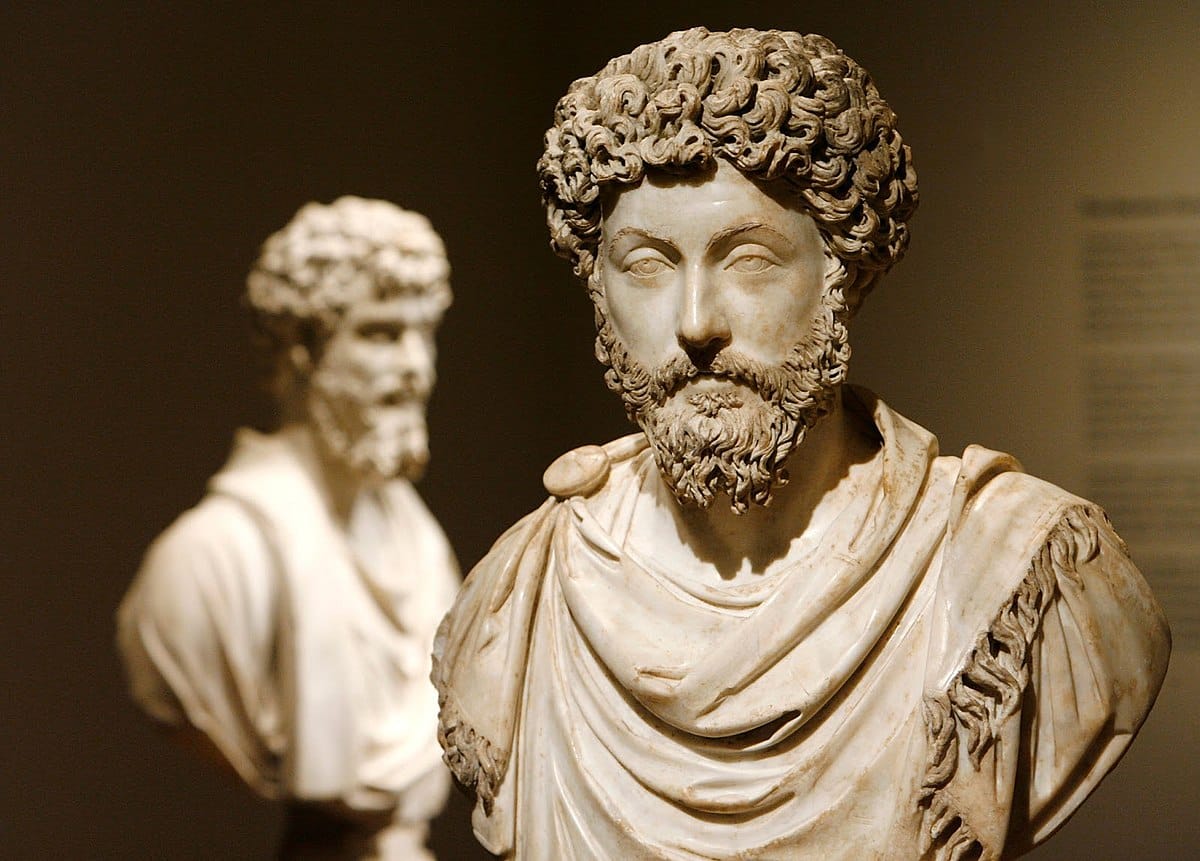
Self-mastery and the question of humility
One of the most striking differences between Christianity and Stoicism appears in the meaning of humility. Ancient Greek culture generally did not view humility in the Christian sense as a primary virtue. The Greek world valued greatness of soul, excellence, honor, and dignity. The philosopher Aristotle praised the greatness of soul in a person or the magnanimous individual who also understood his own worth.
The Christian tradition, nonetheless, transformed the meaning of humility. The Greek concept of lowliness, expressed through words such as tapeinos, originally carried associations with being brought low, degraded, or made to feel insignificant. Christianity transformed humility into a spiritual virtue. For Christians, the humble and those who suffer in this life are believed to hold great importance in the next.
The Stoic ideal, on the other hand, differs in that the sage seeks freedom from dependence on external circumstances. He becomes internally unshaken and self-sufficient. For Christian writers such as Leland, who believed that Stoic self-sufficiency could become a form of spiritual pride, this gives rise to a potential danger. Stoics, however, would argue that one who is wise recognizes his place within the divine order and fulfills his rational nature.
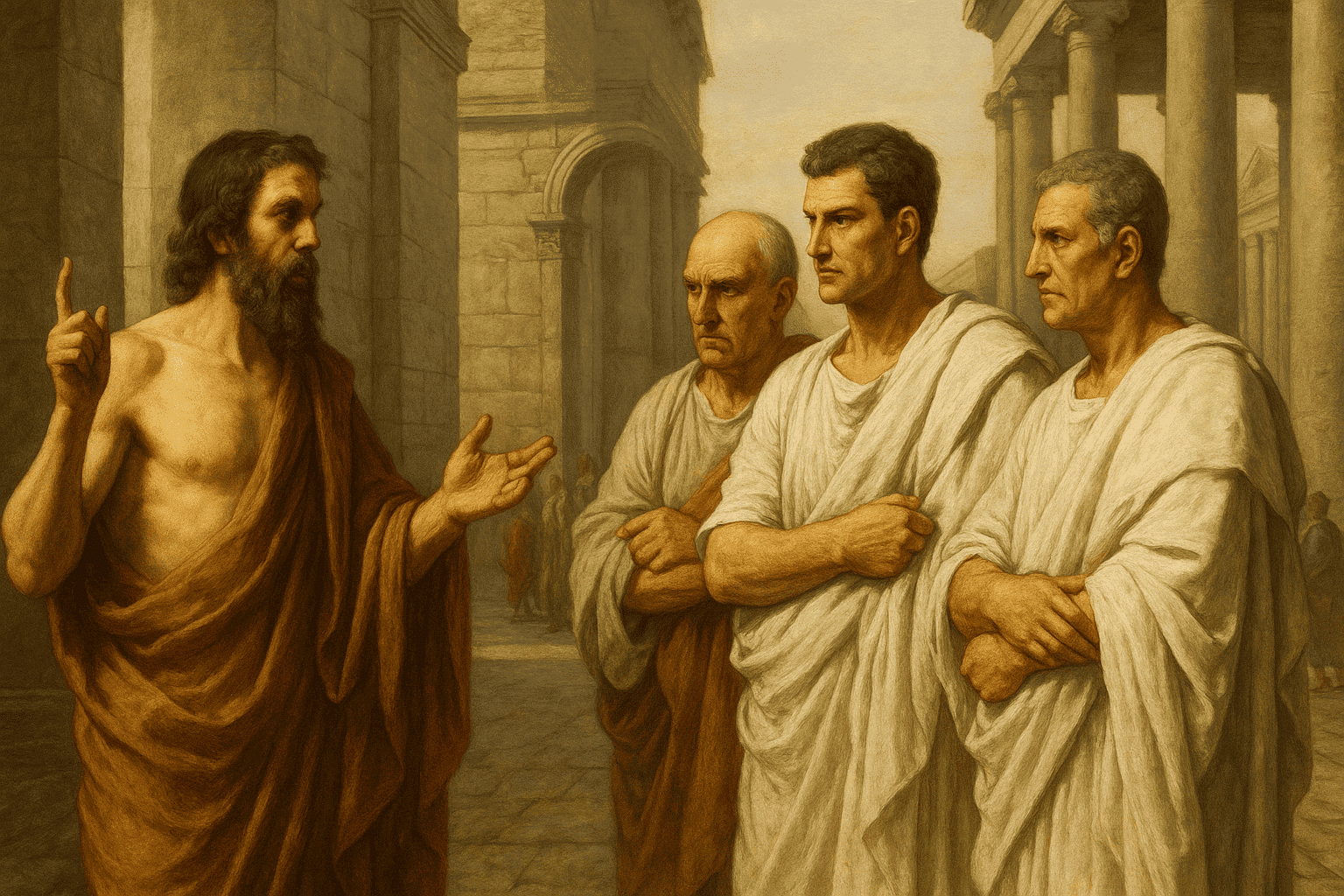
Differing views of emotion and suffering
Stoicism and Christianity also differ in their understanding of emotions. The Stoics taught apatheia, or freedom from destructive passions. However, they did not refer to simple emotional emptiness. Instead, they believed that reason should govern emotional responses. In accordance with Stoicism, one was not to allow grief, fear, or anger to destroy inner freedom. Even in the face of extreme suffering, the wise person should be able to maintain happiness.
Epictetus criticized excessive mourning, such as the grief of Odysseus as portrayed by Homer in the Odyssey, and argued that one who was wise should not be controlled by sorrow. He compared the loss of possessions and loved ones to the loss of that which nature eventually strips away from us.
Christianity takes a different approach. It does not view all emotions arising from suffering as failures of reason. Christ Himself wept at the death of Lazarus, for instance. Therefore, Christians have traditionally understood grief and compassion as compatible with holiness. The Christian goal is not the elimination of emotion. Instead, Christianity seeks the purification of human passions so that they may become expressions of love.
Stoicism seeks freedom from suffering through mastery of judgment, whereas Christianity seeks the salvation of those who suffer through communion with God.

Repentance and forgiveness in Stoicism and Christianity
Another major difference between Stoicism and Christianity concerns repentance. Stoics encouraged self-examination and personal correction. A person should recognize his mistakes and return to a life guided by reason. The Stoic emperor Marcus Aurelius believed that repentance was the greatest punishment that could befall a person.
In contrast, Christianity assigns a deeper religious meaning to repentance, which involves turning back toward God, confessing sin, seeking forgiveness, and restoring communion with the Creator. Stoicism lacked this element because it focused primarily on self-correction rather than reconciliation with God. For the Stoics, the fundamental problem of humanity is irrational judgment and the failure to live in accordance with nature. For Christianity, the problem also includes sin, which damages the relationship between humanity and God.
Stoicism and Christianity share numerous moral ideals. Both encourage courage, discipline, endurance, and the pursuit of virtue as well as reject slavery to desires and excessive attachments to worldly things. However, their ultimate goals differ. Stoicism teaches that humanity attains perfection by aligning itself with divine reason. The wise person becomes free, self-controlled, and godlike through virtue.
Christianity, on the other hand, teaches that humanity achieves salvation through divine grace. Humanity does not save itself through strength alone but through humility, repentance, prayer, and union with God. While Stoicism teaches that one must build up enough strength so as to not be conquered by suffering, Christianity maintains that it is through a union with God that suffering can be transformed and redeemed in accompaniment with love.
The two traditions therefore remain closely connected ethically while being fundamentally different in their metaphysical foundations. Although they share many virtues, the two schools of thought offer contrasting accounts of humanity’s origins, its potential, and the path through which its highest destiny is achieved.
See all the latest news from Greece and the world at Greekreporter.com. Contact our newsroom to report an update or send your story, photos and videos. Follow GR on Google News and subscribe here to our daily email!

