



Millions are heading to theaters this summer for Christopher Nolan’s “The Odyssey,” the mythic action epic starring Matt Damon as the wandering king and Anne Hathaway as his wife Penelope. Long before Damon stepped onto a boat, Homer’s original Odyssey was already carrying real ancient science inside its verses.
Take the ships that ferry Odysseus home. Homer describes the vessels of the Phaeacians as needing no human hand at the helm, finding their way to distant ports and sensing what the sailors aboard want without a word being spoken, a vision of self-guided travel that predates the term “autopilot” by roughly three thousand years.
The epic itself, along with its prequel The Iliad, traces its roots to around 1600 B.C. and was written down closer to 800 B.C., blending myth with details that scholars say mirror real Bronze Age life.
The poem’s real poisons: nepenthe, moly and mandrake
That same inventiveness carries into the plants scattered through the story. Grief drives Helen of Troy to take a Greek magical potion called nepenthe, while the sorceress Circe slips Odysseus’s men a potion that erases their memory and turns them into pigs.
Botanist Rafael Molina-Venegas of Spain’s Donana Biological Station says the drug may have been drawn from henbane or mandrake, since both plants contain compounds that block the brain signal acetylcholine and both saw wide use in the ancient world as painkillers and anesthetics.
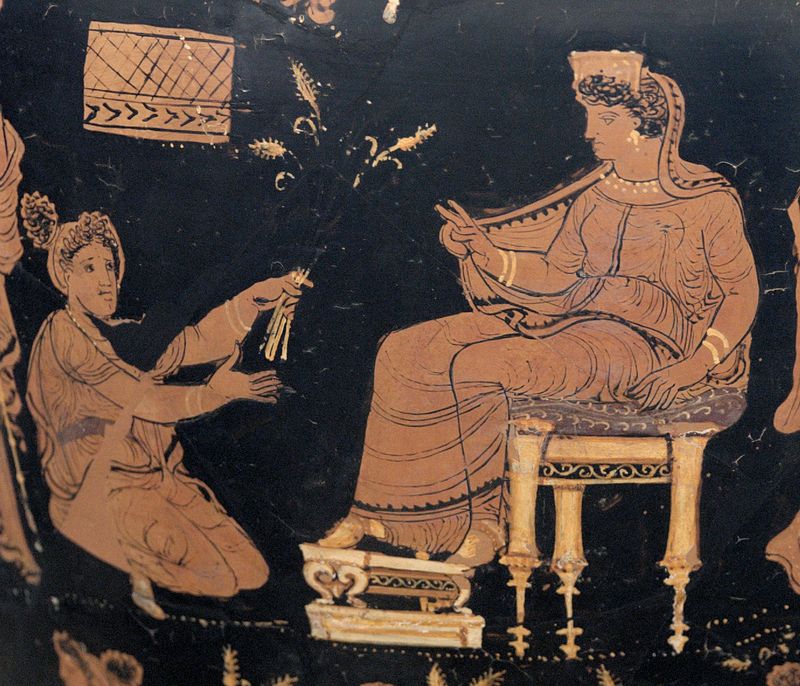
Later, Hermes hands Odysseus a plant called moly, which Homer describes as having a dark root and petals the color of milk, to protect him from Circe’s spell.
Molina-Venegas and fellow researcher Rodrigo Verano argue moly likely points to sea daffodils, known scientifically as Pancratium, local flowers that share those same pale blooms and dark bulbs and whose chemistry works against the very toxins found in henbane and mandrake.
‘The Odyssey’ preserves real ancient science of the stars
The poem’s grasp of the natural world extended to the night sky as well. Before Odysseus sets sail from her island, Calypso instructs him to keep the Great Bear constellation on his left hand as he heads eastward toward home, and the poem also names the Pleiades, Hyades, and Orion.
James Evans, a historian of astronomy at the University of Puget Sound, calls these among the earliest named star groups in Greek history. Later in the story, the seer Theoclymenus warns that the sun has vanished and night has swallowed the world, a vision he delivers just before Penelope’s suitors meet their deaths.

Ancient thinkers such as Plutarch and Heraclitus, along with modern researchers, have read the scene as a memory of a real solar eclipse, one a 2008 study calculated to have occurred on April 16, 1178 B.C.
Steel, shipwrecks and the Bronze Age trade
That same practical knowledge shows up on land, in the poem’s grasp of metalworking and trade. Iron knives and gate fittings appear alongside bronze swords and spears, and one scene points to something closer to steel.
When Odysseus blinds the Cyclops with a heated stake, Homer compares the hiss to the sound of quenching, a smithing technique where hot metal is cooled quickly in water. That trick hardens steel, but it does nothing for plain iron or bronze on their own.

Michael Wright, a former curator at London’s Science Museum, says the passage reads as though its author had personally watched a blacksmith temper a steel edge.
Excavations at the Mycenaean Palace of Nestor in Pylos, Greece, have turned up containers combining gold, silver and bronze, along with a punctured axe head dating to about 1450 B.C., a design that may explain how Odysseus later proves his identity by sending an arrow clean through a dozen lined-up axes.
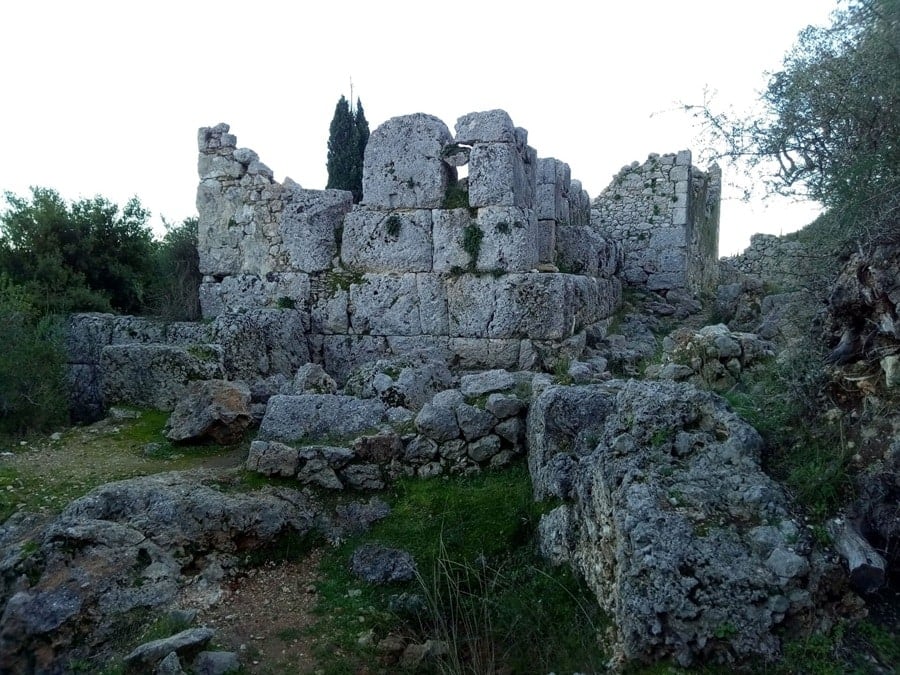
Archaeologist Sharon Stocker of the University of Cincinnati says fresh digs keep backing up details in the text. A shrine on Ithaca where ancient Greeks appear to have worshipped Odysseus as a hero has been dated to between the fourth and first centuries B.C.
A 14th-century B.C. shipwreck uncovered off Turkey’s Ulu Burun in the 1980s supported the poem’s claim of long-distance Bronze Age trade routes.
Naval archaeologist Brendan Foley of Sweden’s Lund University says that boat, a compact and unhurried trading vessel roughly 15 meters long, shows Mediterranean sailors were active across long distances earlier than researchers once assumed.
Odysseus’s own ship carried 52 rowers, meaning it was likely longer and narrower, built for speed rather than cargo.
Why Homer called the sea wine dark, not blue
The poem’s attention to craftsmanship carried into how Homer rendered color, too. His vocabulary leaned almost entirely on black and white, touching purple and red only now and then, a pattern that puzzled 19th-century British Prime Minister William Gladstone.
He was particularly bothered by Homer calling a rainbow purple and the sea wine dark, and he concluded, incorrectly, that ancient Greek eyesight itself must have lagged behind our own.
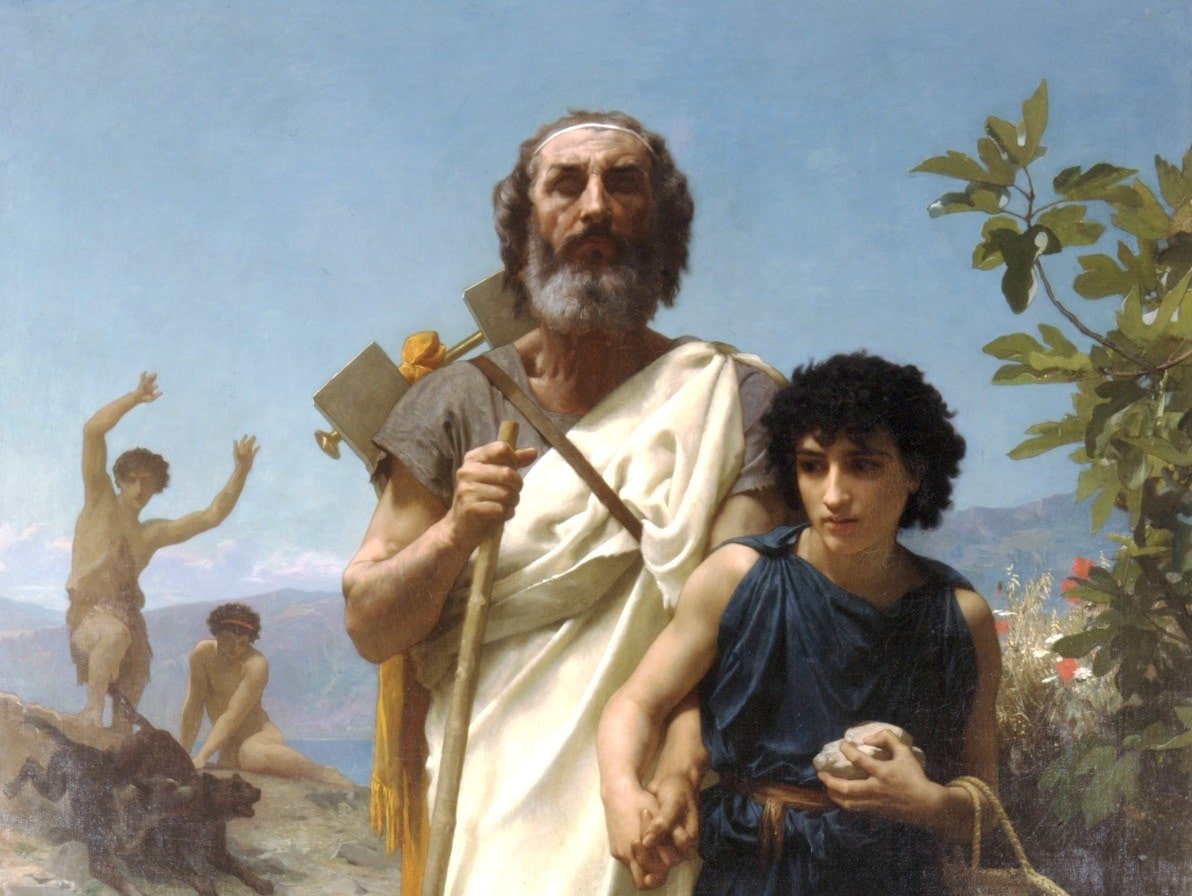
An 1886 article in the journal Nature offered a different theory, suggesting Homer was often describing how bright something appeared rather than its actual hue. Classicist Mark Bradley of the University of Nottingham argues the Greeks were not colorblind at all.
Instead, he says, they organized color around an object’s full character rather than the wavelength of light, which is why the wine dark sea, a phrase Homer reaches for around death or disaster, was meant to carry the same reckless danger as wine, while purple evoked the polished luxury of a king’s robe.
Achilles, the underworld and an ancient case of PTSD
Beyond craftsmanship and perception, the poem also captures something harder to see. Odysseus struggles to find his footing again after years at war, and his descent into the underworld captures that struggle in stranger terms.
The spirits he meets there exist in a muted, colorless in-between, cut off from both life and death. Achilles tells him that a humble life above ground would beat any throne among the dead.

Foley reads the entire episode as an early description of post-traumatic stress, arguing that combat trauma looks much the same whether it happened three thousand years ago or last year.
As people watch Nolan’s ‘The Odyssey,’ the poem behind it is still yielding real ancient science, from the plants ancient healers relied on to the psychological wounds war leaves behind.
See all the latest news from Greece and the world at Greekreporter.com. Contact our newsroom to report an update or send your story, photos and videos. Follow GR on Google News and subscribe here to our daily email!

