



The omission of Astoria from New York City’s official map of immigrant neighborhoods has drawn criticism from Greek American leaders, who argue that leaving out one of the nation’s most important Hellenic communities overlooks generations of immigrants who helped shape the city.
The controversy began after Mayor Zohran Mamdani’s administration released a “New York City Immigrant Enclaves” map as part of a tourism initiative ahead of the 2026 FIFA World Cup. While the map highlights dozens of ethnic communities across the five boroughs, it excludes Astoria, long regarded as the heart of Greek America. The map also initially omitted Manhattan’s historic Little Italy, prompting criticism from Italian American organizations before City Hall said it would update the map.
Konstantinos G. Prentzas, governor of AHEPA Empire State District 6, called Astoria’s omission “deeply disappointing,” saying the neighborhood represents far more than a place on a map.
“We cannot rewrite history, and we cannot erase history,” Prentzas said in a statement. “We have a responsibility to preserve it, honor it, teach it, and share it with future generations.”
He argued that Astoria has served for decades as one of the most important centers of Hellenism in the United States, where Greek immigrants built churches, schools, businesses, cultural organizations and charitable institutions while making lasting contributions to New York’s civic and economic life.
Prentzas also expressed solidarity with the Italian American community, noting that Little Italy’s exclusion raised similar concerns about preserving the city’s immigrant heritage.
“When the history of one community is diminished or ignored, every immigrant community should be concerned,” he said.
AHEPA contends that excluding Astoria disregards the sacrifices and achievements of generations of Greek immigrants and their descendants, calling on City Hall to revise the map to recognize the neighborhood’s historic role in Greek American life.
Astoria’s Place in Greek American History
For much of the 20th century, Astoria became synonymous with the Greek diaspora in the United States. Waves of immigrants settled in the Queens neighborhood, establishing Greek Orthodox churches, language schools, restaurants, cafés, professional offices and businesses that transformed it into one of the largest Greek communities outside Greece.
Today, while Greek Americans have spread throughout the New York metropolitan area, Astoria remains an important cultural and commercial hub, attracting visitors from around the world seeking Greek cuisine, traditions and community institutions.
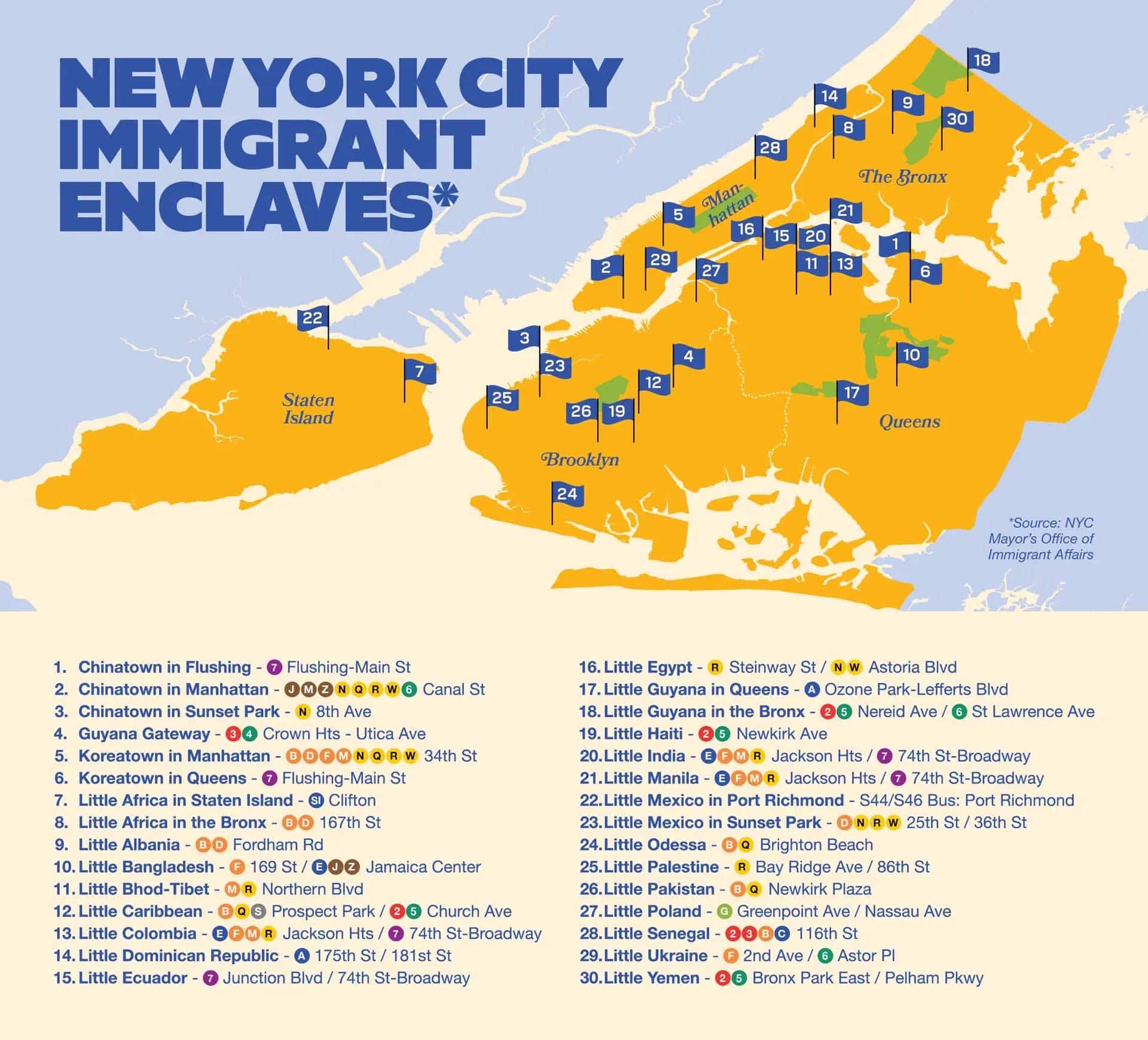
The map has also drawn criticism from Italian, Irish and Jewish organizations, which argued that several historically significant neighborhoods were omitted despite their prominent role in New York City’s immigrant history.
Mamdani addresses New York City immigrant map controversy
During a press conference on Saturday, Mayor Mamdani addressed the controversy regarding the city’s map of immigrant enclaves.
Mamdani said that the map was originally created by the previous administration in 2023 and noted that it is not an exhaustive list of the city’s more than 200 ethnic communities. He stated that his administration has already added a few neighborhoods to the map and plans to make further updates to reflect the city’s diversity. The New York City Mayor did not clarify if the Greektown of Astoria is among the neighborhoods to be included in the map.
For Greek American leaders, however, the issue extends beyond a single map. “Our history deserves recognition. Our contributions deserve respect. Our communities deserve to be included,” Prentzas said.
See all the latest news from Greece and the world at Greekreporter.com. Contact our newsroom to report an update or send your story, photos and videos. Follow GR on Google News and subscribe here to our daily email!

