



When Alexander Onassis died following a devastating plane crash in Athens on January 23, 1973, Aristotle Onassis refused to accept that it had been a tragic accident. The Greek shipping magnate, one of the wealthiest and most influential businessmen in the world, became convinced that someone had deliberately caused the crash that claimed the life of his only son and heir.
For the final two years of his life, Onassis pursued answers with the same relentless determination that had built his global shipping empire. He spent millions on private investigations, publicly questioned the official findings, offered a $1 million reward for information leading to those responsible, and accused powerful enemies—from business rivals to intelligence agencies—of orchestrating what he believed was a carefully planned assassination.
More than half a century later, no evidence has ever emerged to prove that Alexander Onassis was murdered. Multiple official investigations concluded that the crash resulted from a catastrophic error involving the aircraft’s flight controls. Yet Aristotle Onassis never accepted those conclusions. Whether driven by compelling suspicions or the unbearable grief of losing the son he hoped would inherit his empire, he carried his conviction to the grave.
The tragedy became one of the defining chapters in the history of modern Greece’s most famous shipping dynasty and continues to fuel speculation decades after the fatal crash.
Alexander Onassis: The Heir to an Empire
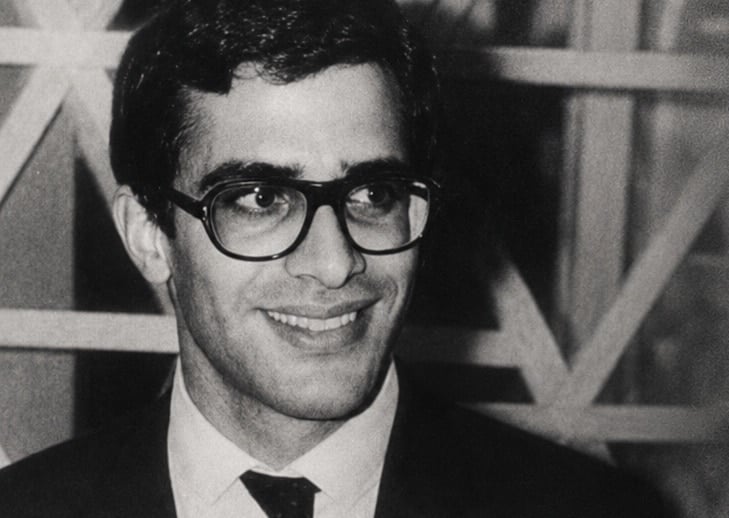
Born in New York City on April 30, 1948, Alexander (Alexandros) Onassis grew up in extraordinary privilege as the eldest child and only son of Aristotle Onassis and Athina “Tina” Livanos, herself the daughter of shipping magnate Stavros G. Livanos.
He and his younger sister Christina Onassis (December 1950-November 1988) loved their mother and were upset in October 1968, when their father married Jacqueline Kennedy, the widow of John F. Kennedy, the 35th President of the United States. They had hoped that he might remarry their mother, which had seemed possible towards the end of their father’s relationship with the Greek opera singer Maria Callas.
Tensions between father and son worsened when at 18, Alexander Onassis had an affair with a British fashion model, Fiona von Thyssen (née Campbell Walter), some 16 years his senior and a friend of his mother. She was the former wife of industrialist Baron Hans Heinrich Thyssen-Bornemisza.
Although his father had amassed one of the world’s largest fortunes through shipping, airlines, and international investments, Alexander’s future was never expected to be one of leisure. After Aristotle made amends with Alexander during a trip in France, he intended him to become the next leader of the Onassis empire.
Rather than pursuing a traditional university education, Alexander worked alongside his father at the family’s headquarters in Monaco, gradually learning the complexities of the global shipping business. He was also appointed president of Olympic Aviation, the subsidiary of Olympic Airways that Aristotle had acquired in 1957 as part of his ambition to modernize Greece’s commercial aviation sector. Flying quickly became Alexander’s greatest passion.
Although poor eyesight prevented him from obtaining an airline transport pilot’s license, he qualified for a commercial pilot certificate that allowed him to fly light aircraft and air taxis. By early 1973, he had logged approximately 1,500 flying hours after beginning his training in 1967 and was considered an experienced pilot.
To Aristotle Onassis, Alexander represented far more than his only son. He was the future custodian of a business empire that had transformed the son of a refugee from Smyrna into one of the world’s richest men.
The Flight That Lasted Only Seconds
On January 22, 1973, Alexander arrived at Hellinikon International Airport outside Athens to participate in a training flight aboard a Piaggio P.136L-2 amphibious aircraft operated by Olympic Aviation.
The flight had a routine purpose. Alexander was overseeing the evaluation of Donald McCusker, an American pilot seeking employment with Olympic Aviation. Also aboard was Donald McGregor, Onassis’ regular pilot, who was recovering from an eye infection but joined the flight as an observer.
The plan was straightforward: depart Athens, conduct a series of amphibious landing exercises between the nearby Saronic Gulf islands of Aegina and Poros, and return. The aircraft never made it that far. Shortly after taking off from Runway 33 at approximately 5:00 p.m., witnesses saw the aircraft’s right wing suddenly dip. Instead of climbing, the Piaggio rolled sharply and rapidly lost altitude. The aircraft had been airborne for only about 15 seconds. Unable to recover, it slammed into the ground just beyond the runway in a violent crash that left the aircraft severely damaged and its occupants critically injured.
Emergency crews rushed to the scene and pulled Alexander, McCusker, and McGregor from the wreckage before transporting them to hospital. Alexander had suffered catastrophic head injuries.
Aristotle Onassis Rushes to Athens
At the time of the crash, Aristotle Onassis was in New York City. When he received the news that his son had been gravely injured, witnesses recalled that the normally composed billionaire collapsed from shock. He immediately arranged transportation to Greece, arriving in Athens the following day and heading directly to the hospital where Alexander was fighting for his life. Alexander’s mother, Tina Livanos, also traveled to Athens from Switzerland accompanied by her husband, Stavros Niarchos—the very man Aristotle would later come to suspect of involvement in the tragedy.
Determined to save his son, Onassis flew renowned British neurosurgeon Professor Alan Richardson from London to examine Alexander. The prognosis was devastating. Richardson informed the family that Alexander’s injuries were unsurvivable. Despite every medical effort, the 24-year-old died on January 23, 1973, less than twenty-four hours after the crash.
Aristotle Onassis considered having his son’s body cryogenically frozen, but was persuaded against it. Instead, Alexander was embalmed by Desmond Henley. Alexander Onassis was buried next to the chapel on his father’s private Ionian island of Skorpios.
Alexander’s loss shattered Aristotle Onassis
Friends later recalled that the shipping tycoon never appeared to recover from that moment. The confident businessman who had spent decades negotiating billion-dollar deals with heads of state suddenly became a grieving father whose only concern was understanding how a routine training flight had ended in disaster.
For Onassis, however, grief soon gave way to suspicion. Almost immediately, he began rejecting the possibility that Alexander’s death had been caused by pilot error or mechanical failure alone. The official investigations had barely begun before he privately insisted that someone had deliberately sabotaged the aircraft.
It was the beginning of an obsession that would consume the final years of his life and give rise to one of the greatest enduring mysteries surrounding the Onassis family.
Why Aristotle Onassis Believed It Was Murder
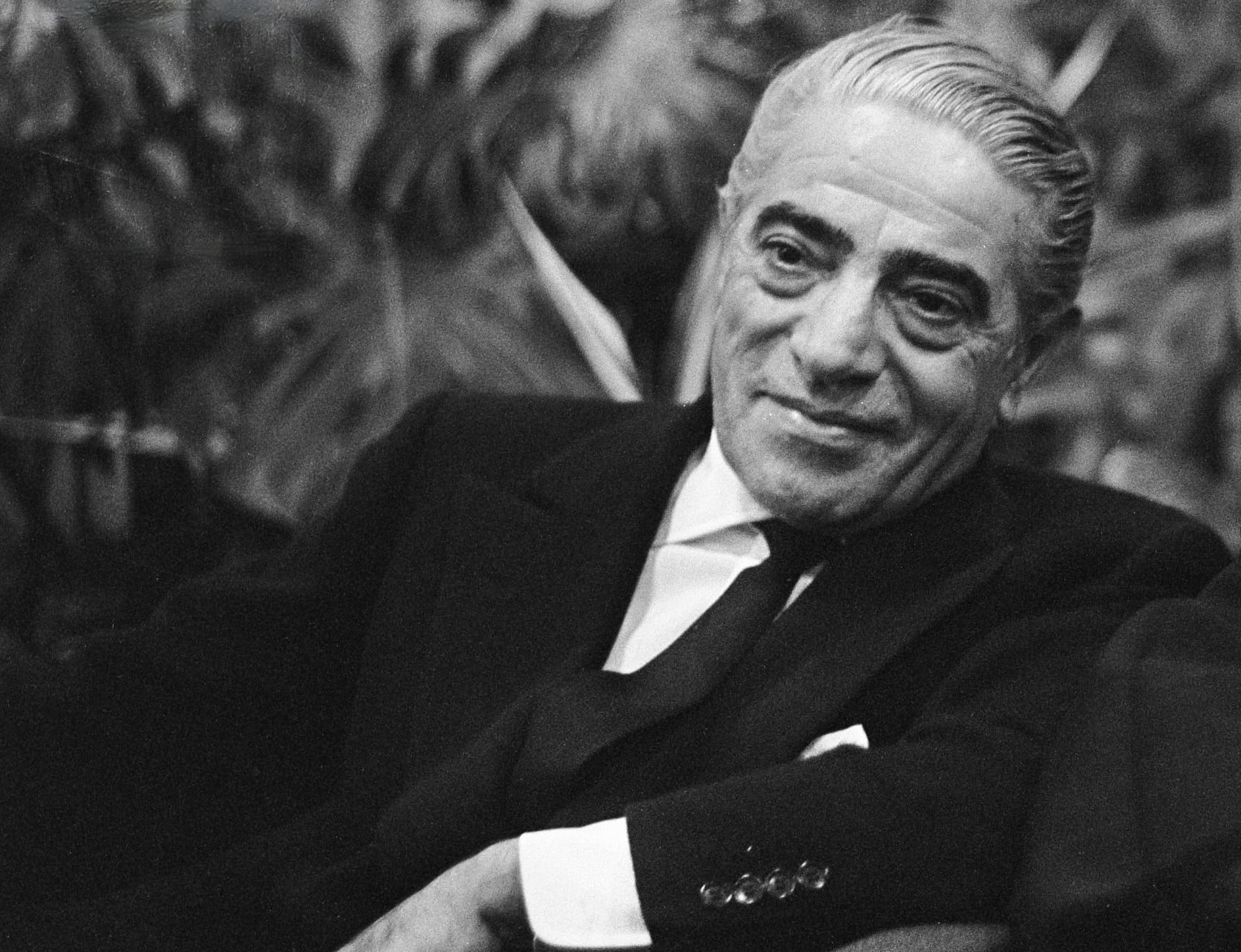
For Aristotle Onassis, the official explanation never made sense. He had spent decades navigating a world where fortunes were won and lost through fierce competition, political influence, and international intrigue. As one of the world’s most powerful shipping magnates, he had crossed swords with governments, oil companies, intelligence agencies, and business rivals. To a man who believed almost nothing happened by chance at the highest levels of power, the death of his only son seemed too devastating—and too convenient—to be a simple accident.
Within days of Alexander’s funeral, Onassis began privately telling associates that someone had deliberately sabotaged the aircraft.
His determination to uncover what he believed was the truth became all-consuming. He hired private investigators, commissioned independent technical analyses, interviewed aviation experts, and reportedly spent millions of dollars trying to identify those responsible.
Perhaps the clearest indication of his conviction came when he offered a reward of $1 million—an enormous sum at the time—for information leading to the conviction of those responsible for Alexander’s death.
The reward remained unclaimed.
The official investigation of the plane crash
Greek aviation authorities launched an immediate investigation into the crash, while additional technical examinations were later carried out to determine whether the aircraft had suffered a mechanical failure.
Attention quickly focused on the Piaggio’s flight-control system. Investigators discovered that the aircraft’s aileron controls—the movable surfaces on the wings that allow an airplane to roll left and right—had been incorrectly installed following maintenance work. As a result, the controls responded in the opposite direction from the pilot’s inputs.
When the pilot attempted to correct the aircraft after takeoff, the reversed controls instead increased the roll, making recovery virtually impossible.
Three separate investigations ultimately reached essentially the same conclusion: the improperly installed aileron controls had rendered the aircraft uncontrollable moments after takeoff.
The findings led prosecutors to charge Donald McCusker and six Olympic Airways engineers with negligence related to the maintenance of the aircraft.
The case drew enormous public attention, not least because of Aristotle Onassis’ insistence that far more than negligence was involved.
After lengthy court proceedings, however, all of the defendants were acquitted by the Three-Member Criminal Court of Athens in November 1977. Legally, the case was over, but for Aristotle Onassis, it had barely begun.
Why Onassis Rejected the Findings
To many observers, the investigation appeared straightforward: a maintenance error had caused a fatal accident. Onassis saw something very different. He found it difficult to believe that experienced maintenance engineers working on one of Olympic Aviation’s aircraft could have made such a fundamental mistake without someone noticing before the aircraft returned to service.
Nor did he believe it was a coincidence that the victim happened to be the heir to one of the world’s largest private fortunes. Friends later recalled that Onassis repeatedly asked whether someone had intentionally reversed the controls, knowing the mistake would almost certainly prove fatal during flight.
He refused to accept that the tragedy resulted merely from incompetence. Instead, he became convinced that the maintenance error had been deliberate—that the crash had been carefully planned to eliminate his son.
Although no evidence ever emerged proving sabotage, Onassis never abandoned that belief.
The CIA Theory
Among the theories that circulated after the crash, perhaps the most sensational involved the United States Central Intelligence Agency.
According to friends and several biographical accounts, Onassis suspected that the CIA may have played a role in Alexander’s death. The theory reflected the complicated relationship Onassis had long maintained with the American political establishment.
During the 1950s, he had challenged powerful American oil interests by negotiating lucrative tanker contracts with Saudi Arabia, provoking fierce opposition in Washington and among major U.S. corporations. His business dealings frequently brought him into conflict with governments whose strategic interests extended far beyond shipping.
His highly publicized marriage to Jacqueline Kennedy in 1968 only deepened public fascination with his political connections and fueled endless speculation about the enemies he may have accumulated.
The Cold War atmosphere of the era made conspiracy theories especially fertile. Intelligence agencies around the world were frequently linked—sometimes accurately, often not—to covert operations and political intrigue. For Onassis, who believed powerful forces operated behind the scenes of international affairs, the possibility of intelligence involvement never seemed entirely implausible.
No evidence has ever been produced connecting the CIA to Alexander Onassis’ death, and historians generally regard the allegation as one of several theories born from Aristotle Onassis’ profound grief rather than documented fact.
A Bitter Rival: Stavros Niarchos
If one name surfaced more often than any other in Onassis’ private suspicions, it was that of fellow Greek shipping magnate Stavros Niarchos.
The rivalry between the two men had become legendary. Both had built enormous fortunes in international shipping and competed relentlessly for prestige, influence, and commercial dominance during the postwar boom that transformed Greek shipowners into global economic powers.
Their relationship was also deeply personal. Aristotle Onassis had married Tina Livanos, while Niarchos married her sister, Eugenia Livanos, intertwining two of Greece’s wealthiest shipping families. Over the years, family tensions, business disputes, and personal rivalries intensified into one of the most famous feuds in modern Greek business history.
After Alexander’s death, Onassis reportedly became convinced that Niarchos had somehow been involved. The suspicion was fueled in part by the fact that Niarchos accompanied Alexander’s mother, Tina Livanos, to Athens following the crash—a circumstance that some later writers considered symbolic, though not incriminating. Despite persistent rumors that have circulated for decades, no investigation ever uncovered evidence linking Niarchos to the crash.
No charges were filed against him, and no court found any basis for claims that he played a role in Alexander’s death. Even so, Aristotle Onassis never publicly withdrew his suspicions, and the allegations became one of the most enduring chapters in the mythology surrounding the two shipping dynasties.
Onassis: A Father Consumed by Grief
Although Aristotle Onassis never proved that Alexander had been murdered, he never stopped searching for answers.
Friends and biographers described a man transformed by the loss of his only son. The billionaire who had negotiated with presidents and built one of the world’s greatest shipping empires withdrew from public life, devoting much of his energy to understanding how a routine training flight could have ended in catastrophe.
He reportedly reviewed technical reports repeatedly, questioned witnesses, consulted aviation experts, and revisited every detail of the crash. Yet each new investigation reached essentially the same conclusion: there was no evidence of a wider conspiracy.
The Beginning of the “Onassis Curse”
Alexander’s death marked the beginning of what many later called the “Onassis curse.”
Just over two years after losing his son, Aristotle Onassis died on March 15, 1975, at the age of 69. Officially, the cause was respiratory failure resulting from complications of myasthenia gravis, an autoimmune disease that had progressively weakened him. Those closest to him, however, often believed that grief had accelerated his decline. Friends recalled that he had become almost unrecognizable after Alexander’s death. The relentless businessman known for his confidence and ambition appeared exhausted, withdrawn, and emotionally broken.
The tragedy did not end there. In November 1988, Alexander’s younger sister, Christina Onassis, died suddenly at the age of 37, further cementing the family’s reputation as one of the most tragic dynasties in modern Greek history.
Alexander Onassis Legacy
Before his own death, Aristotle Onassis ensured that his son’s memory would live on. He established the Alexander S. Onassis Public Benefit Foundation, funded through the Onassis fortune and headquartered in Athens.
Today, the foundation is one of Greece’s leading cultural and educational institutions, supporting scholarships, research, the arts, and international cultural exchange. For many, it remains Alexander Onassis’ most enduring legacy.
Was Alexander Onassis Murdered?
More than five decades after the crash, no evidence has emerged proving that Alexander Onassis was assassinated. Yet the mystery has never completely disappeared. Partly because of Aristotle Onassis’ unwavering conviction, and partly because of the extraordinary world in which he lived—one of immense wealth, geopolitical influence, fierce business rivalries, and Cold War intrigue—the tragedy continues to invite speculation.
Whether his suspicions reflected genuine unanswered questions or the inability of a grieving father to accept the random loss of his only son remains impossible to know. What is certain is that Alexander’s death changed Aristotle Onassis forever.
For the man who conquered the world’s oceans and built one of history’s greatest shipping empires, it was the one battle he could never win.
See all the latest news from Greece and the world at Greekreporter.com. Contact our newsroom to report an update or send your story, photos and videos. Follow GR on Google News and subscribe here to our daily email!

