



The story of Margites is a fascinating example of an early ancient Greek comedy that predates much of the conventional literature we all know. Margites was the archetypal fool, a man utterly inept and hilariously oblivious of his ineptitude; a character that made thousands of ancient Greeks laugh with his ability to navigate life despite being what we could call ”an idiot”.
Unfortunately, only fragments and references of this fascinating work survive, but despite that, its profound impact on subsequent literary traditions is undeniable.
The Homeric links to Margites
The precise origins and the actual author of “Margites” remain a mystery that classicists from around the world have been trying to solve for centuries. Often attributed to Homer, Aristotle himself drew parallels between “Margites” and Greek comedies, much like seeing the “Iliad” and “Odyssey” as parents to tragedy. Nonetheless, this attribution is still not confirmed by scholarly experts.
Harpocration supported the theory that Margites was one of Homer’s epics too, though Basil of Caesarea remained sceptical, arguing that this was probably not correct. The medieval Suda encyclopedia attributed it to Pigres of Halicarnassus, making the whole issue of who wrote Margites a true enigma.
Unlike the famous Homeric epics of the “Iliad” and the “Odyssey”, “Margites” is something completely different to these two. It was a playful, mocking work dedicated to making a parody of an enlightened mentor.

Who was Margites?
Margites was a man of many undeniable talents but a master of none. His defining characteristic was an utter lack of practical skill coupled with astonishing self-confidence that made him the archetypal character of a good comedy. He was so naive that he “did not know which parent had given birth to him,” as Aristotle described him in his Nicomachean Ethics. The line perfectly captures his incompetence as “He knew many things but knew all badly.” (“πολλὰ ᾔδει Μαρσίτης, ἀλλὰ κακῶς ᾔδει· καὶ γὰρ οὐκ ᾔδει ὅτε μὴ μήτηρ αὐτὸν ἔτικτεν.”)
The work of Margites had an unusual composition, as it mixed hexameter and iambic lines, similar to the “Batrachomyomachia.” The Batrachomyomachia, or Battle of the Frogs and Mice, was an ancient Greek comic epic that parodies the heroic style of Homeric poetry through a mock-war between animals. Although traditionally attributed to Homer, it was likely written by an unknown author during the Hellenistic period (3rd–2nd century BC).
Margites undoubtedly focuses on the funny and sometimes foolish aspect of a man rather than on topics such as divine intervention or ethical considerations, like other known ancient Greek pieces of literary art.
Is Margites the beginning of Greek comedy?
As the story of Margites predates Aristophanes by many centuries, it is believed it is a foundational work in the evolution of Greek comedy, so much so as to consider it the beginning of what we now know as ancient Greek comedy.
Margites offers readers a satirical portrait of a man so foolish that the poem delivers a sophisticated critique of superficial knowledge and societal vanity that sounds exceptionally relevant today. Even though we only know small parts of it, we can say that it was a didactic poem in reverse, as it was teaching not what to be, but what to avoid. Its humorous approach, mocking empty rhetoric and the illusion of wisdom, became a foundational stone upon which numerous comedies were based later in time.
Margites introduced archetypes that became favourites in the world of comedy: ignorant polymaths, the doomed innovators, the overconfident fools undone by their hubris. The term margitomanēs (“mad as Margites”) became a term in the Greek language meaning useless stupidity, used for those who boasted about their knowledge but were clearly and blatantly stupid.
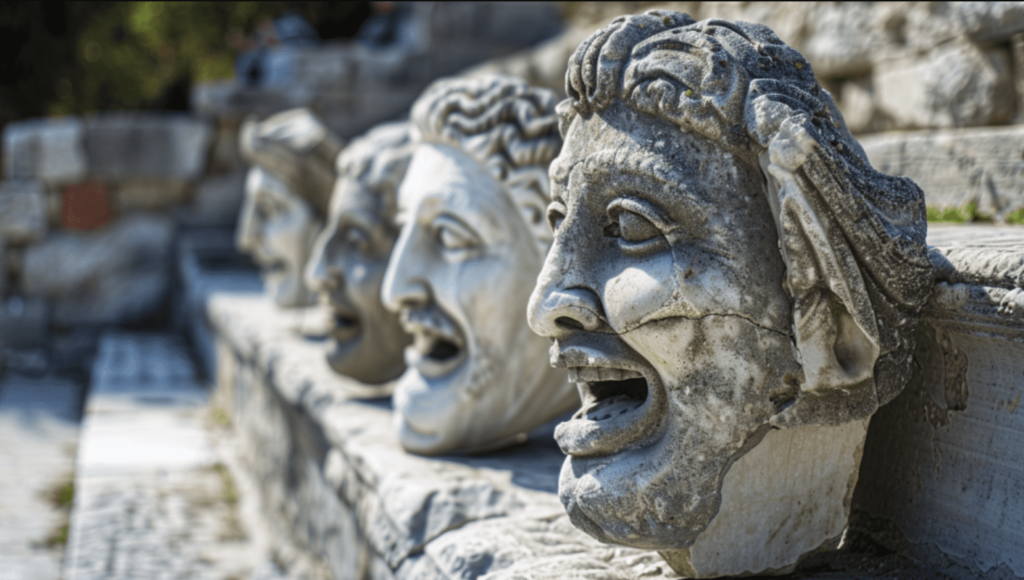
Despite not knowing the full extent of the work, Margites remains an important piece of ancient Greek literature.
Only a few fragments of Margites survive today, preserved indirectly through quotations and references by later authors like Aristotle, Plato and entries in the Suda lexicon. The most famous line, cited by Aristotle in his Poetics, describes Margites as a man who “knew many things, but all badly,” capturing the essence of the foolish anti-hero.
Though the full poem is lost, these fragments reveal that Margites was a mock-epic, parodying the heroic style while offering social satire that made it popular. Margites may only survive in little fragments, but its importance and relevance are still big in Greek comedy and satire. By humorously exposing human stupidity and false wisdom, it laid the groundwork for the rich Greek comedic tradition that continues to influence us even to this day.
See all the latest news from Greece and the world at Greekreporter.com. Contact our newsroom to report an update or send your story, photos and videos. Follow GR on Google News and subscribe here to our daily email!

