


The Ancient Greeks occupy a surprising place in Ireland’s legendary past in which medieval traditions preserve remarkable links between the Celtic world and Greece. Irish mythology preserves some of the most fascinating origin stories in Europe. Medieval Irish traditions describe waves of peoples arriving in Ireland prior to the beginning of recorded history. Among these legendary figures stands Partholon, sometimes referred to as the first king and settler of Ireland after the Flood in accordance with medieval Irish tradition.
What makes the story especially intriguing is his connection to Greece. Ancient Irish texts describe Partholon as the son of Sera and relate his ancestry to the Greek world. Later Irish traditions also associated the mysterious Tuatha Dé Danann with advanced knowledge, sacred wisdom, and distant origins beyond Ireland itself.
Partholon and the first settlement of Ireland
The story of Partholon appears mainly in medieval Irish texts such as the Lebor Gabála Érenn (or Book of the Invasions of Ireland). This work attempted to construct a grand historical narrative for Ireland stretching from biblical times into the medieval age. According to the tradition, Partholon arrived in Ireland with his followers after fleeing conflict and destruction abroad. Irish sources such as Lebor Gabála Érenn describe him as the son of Sera of Calydon, who descended from Magog, the biblical son of Japheth.
Some versions of the story place Partholon’s wanderings through regions associated with the Eastern Mediterranean and Greece before his arrival in Ireland. The legends describe him introducing agriculture, livestock, brewing, and organized settlement into Ireland. Plains were cleared, lakes emerged, and civilization advanced.
According to the Lebor Gabála Érenn, Partholon did not sail directly to Ireland. Instead, he journeyed through several lands before finally reaching the island with his family and followers. His travels took him across the Eastern Mediterranean and through regions associated with Greece before he eventually reached the western edge of Europe. Four plains were cleared during his reign, and several lakes were said to have appeared for the first time. Under his leadership, Ireland transformed from an untamed landscape into an inhabited kingdom. This outlook explains why Irish tradition repeatedly linked its origins with Mediterranean peoples.
The Tuatha Dé Danann and sacred knowledge
Another legendary group associated with Ireland’s mythical past were the Tuatha Dé Danann, often translated as the “People of the Goddess Danu.” Irish tradition describes them as supernatural beings or divine ancestors possessing extraordinary wisdom, magical skill, and advanced arts. They supposedly arrived in Ireland from mysterious northern islands where they mastered science, druidic knowledge, and sacred learning.
The Tuatha Dé Danann eventually reached Ireland carrying with them the Four Treasures, the sacred objects that became symbols of rightful kingship and divine authority. These included the Spear of Lugh, the Sword of Nuada, the Cauldron of the Dagda, and the Lia Fáil, the Stone of Destiny. The stone of Destiny, according to tradition, cried out beneath the feet of the rightful king.
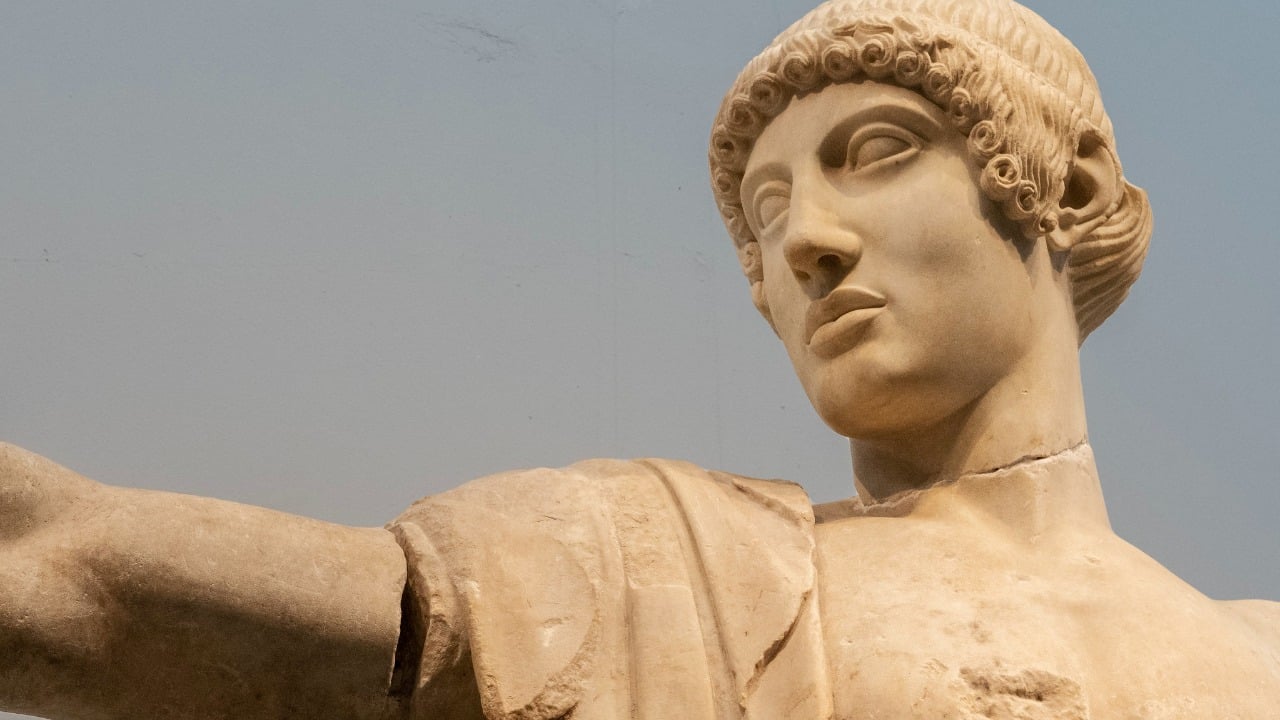
According to the Lebor Gabála Érenn, the Tuatha Dé Danann did not originate in Ireland. Instead, they once lived in the Eastern Mediterranean in great cities such as Athens, where they served as teachers of the Greeks. There, they mastered the arts, craftsmanship, poetry, and the mysteries of druidic wisdom before eventually journeying westward to Ireland. Among their ancestors stood powerful kings, noble clans, renowned poets, and the earliest Druids.
The very name “Danu” of the earth goddess and primordial maternal figure that inhabited Ireland before mankind resembles the name of the “Danaans,” associated with the heroic age of Greece. Some researchers also note parallels between the Tuatha Dé Danann and the divine race of the Hyperboreans described by Pindar. Both traditions preserve memories of semi-divine beings associated with wisdom, immortality, and sacred kingship.
Greeks and Celts in antiquity
Historical evidence clearly shows that Greeks and Celts interacted extensively during antiquity. Greek writers such as Strabo wrote about Celtic peoples across southern France, northern Italy, Iberia, and the Balkans. The Greeks referred to many Celtic groups collectively as Keltoi or Galatai.
Trade connected the Mediterranean world with Celtic Europe for centuries, and Greek colonies in southern France, especially Massalia (modern-day Marseille), maintained commercial and cultural contact with Celtic tribes. Greek pottery, wine, weapons, and artistic influence spread northward through these interactions.
Meanwhile, Celtic mercenaries served in Hellenistic armies after the death of Alexander the Great. Some Celtic groups even invaded Greece itself during the famous Galatian invasion of the third century BC. Eventually, many of these Celts settled permanently in Anatolia, where they formed the region known as Galatia. Thus, Greeks and Celts did not exist in isolation from one another. Their worlds frequently overlapped through war, trade, and migration.
Greek writers also preserved their own traditions concerning the origins of the Celtic peoples. The poet Parthenius of Nicaea relates that Heracles fell in love with Celtine and fathered a son with her named Celtus, who became the ancestor of the Celtic peoples.
Interestingly, medieval Irish traditions preserve a similar concern with genealogy and descent. The Lebor Gabála Érenn traces the ancestry of Partholon through Sera and ultimately back to Japheth, son of Noah. The work Foras Feasa ar Éirinn (commonly known in English as The History of Ireland) of the Irish historian Geoffrey Keating claims that Partholon was the son of Sera who was king of Calydon in Greece and fled his homeland after murdering his father and mother.

Ireland and its Ancient Greek roots through Japheth
Irish genealogical tradition connected the island directly to the descendants of Japheth, whom biblical tradition regarded as the ancestor of the European peoples. Partholon occupied a significant place within this historical framework, representing one of the earliest links in the chain connecting Ireland to the ancient nations of the world.
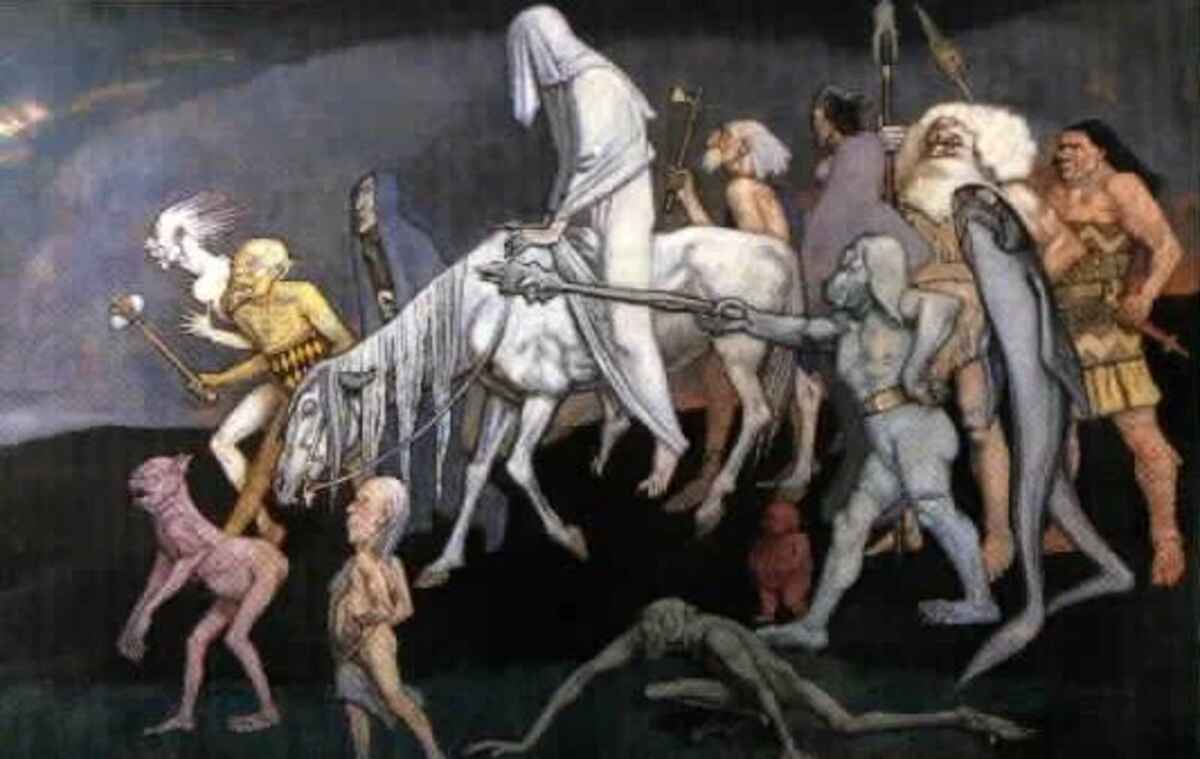
Partholon became remembered as the leader who fought the mysterious Fomorians, supernatural adversaries who frequently appear throughout Irish mythology. His victory over them represented one of the earliest triumphs of order over chaos in the legendary history of Ireland. After ruling for many years, however, tragedy struck when a devastating plague swept through his people. According to the tradition, thousands died within a single week, including Partholon himself, and only their stories survived in later generations.
The genealogies preserved in medieval Ireland carefully trace Partholon’s ancestry back to Japheth, the son of Noah. These genealogies place the Irish people within the universal history of mankind after the Flood.
Modern scholars commonly utilize the term “Indo-European” to describe the linguistic relationship between the Greeks, Celts, and Italic peoples among many others. The Bible uses similar terms with the Sons of Noah: Shem, Ham, and Japheth to describe Semitic or Indo-European nations. Ancient Greek and Irish writers likewise expressed similar concepts through their myths. Irish tradition traces one of Ireland’s earliest rulers to Ancient Greece through Sera, while Greek tradition traces the Celts themselves to Celtus, the son of Heracles. Both narratives place Greece at the beginning of important ancestral lineages.
The Ancient Greek and Balkan roots of the bagpipe traditions of Ireland and Scotland
One particularly fascinating cultural connection involves the bagpipe. Bagpipes and their Irish equivalent, the uilleann pipes, are almost exclusively associated with Scotland and Celtic culture today. However, ancient forms of the instrument likely originated much farther to the southeast. The Greek instrument known as the gaida is significantly similar with Balkan and Celtic bagpipes, for instance. Variations of bagpipes existed throughout the Eastern Mediterranean and the Balkans for centuries.
Ancient Greek sources such as those from the philosopher Aristotle already describe reed and air-blown instruments resembling early bagpipes known as askavlos. The Roman emperor Nero was also famous for playing the tibia utricularis according to the writer Dio Chrysostom. Over time, these musical traditions spread through Western Europe. The Roman Empire likely played a major role in the spread of such instruments, as Roman legions and traveling musicians carried Eastern Mediterranean musical influences into western provinces inhabited by Celtic populations.
As centuries passed, local cultures adapted the instrument according to regional traditions. In both the modern and Ancient Greek worlds, the askavlos or gaida remained part of folk music, whereas in Scotland and Ireland, bagpipes evolved into iconic national instruments. Thus, the Celtic bagpipe tradition may preserve Ancient Mediterranean and Greek musical influences transformed through centuries of adaptation.
See all the latest news from Greece and the world at Greekreporter.com. Contact our newsroom to report an update or send your story, photos and videos. Follow GR on Google News and subscribe here to our daily email!

