



Italy has unveiled a set of rare Etruscan tomb paintings after paying $17 million to acquire them, museum officials said this week. The frescoes, once part of the François Tomb near ancient Vulci, opened to the public at Rome’s National Etruscan Museum of Villa Giulia.
The Culture Ministry announced in May that it had bought the panels for 15 million euros ($17 million) from the Torlonia family, an aristocratic Italian family that had kept them in private hands for more than a century.
Italian officials had sought to recover the tomb since 1921 as part of a broader push to reclaim artifacts removed from the country during the 1800s.
French archaeologist Alessandro François discovered the tomb in 1857 on land owned by the Torlonia family. Workers detached the frescoes in 1863, and they remained in the family’s private collection until this year. Other objects found inside the tomb were divided among François, his colleagues, and the family at the time.
Italy’s Etruscan tomb paintings reveal ancient Greek myths and battles
The paintings date to between 340 and 320 B.C. and blend scenes from Greek mythology with moments from Etruscan history, according to museum director Luana Toniolo.
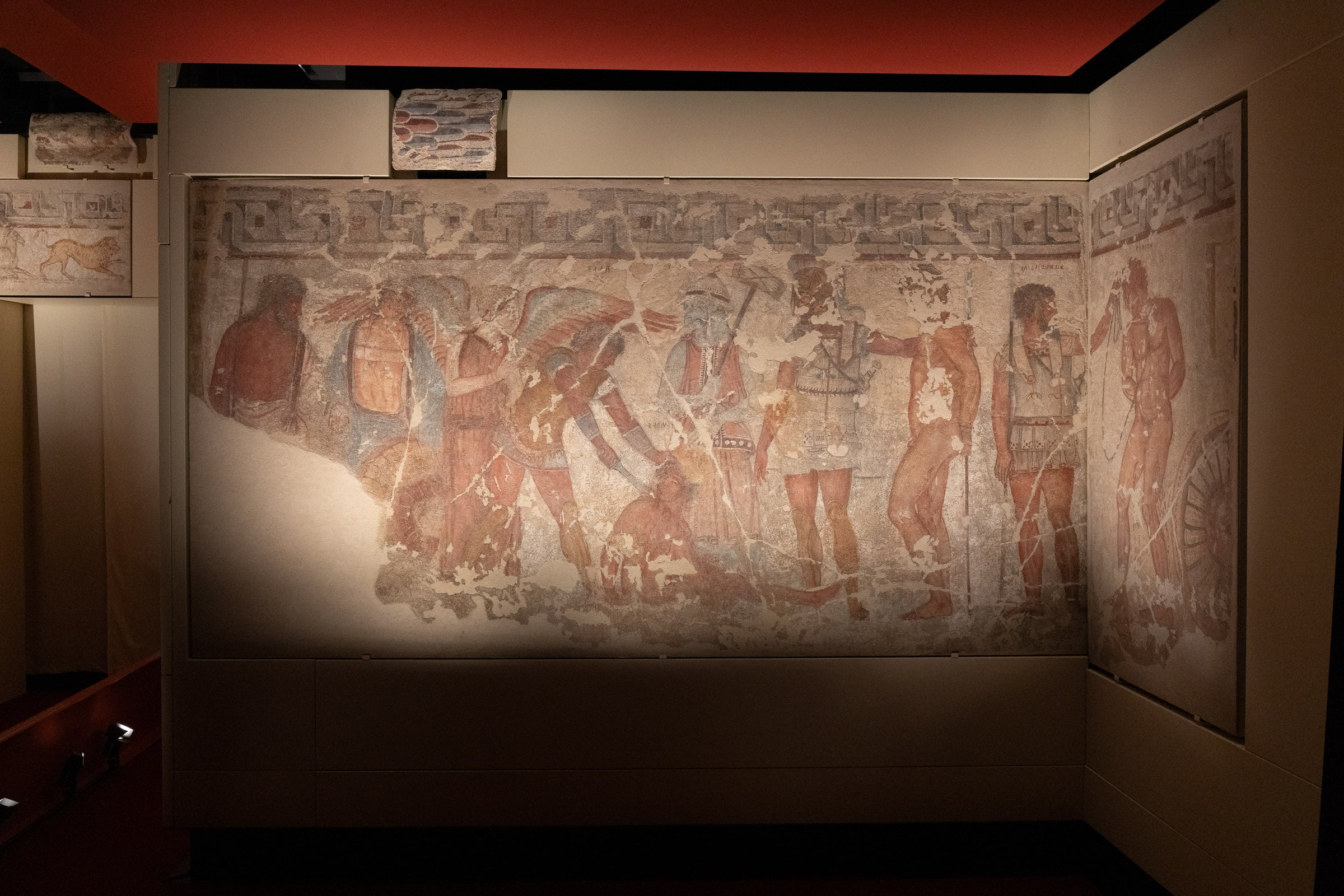
One scene shows Etruscan heroes killing rivals from Rome and other cities. Another depicts the Greek hero Achilles sacrificing Trojan prisoners.
A third shows a warrior named Mastarna freeing an Etruscan nobleman, a figure the Roman emperor Claudius later identified as Servius Tullius, the sixth king of Rome. Toniolo said that it is the only surviving portrait of a Roman king.
Toniolo said that the paintings capture families, warriors, gods, and heroes from Etruscan times, and reinterpret Greek myths through an Etruscan lens.
Loaned treasures and new purchases mark Italy’s cultural revival
Jewelry, painted vases, and other items originally found in the tomb are also on display, on loan from museums including the Louvre and the British Museum.
Those pieces were given to archaeologists and their backers as payment after the tomb was opened and were later sold and scattered worldwide. This marks the first time in more than 160 years that the objects have been shown together.
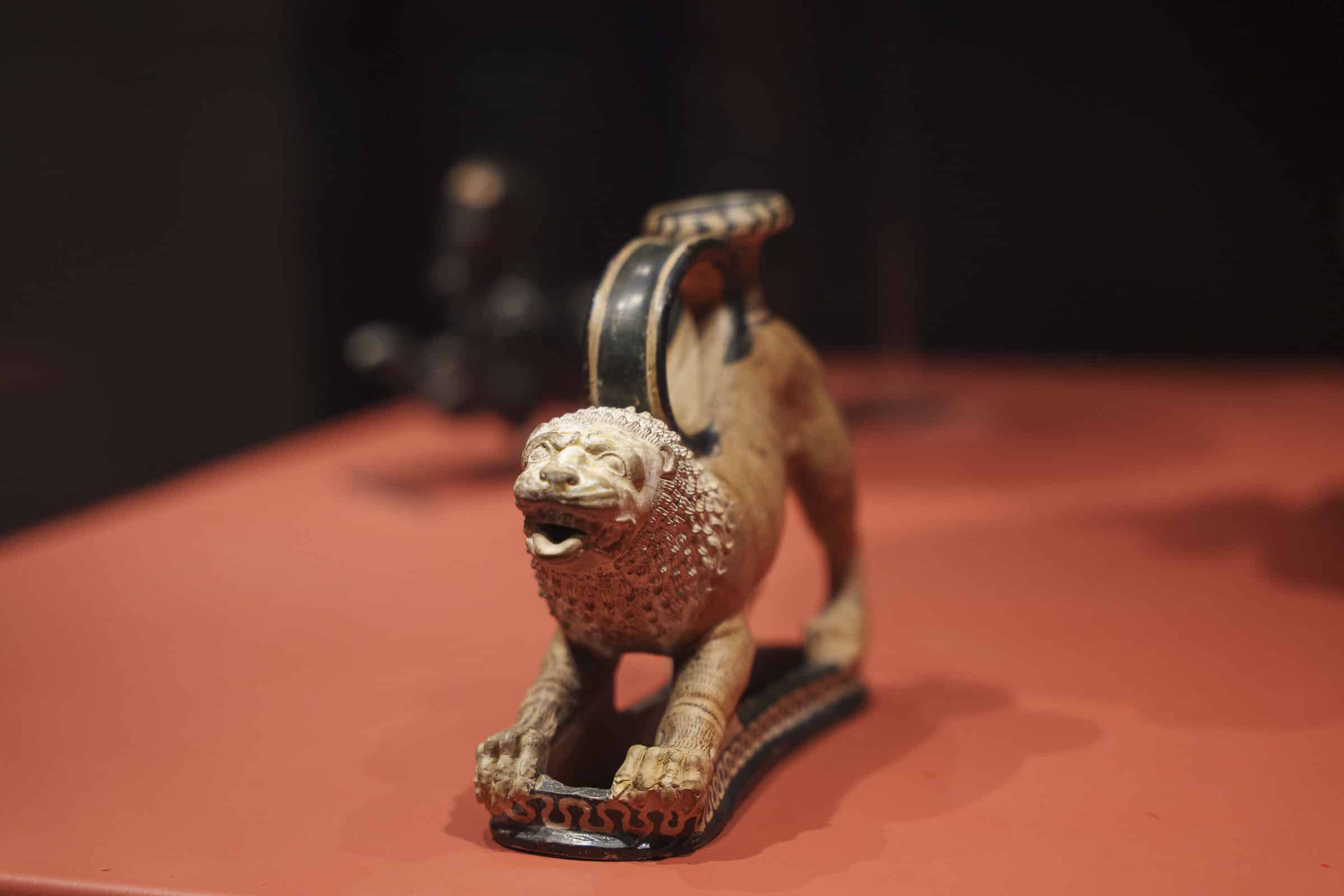
Toniolo said that museums worldwide were eager to take part once they learned Italy planned to buy the tomb, calling it a case of strong international cooperation.
The Etruscan tomb paintings mark Italy’s third major art purchase this year. The ministry also paid about $14.9 million for Antonello da Messina’s “Ecce Homo” and roughly $35 million for a Caravaggio portrait of Maffeo Barberini, who became Pope Urban VIII.
Culture Minister Alessandro Giuli has focused the ministry’s budget on fewer, higher-value acquisitions rather than smaller purchases, officials said.
See all the latest news from Greece and the world at Greekreporter.com. Contact our newsroom to report an update or send your story, photos and videos. Follow GR on Google News and subscribe here to our daily email!

