



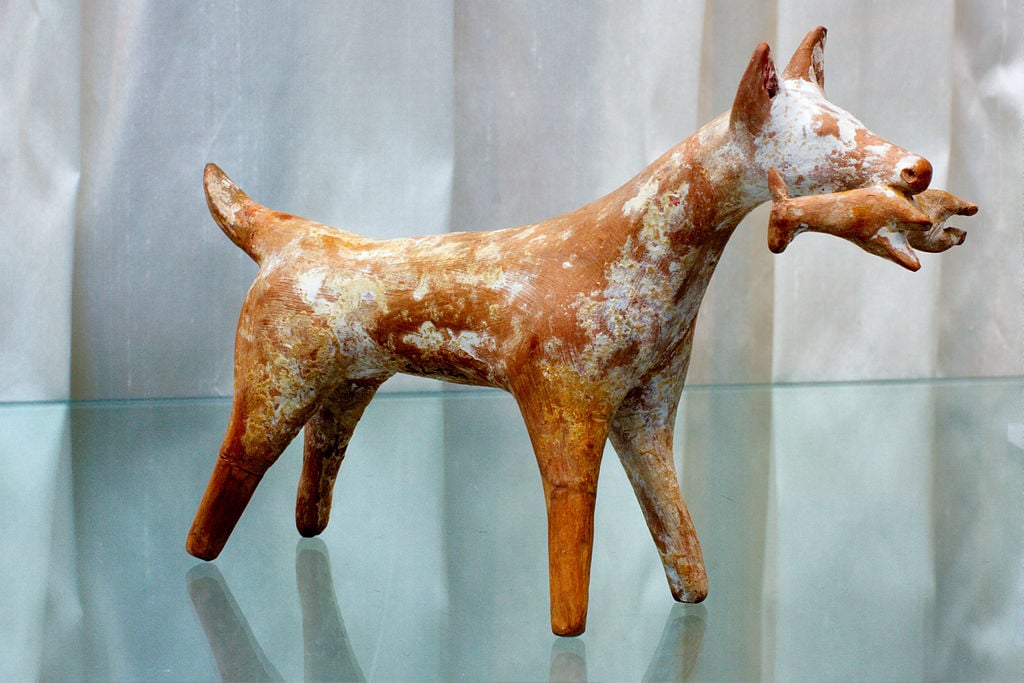
When we think of the Ancient Greeks, it is easy to overlook how much their society resembled our own in certain ways, particularly in their deep devotion to their pets.
From working farm dogs in the countryside to members of the urban elite displaying tame cheetahs, animals played a central role in everyday life. For many Ancient Greeks, pets were not only companions but also status symbols, objects of beauty, and at times even perceived gifts from the gods.
As in many societies today, dogs dominated the world of pets in Ancient Greece. Man’s best friend was closely interwoven in family life, although the Ancient Greeks tended to distinguish between breeds based on function and purpose. The Molossian, a large and powerful breed from Epirus and an ancestor of the modern Mastiff, served as a formidable guardian and protector. In contrast, the Laconian, a sleek and remarkably fast hound from Sparta, was prized for its exceptional scent-tracking abilities.
Among city dwellers, another favorite emerged. Wealthy households often kept Meliteans, small lap dogs originally associated with Malta, known in antiquity as Melite. These fluffy companions became a visible marker of status and were so beloved that they frequently appear on tombstones, suggesting they were deeply mourned and long remembered.
How did Ancient Greeks name their dogs?
Naming a dog in the ancient world was surprisingly deliberate. The historian Xenophon offered specific guidance on the practice, recommending names that were short, sharp, and easy to call out in the field. Examples included Bia (Force) and Hormé (Impulse), both of which reflected traits owners wanted to evoke in their animals. Notably, the Ancient Greeks rarely gave their pets human names. Instead, they tended to choose descriptive labels tied to a dog’s temperament, speed, appearance, or courage, emphasizing function over sentimentality in the name itself.
Even so, the emotional bond between people and their dogs was unmistakably strong. The story of Argos, the loyal dog from Homer’s Odyssey who waited twenty years for Odysseus to return home, remains one of the most enduring examples of that connection. It captures just how deeply loyalty and companionship were understood in the Greek imagination.
Dogs were not the only beloved pets
Of course, not everyone had access to wide open space or a sprawling yard. In densely populated cities, birds became the companion of choice. Easy to keep in small wicker cages, they brought music and a touch of nature into the home. Songbirds such as nightingales and goldfinches were especially popular in Ancient Greece. By modern standards, however, some household arrangements seem unusual—geese and ducks were also commonly kept as pets, often wandering freely indoors and behaving like a chaotic blend of a child’s playmate and a feathered alarm system. Later, as Greek influence expanded following Alexander the Great’s campaigns into India, exotic imports, including parrots, became fashionable among the wealthy elite.
For those determined to impress, even birds and familiar companions were not always enough. Members of the upper classes occasionally imported animals such as cheetahs and caracals from Africa, keeping them as both hunting partners and living displays of status in private gardens. Monkeys likewise appeared in certain households and were occasionally dressed in small outfits to entertain guests at banquets. While this may seem extravagant nowadays, it reflects the extent to which the Ancient Greeks, particularly the wealthiest among them, sought to bring elements of the untamed natural world into domestic life through the pets they cherished.
In practice, the Ancient Greek concept of pets was remarkably broad. Since domestic cats were not yet widely established in Greece at the time (largely due to their association with Egypt), households often relied on ferrets and weasels to control rodent populations. In some cases, snakes were kept for the same purpose. For some Ancient Greeks, especially those less fond of smaller mammals, a house snake was a practical alternative that also carried symbolic meaning, representing the Agathos Daimon, or “Good Spirit,” believed to protect the home.
Children were not excluded from this world of animal companionship. Many kept cicadas in small cages, enjoying their constant buzzing much like one might keep crickets or fireflies today. Perhaps the most poignant evidence of this long-standing relationship, however, comes from the way the Ancient Greeks laid their pets to rest. Archaeologists have uncovered numerous pet gravestones, many bearing epitaphs that feel strikingly familiar in their expression of grief and affection. Some even depict owners holding their beloved animals, preserving a final image of companionship.
One of the most well-known examples is a gravestone from the early Roman period dedicated to a dog named Margarita, which asks passing travelers not to mock the sight of a dog’s grave and also reveals that her master buried her with his own hands while in tears. It is a reminder that even thousands of years ago, people understood a simple truth: a home rarely feels complete without an animal waiting inside.
See all the latest news from Greece and the world at Greekreporter.com. Contact our newsroom to report an update or send your story, photos and videos. Follow GR on Google News and subscribe here to our daily email!

