



Archaeologists working at Gabal El-Tair in Minya, Egypt, have uncovered two tombs from the Early Dynastic period (3150 – 2686 BC) along with several prehistoric burials and later graves, in a discovery that sheds new light on the history of funerary architecture in ancient Egypt.
The find adds fresh evidence to the long record of Egyptian tomb discoveries and shows how burial practices changed over thousands of years.
Tourism and Antiquities Minister Sherif Fathy said that the discovery adds an important new chapter to Egypt’s archaeological record. He said that the find offers valuable evidence that helps researchers trace how funerary architecture developed across different periods of ancient Egyptian history.
Hisham El-Leithy, secretary general of the Supreme Council of Antiquities, said that the first tomb stands out as a rare architectural find with a unique design. The second tomb, he said, closely matches the first in design and remains in good condition.
Tomb design hints at pyramid origins
El-Leithy added that early studies show a clear similarity between the two newly found tombs and the well-known tomb of King Den at Abydos.
This link, he said, strengthens the archaeological significance of the Gabal El-Tair area and confirms its role as a major burial ground used over a long period, from the prehistoric era through the late period.
Mohamed Abdel Badie, head of the Egyptian antiquities sector, said that the first tomb features walls that grow thicker near the base and gradually thinner toward the top.
He said that this building method may represent an early step in the engineering ideas that later led to the step pyramid and eventually the true pyramid.
Prehistoric burials and tombs trace Egypt’s history
Abdel Badie said that later generations likely removed stone blocks from the tomb for reuse. Still, the surviving parts reveal important construction details, including oxidized lines that show how builders cut stone with precision, as well as large wooden supports used to reinforce the walls.
He said that the second tomb sits just south of the first and shares nearly the same design, but it avoided later stone removal, which helped preserve its features.
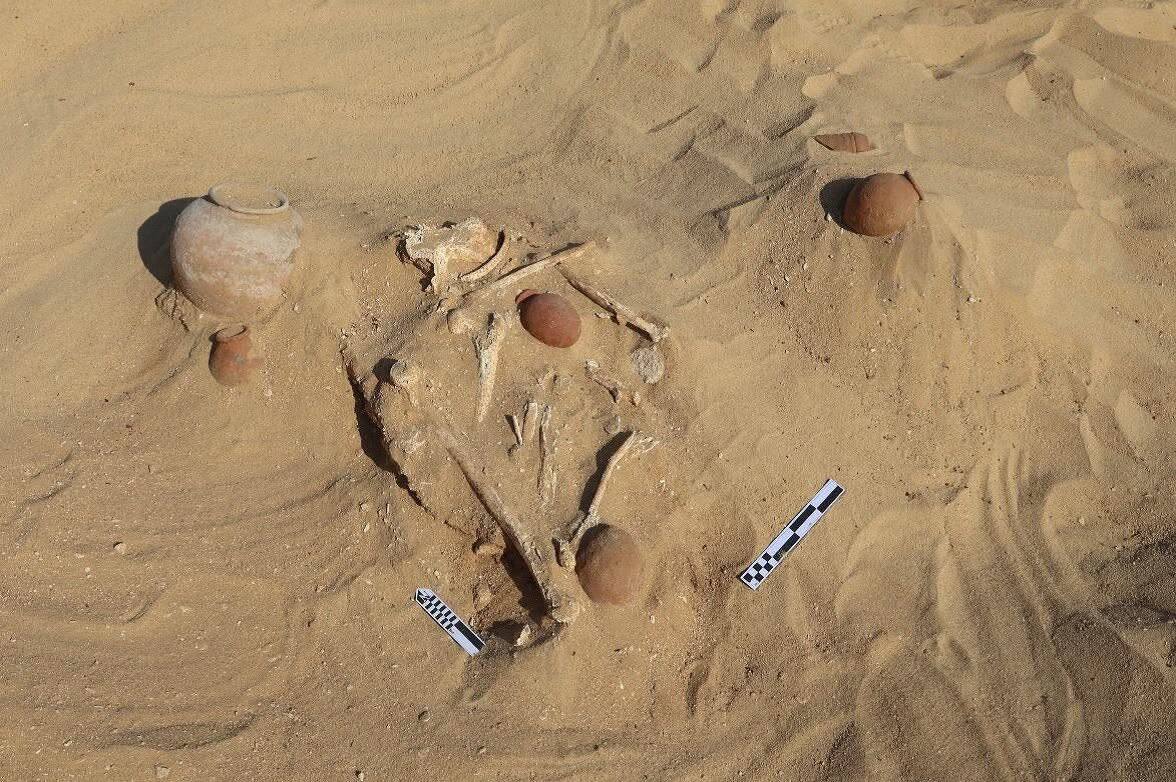
Sami Derdery, head of the mission and of the Central Administration of Middle Egypt Antiquities, said that the team also found part of a prehistoric cemetery with bodies buried in a crouched position and wrapped in decayed plant matting.
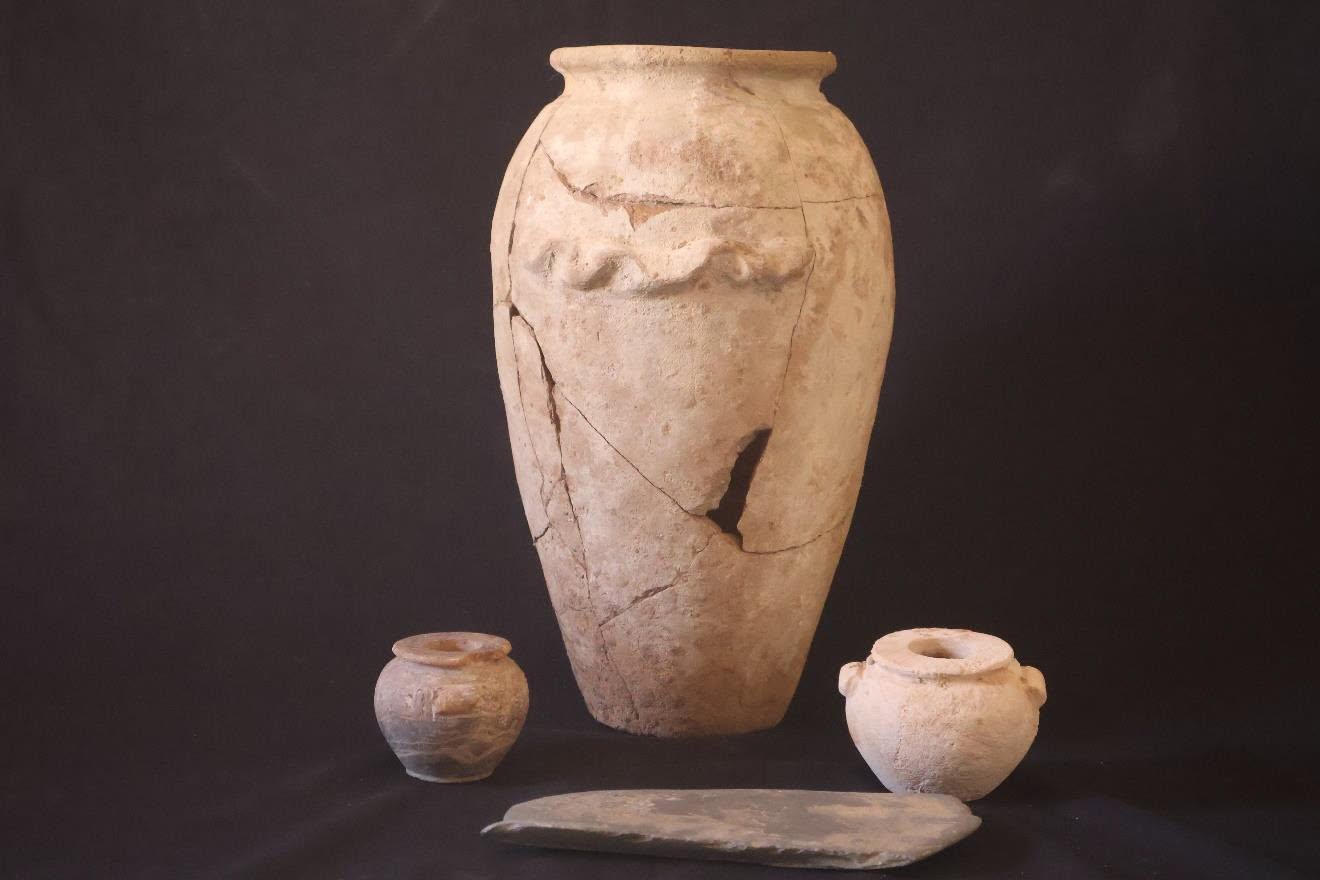
Black-topped pottery found nearby dates to the Naqada II and III periods. Researchers also found individual and group burials, some inside decayed wooden coffins, dating to the late period.
See all the latest news from Greece and the world at Greekreporter.com. Contact our newsroom to report an update or send your story, photos and videos. Follow GR on Google News and subscribe here to our daily email!

