



In a powerful display of cultural solidarity, the culture ministers of Greece and Italy gathered at the Archaeological Museum of Thessaloniki on Tuesday to showcase the repatriation of 145 ancient bronze coins and review the landmark results of their joint crackdown on the illicit antiquities trade.
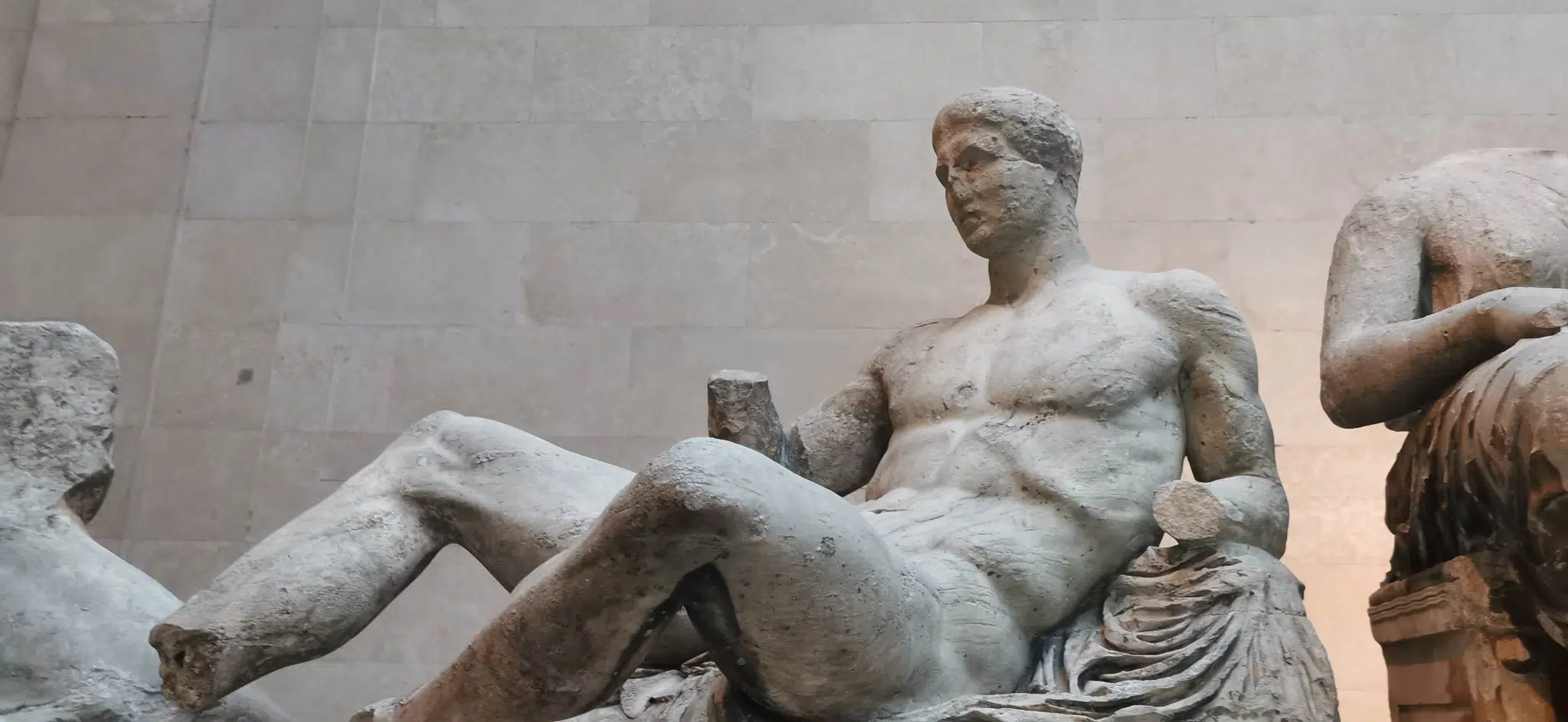
Italy’s support for the reunification of the Parthenon Marbles
The event, however, went far beyond a standard return of artifacts, as Italy explicitly threw its diplomatic weight behind Greece’s long-running battle to secure the return of the Parthenon Marbles from the British Museum.
Standing alongside Greek Culture Minister Lina Mendoni, Italian Culture Minister Alessandro Giuli praised the deep bilateral coordination between Rome and Athens. He voiced firm support for the reunification of the Parthenon Sculptures, expressing hope that the successful Greek-Italian model of protecting and restoring displaced archaeological heritage would “provide an example to our British friends.”

Greece-Italy cooperation in combating antiquity looting
The presentation marked the first public assessment of a Memorandum of Understanding officially signed by the two nations in June 2025. To ensure the momentum continues, both ministers signed an extension of this strategic partnership through March 2027. The agreement focuses on tracing, documenting, and physically reconstructing thousands of historic objects violently severed from their original archaeological contexts by international smuggling rings.
At the heart of this bilateral cooperation is the dismantling of the network surrounding the notorious late British antiquities trafficker Robin Symes. The sprawling investigation, sparked originally by a raid on a Cycladic warehouse on the island of Schinoussa in 2006, culminated in May 2023 with the return of 351 intact ancient objects to Greece.

However, the true scale of the devastation left in Symes’s wake was realized in July 2023, when the Thessaloniki Museum received five massive crates containing nearly three hundred smaller boxes filled entirely with random, unidentifiable pottery fragments.
Olympia Vikatou, the new Secretary General for Culture, described the shocking reality of opening those crates, noting that the fragments were completely stripped of context and occasionally stored in cheap hotel soap boxes. Mendoni revealed that the joint team is painstakingly analyzing roughly seventy thousand of these shattered pottery fragments. Despite the daunting complexity of the jigsaw puzzle, the collaboration has yielded incredible success.
Museum Director Anastasia Gadolou announced that over seventy high-quality vases have already been fully reassembled. Luigi La Rocca, head of the Italian cultural heritage protection service, added that several of the newly restored vessels have been confidently attributed to some of the most significant master creators of ancient Attic vase painting.
As Greece intensifies its international diplomatic efforts to retrieve the remaining Parthenon sculptures currently housed in London, Italy has solidified its status as Athens’ closest ally in the fight against cultural theft. The message from Thessaloniki was clear: if Rome and Athens can recover looted antiquities and reverse the damage caused by the black market, the British Museum no longer has an excuse to hold onto looted history.
Related: UNESCO Calls on UK and Greece to Intensify Parthenon Marbles Talks
See all the latest news from Greece and the world at Greekreporter.com. Contact our newsroom to report an update or send your story, photos and videos. Follow GR on Google News and subscribe here to our daily email!

