



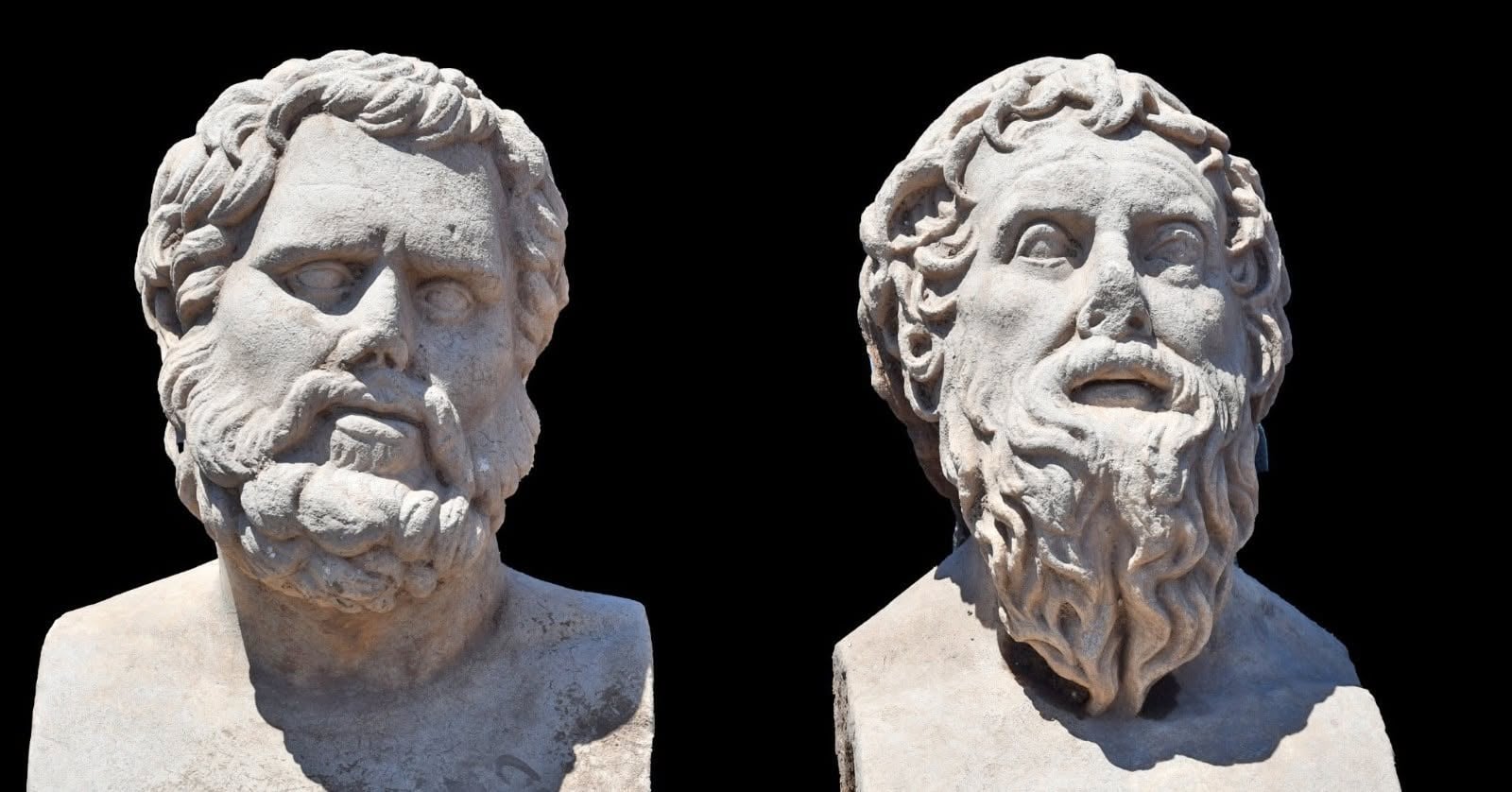
Archaeologists in Israel have uncovered two remarkably well-preserved marble busts with a Greek inscription dating back about 1,700 years near Binyamina, shedding new light on life during the Roman and Byzantine periods.
The marble busts, known as protomes, depict figures from the Greco-Roman world. They were discovered buried inside a wine-collection pit connected to a Roman-Byzantine winepress.
The statues were uncovered during an excavation led by the Israel Antiquities Authority as part of the “Connecting Israel” infrastructure project carried out by the Ministry of Transportation and Israel Railways.
The discovery is considered unusual because marble artifacts from this period are rarely found intact. Researchers say the excellent state of preservation offers valuable insights into the art and culture of the ancient world.
Statues were deliberately buried
The statues date to the Roman period, but archaeologists did not find them in their original location, explained the excavation directors Eliran Oren and Avishag Reiss of the Israel Antiquities Authority.

Instead, they were discovered carefully placed face down inside a wine-collection pit belonging to a Roman-Byzantine winepress. This suggests they were intentionally buried when the winepress was no longer in use.
The excavation directors described the find as highly unusual. “This is a once-in-a-lifetime discovery,” they said. “It was very unexpected.”
Greek inscription offers clues
One of the statues bears a Greek inscription preserving the name “Lycurgus (Greek: Λυκοῦργος).” According to Dr. Peter Gendelman, a Caesarea region expert with the Israel Antiquities Authority, the discovery adds to a growing collection of ancient portraits previously found in Caesarea.
Gendelman explained that two notable figures from Greek history carried this name: Lycurgus of Sparta, traditionally regarded as the city’s founder and lawgiver, and Lycurgus of Athens, a prominent statesman and orator of the fourth century B.C.
Researchers say the inscription could help identify the figure depicted and reveal more about cultural influences in the region during the Roman period.
Statues reflected status and culture
Gendelman said statues of this kind were commonly displayed in public buildings and the homes of wealthy families. Members of the elite used them to express their connection to the cultural and intellectual traditions of the ancient world, he explained.
Archaeologists also identified the remains of a bathhouse near the discovery site, raising the possibility that the busts once decorated an upscale villa in Caesarea before being buried centuries ago.
Following their initial public display, the statues will undergo cleaning, conservation, and further study to understand their origin and historical significance better.
See all the latest news from Greece and the world at Greekreporter.com. Contact our newsroom to report an update or send your story, photos and videos. Follow GR on Google News and subscribe here to our daily email!

