



Greek island of Sifnos is reviving one of its most distinctive links to antiquity through phryctoria, the ancient Greek beacon-tower communication system.
The custom centers on the symbolic lighting of ancient tower sites across the island, recreating the visual communication network once used to transmit messages over long distances. In antiquity, such systems relied on fire, smoke, sunlight, mirrors, and clear visual contact between elevated points.
Mrs. Katsilieri, who spoke to Greek Reporter about the custom, said the towers were built in strategic locations so they could communicate visually with one another.
“In ancient times, phryctoriae were used as a means of remote communication,” Katsilieri said to Greek Reporter. “The towers were built in strategic locations, in areas where they could have visual contact with each other.”
A network linked to Sifnos’ ancient wealth
According to Katsilieri, Sifnos developed an extensive network of towers because the island was wealthy in antiquity and needed protection. She said the island’s mineral wealth, including gold, exposed it to the danger of enemy raids and made a fast warning system essential.
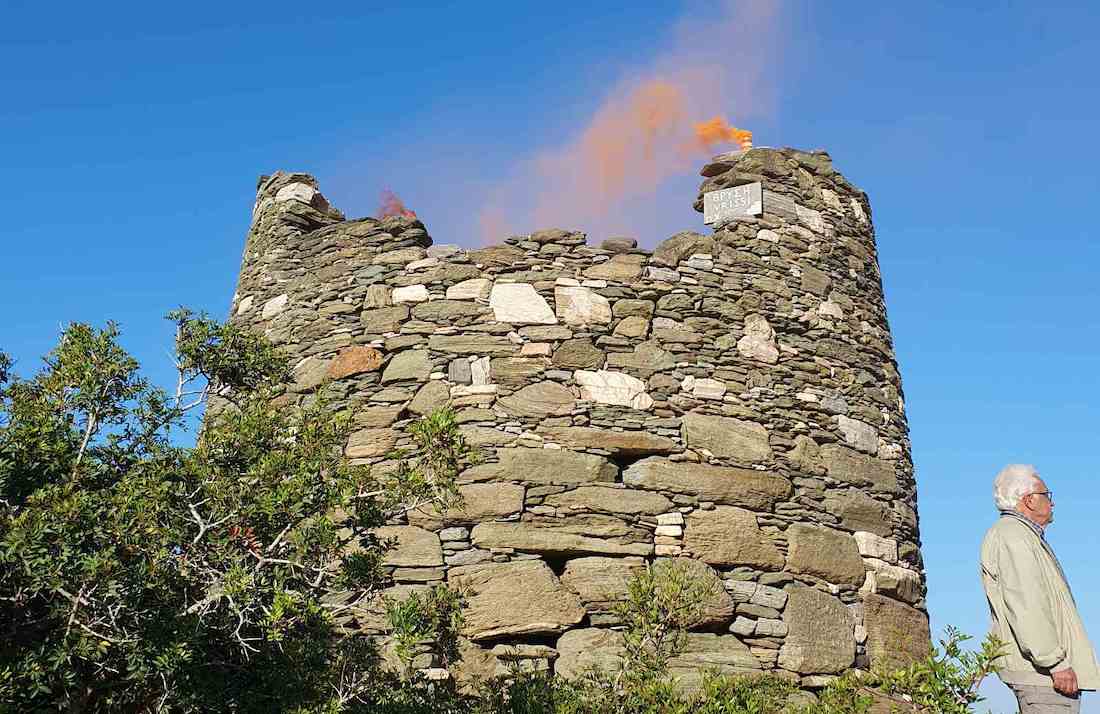
The towers of Sifnos, she said to Greek Reporter, were round, two-story structures built between the 6th and 3rd centuries BC.
The same structures continued to serve communication and surveillance needs in later periods. During Byzantine times, Katsilieri said, they were known as viglas, or watch posts, while those responsible for guarding them were called viglatores.
Katsilieri also connected the broader ancient practice of beacon communication with the famous tradition of the fall of Troy. She noted that, according to ancient tradition, the news of the city’s fall was transmitted across great distances through a chain of fire signals.
Greece’s Sifnos revived ancient phryctoria through the Cyclades Regatta
The modern revival of phryctoria on Sifnos began more than two decades ago, when the island was preparing to welcome the Cyclades Regatta, an international offshore sailing race.
Katsilieri said to Greek Reporter that the idea came from the then-president of the Municipality’s Tourism Committee, who suggested lighting some of Sifnos’ ancient towers to symbolically welcome the sailing fleet arriving on the island.
The first revival involved about 20 to 21 towers. The following year, the number rose to around 30, and the year after that to about 40, as the initiative gradually gained momentum on the island.
When the Regatta could no longer return to Sifnos every year, the idea had already taken root among residents.
“When the Regatta had to go to other islands and could not come every year to Sifnos, this had already become something people on the island were waiting for,” Katsilieri said to Greek Reporter. “So we decided to dedicate a day to the revival of the communication of the ancient towers.”
The event has since developed into an annual cultural tradition on Sifnos. Katsilieri said this year marks the 23rd anniversary of the revival.

Volunteers climb the hills to “host” the towers
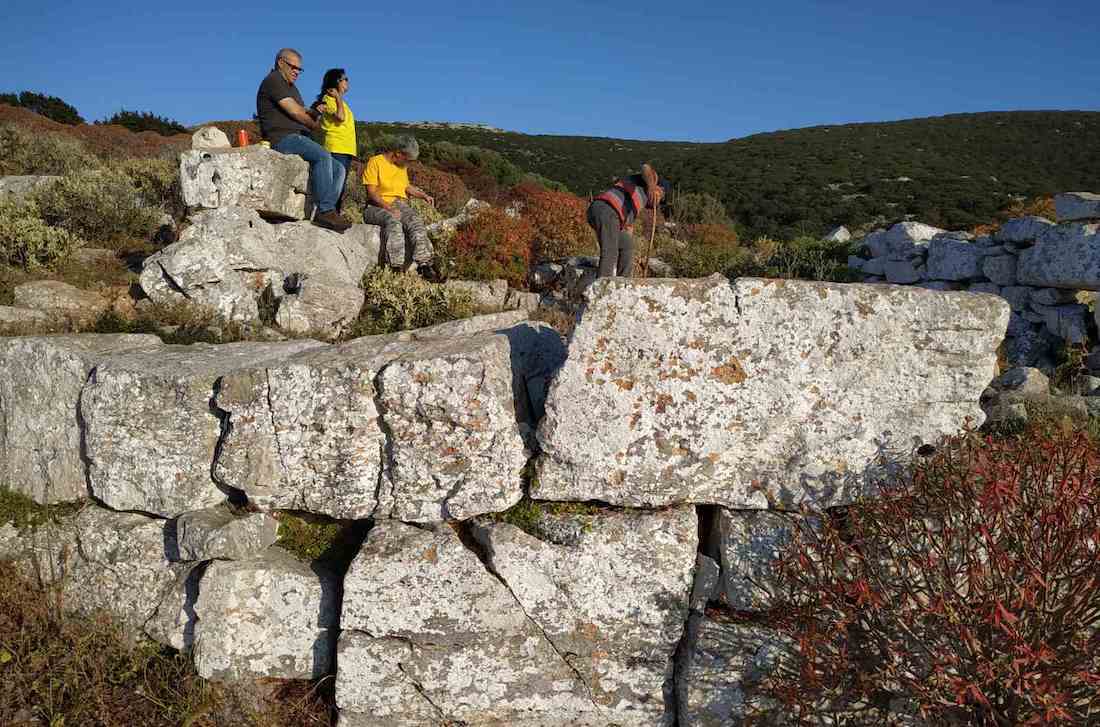
The revival depends heavily on local participation. Katsilieri said to Greek Reporter that most volunteers are residents of Sifnos, although visitors who happen to be on the island during the event also take part, usually accompanying local volunteers.
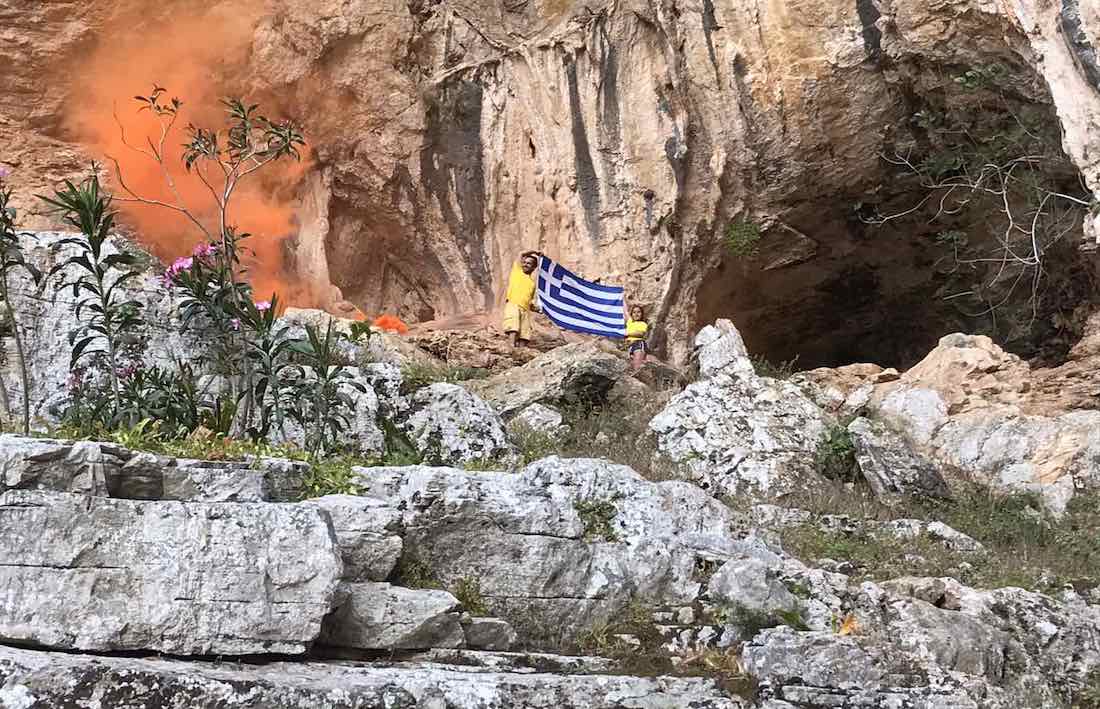
Participants include families, farmers, entrepreneurs, doctors, archaeologists, and people from many different backgrounds. Some volunteers walk for as long as two hours to reach their assigned tower, since many of the ancient sites stand on hills or in places that are not easily accessible.
Each group essentially “hosts” a tower for the evening. The symbolic communication lasts only briefly and uses safe smoke devices, preserving the spirit of the ancient signal system while protecting the landscape and archaeological sites.
Technology has also changed the way people experience the event. In earlier years, volunteers gathered afterward to share photographs from their towers. Today, people can follow the lighting online.
From Sifnos to the Wider Cyclades
What began as a local event on Sifnos has gradually grown into a wider Cycladic initiative.
By the 10th anniversary of the revival, around 80 archaeological sites and points of interest were being lit across the island, including ancient towers, citadels, sanctuaries, and other historic locations.
For the 20th anniversary, Sifnos opened the initiative to other Cycladic islands with similar watchtower traditions. Katsilieri said to Greek Reporter that last year, 14 Cycladic islands took part, with around 100 monuments and approximately 800 volunteers participating.
The expansion has transformed the revival into a shared Cycladic cultural event. Other islands now join the symbolic network, identify their own towers, and bring volunteers together around their archaeological heritage.
Greece’s Sifnos keeps ancient Phryctoria alive through its people
For Katsilieri, the revival’s significance goes far beyond the visual impact of the event. Its deeper value, she said, lies in the way it brings people closer to archaeology and helps them see ancient monuments as part of their own living heritage.
She explained that many people often feel distant from museums and archaeological sites, viewing them as formal spaces governed by restrictions or as places meant mainly for specialists. The towers on Sifnos create a different kind of connection.
“When people go to the towers, they feel them as their own,” Katsilieri said to Greek Reporter. “They enter the ruins, understand what they would have been like at their original height, and discover the history behind places many people once saw only as stones.”
She also recalled an archaeologist from England who visited Sifnos specifically because of the towers and viewed the revival as a powerful example of how an entire local community can come together around its archaeological heritage.
See all the latest news from Greece and the world at Greekreporter.com. Contact our newsroom to report an update or send your story, photos and videos. Follow GR on Google News and subscribe here to our daily email!

