



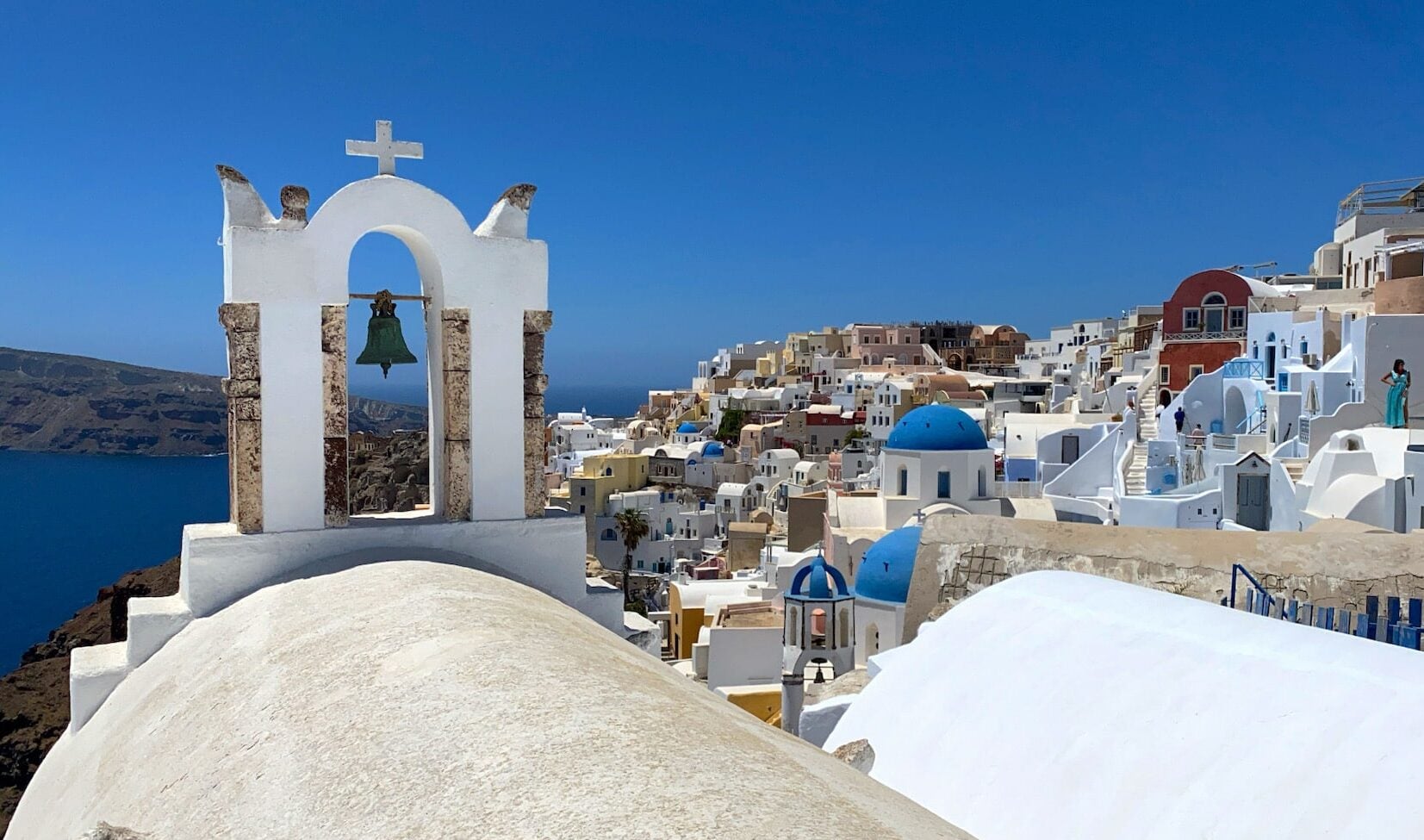
In a historic move for the island of Santorini, Saint Irene (Hagia Irini) has been officially declared its patron saint. This decision follows a formal request by the Holy Metropolis of Thira, Amorgos, and the Islands to the Municipal Council of Thira.
The bond between the island and Saint Irene is deeply rooted in history. According to the most widely accepted theory, the name “Santorini” is an adaptation of “Santa Irini,” the name used by Latin explorers and Crusaders during the Medieval period to honor the saint. Over the centuries, this name evolved into the modern “Santorini,” serving as a permanent link to the island’s spiritual identity.
This year marks the first time the feast of Saint Irene will be celebrated with full official honors on Tuesday, May 5th. The festivities will begin in the morning with traditional religious services led by the Holy Metropolis. At 6:30 p.m., an official anniversary program will take place in the courtyard of the Cathedral, attended by church dignitaries, local government officials, and community leaders.
Santorini: The origin of the name
While the island’s ancient name is Thira, the transition to “Santorini” occurred around the 12th or 13th century.
It is believed that foreign sailors anchored their ships at a Santorini bay, where there was a church dedicated to Saint Irene. They referred to the destination as the “island of Santa Irini,” which eventually became the name for the entire volcanic complex.
Who was Saint Irene and the Santorini connection?
Saint Irene of Thessaloniki, the saint honored on May 5th, lived during the late 3rd to early 4th century. She was a martyr who, according to tradition, remained steadfast in her faith despite persecution. In the Cyclades, she is revered not only as a protector but as a symbol of the island’s endurance through its long history of volcanic eruptions and changes in rule.
One of the most significant monuments related to her is the Early Christian Basilica of Saint Irene in Perissa, located at the foot of Mesa Vouno. Dating back to the 5th or 6th century, it was once a massive, three-aisled basilica. Its ruins are still visible today and provide evidence that the island was a major Christian center during the Byzantine era. It is arguably the most important religious landmark connecting the saint’s name to the physical landscape of Santorini.
The official proclamation of Saint Irene as Patron Saint formalizes a centuries-old tradition. For locals, this move honors the transition from the ancient “Calliste” (The Most Beautiful) and “Thira” to the globally recognized “Santorini,” bridging the gap between the island’s Greek Orthodox present and its Venetian/Latin past.
Related: Where Do the Names of Greek Islands Come From?
See all the latest news from Greece and the world at Greekreporter.com. Contact our newsroom to report an update or send your story, photos and videos. Follow GR on Google News and subscribe here to our daily email!

