



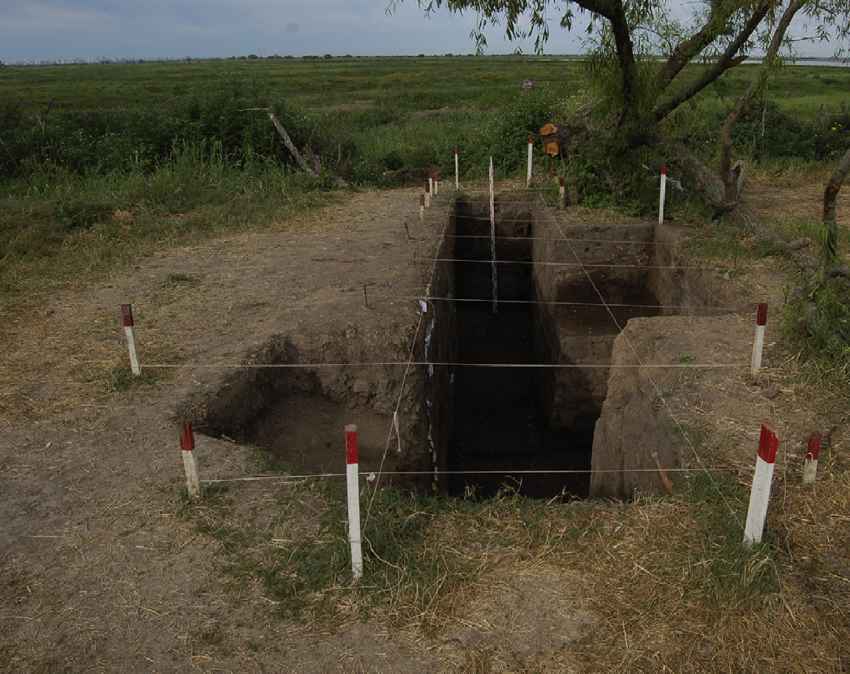
Scientists have reconstructed more than 6,000 years of human history in South America’s southern regions. The findings reveal that ancient populations were far more genetically complex and geographically mobile than archaeology alone had suggested.
The study was led by Kim-Louise Krettek of the University of Tübingen in Germany and published in Current Biology. Researchers analyzed genome-wide data from 52 ancient individuals buried across 31 sites in present-day Argentina and Uruguay.
The individuals dated between 6,000 and 150 years ago, spanning four regions: the central and southern Pampas, Northwest Patagonia, the Paraná River Delta and Lower Uruguay River, and the eastern lowlands of Uruguay.
Three distinct ancestries found in the Middle Holocene Pampas
One central finding challenges earlier assumptions about the Middle Holocene Pampas. Researchers identified at least three genetically distinct ancestries present in the region, not a single continuous genetic profile previously assumed.
The oldest two groups, dating to 7,700 and 6,800 years ago, share a baseline ancestry. A third group, dated to 6,000 years ago in the southern Pampas, shows strong genetic ties to populations from southeastern Patagonia, hundreds of miles to the south.
Scientists have uncovered surprising details about human history in South America, tracing 6,000 years of migration and genetic diversity across Argentina and Uruguay. pic.twitter.com/9DwbXK0bap
— Tom Marvolo Riddle (@tom_riddle2025) April 24, 2026
A separate ancestry of still-unknown geographic origin entered the southern Pampas around 5,500 years ago. It grew significantly by 4,000 years ago and eventually became the dominant genetic profile across the region.
Researchers tracked this same ancestry reaching the Lower Uruguay River by 1,500 years ago and Northwest Patagonia by at least 600 years ago.
Andean ancestry persisted in northwest Patagonia for millennia
In Northwest Patagonia, southern Andean ancestry appears as early as 4,400 years ago and remained present through colonial times. One individual at the Aquihueco site, also dated to around 4,400 years ago, showed an even stronger Andean genetic signal. Researchers say that this points to a likely recent migrant from the Andes into the region.
Along the Paraná River Delta, researchers found a clear genetic divide between individuals from the Upper and Lower Delta, both dating to around 600 years ago.
This genetic split closely matches previously documented differences in ceramic styles between the two areas. Together, the evidence suggests they represented distinct cultural communities despite their geographic proximity.
Coastal dispersal reshaped South America’s human history
The most unexpected finding came from eastern Uruguay. An individual dated to 730 years ago showed clear genetic connections to Sambaqui shell mound communities from the southern coast of Brazil.
Those communities were already linked to the spread of Kaingang ancestry and Je language speakers. Researchers say that this points to a coastal population movement carrying this lineage from southern Brazil into Uruguay.
Krettek said the findings show that large-scale human movements were closely tied to the remarkable cultural diversity that developed across South America’s southern regions during both the Middle and Late Holocene.
See all the latest news from Greece and the world at Greekreporter.com. Contact our newsroom to report an update or send your story, photos and videos. Follow GR on Google News and subscribe here to our daily email!

