



Archaeological surveys tied to a highway project in Brazil’s Amapá state have uncovered artifacts from Amazon’s indigenous inhabitants who lived there long before European colonization reshaped the continent.
Excavations at nine sites along the BR-156 highway produced pottery vases believed to be burial urns. Archaeologists also found small carved objects resembling human faces. The pottery showed multiple styles and techniques, pointing to cultural ties stretching from Brazil’s Pará state to the Caribbean.
Lúcio Flávio Costa Leite heads the Archaeological Research Center at Amapá’s Institute for Scientific and Technological Research. He said road construction creates a difficult balance for researchers.
Such projects drive deforestation but also require archaeological surveys that lead to important finds. He added that those discoveries push authorities toward longer-term protection of affected areas.
Excavation layers track Amazon’s indigenous inhabitants through colonization
Archaeologist Manoel Fabiano da Silva Santos worked with a team from the National Department of Transport Infrastructure. He described the excavation layers as a historical record.
Near the surface, he found Portuguese porcelain and iron nails. Deeper down, Indigenous ceramics appeared, marking a clear transition from before colonization to the period that followed.
New findings along a Brazilian highway reveal how Amazon's indigenous inhabitants built connected societies long before European colonization reached the continent. pic.twitter.com/7i9WNET8Ng
— Tom Marvolo Riddle (@tom_riddle2025) April 24, 2026
Those artifacts will enter Amapá’s state collection, managed by Costa Leite. It holds around 530,000 pieces, with the oldest dating back about 6,140 years. Costa Leite said the pottery reflects a sophisticated understanding of materials and landscape, which he considers to be its own form of technology.
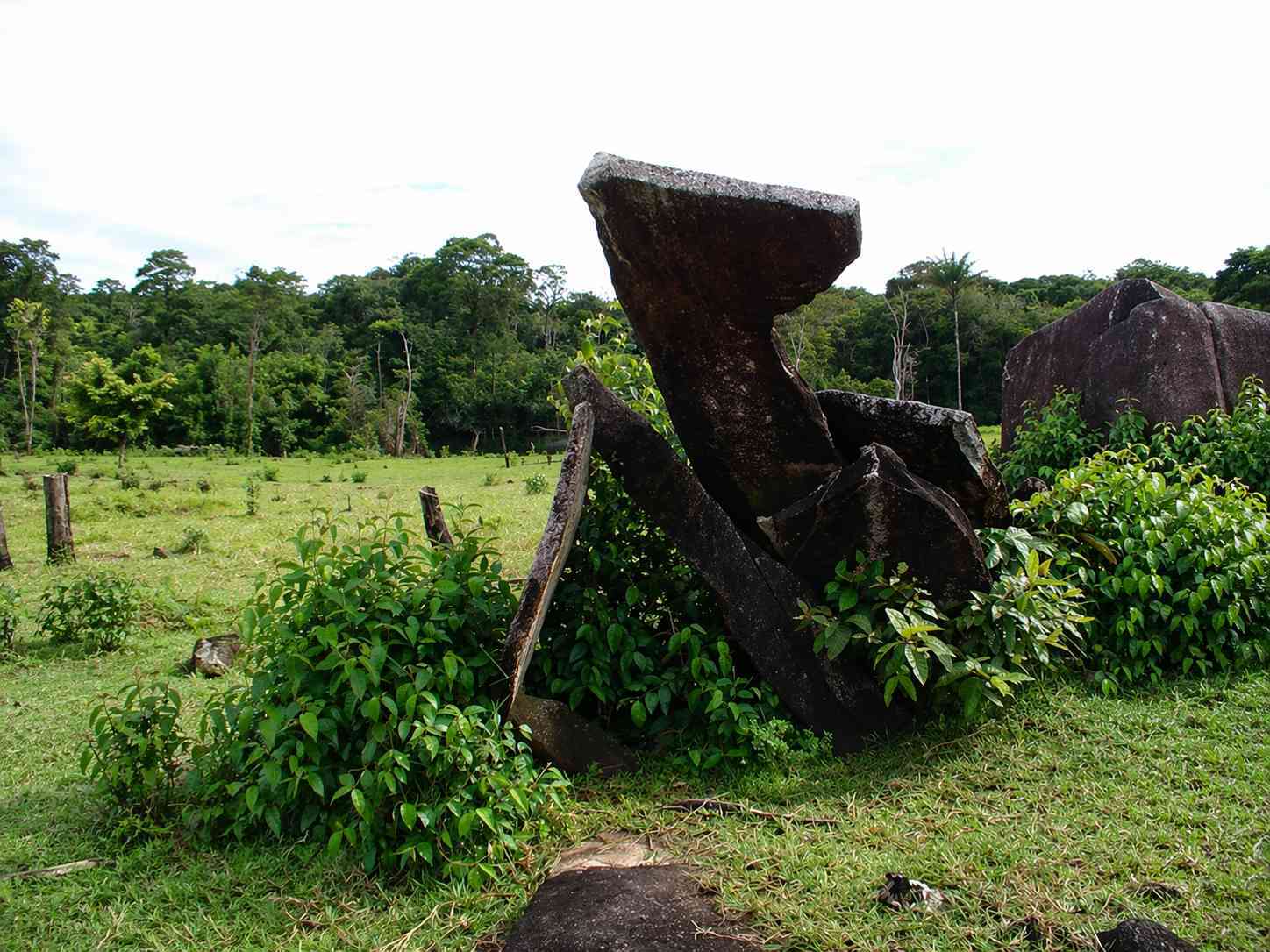
One of Amapá’s most significant sites sits in the city of Calçoene. A stone monument there features 127 carved stones arranged in a circle about 30 meters (98 feet) wide. It stands in open grassland near the rainforest and has drawn comparisons to Stonehenge in Britain.
Stone monument in Calçoene draws comparisons to Stonehenge
Archaeologist Mariana Petry Cabral of the Federal University of Minas Gerais helped begin work at the site about 20 years ago. She said the stones were brought in from surrounding areas rather than sourced on-site. Their full meaning remains unclear.
Later excavations confirmed that the area served as a burial ground. Radiocarbon dating showed the site was in use for several hundred years, starting around 1,100 years ago.
The stones were also positioned to mark where the sun rises during the Northern Hemisphere’s winter solstice.
Discovered in 2005, the site is open to visitors with prior approval. It is also being considered for national park status. Brazilian law prohibits alterations to archaeological sites, which helps protect the surrounding forest as well.
Satellite scans reveal ancient roads and settlement networks
Eduardo Neves is an archaeology professor at the University of São Paulo. He has studied the Amazon for more than 30 years and, since 2023, has led the Amazon Revealed project.
It uses satellite scans to locate sites beneath the forest canopy. The scans identified road networks linking large settlement clusters, most clearly in southern Amazonas state and Acre.
Neves said Amazon’s indigenous inhabitants were far more interconnected and organized than commonly assumed.
Cabral said Amapá is central to understanding how active and wide-reaching these ancient populations and their exchange networks truly were.
See all the latest news from Greece and the world at Greekreporter.com. Contact our newsroom to report an update or send your story, photos and videos. Follow GR on Google News and subscribe here to our daily email!

