



New research shows that the Mycenaeans may have used metal tools to shape arrowheads around 3,000 years ago, offering new insight into how advanced their craftsmanship was during the Bronze Age.
The study suggests that these finely made arrowheads were not shaped using only stone or organic tools, as previously believed, but may also reflect the use of early metal implements.
Researchers led by Odysseas Boitte found that Bronze Age craftsmen in mainland Greece likely used metal-tipped tools alongside traditional materials to refine arrowheads made from obsidian and other siliceous stones. The findings were published in Digital Applications in Archaeology and Cultural Heritage.
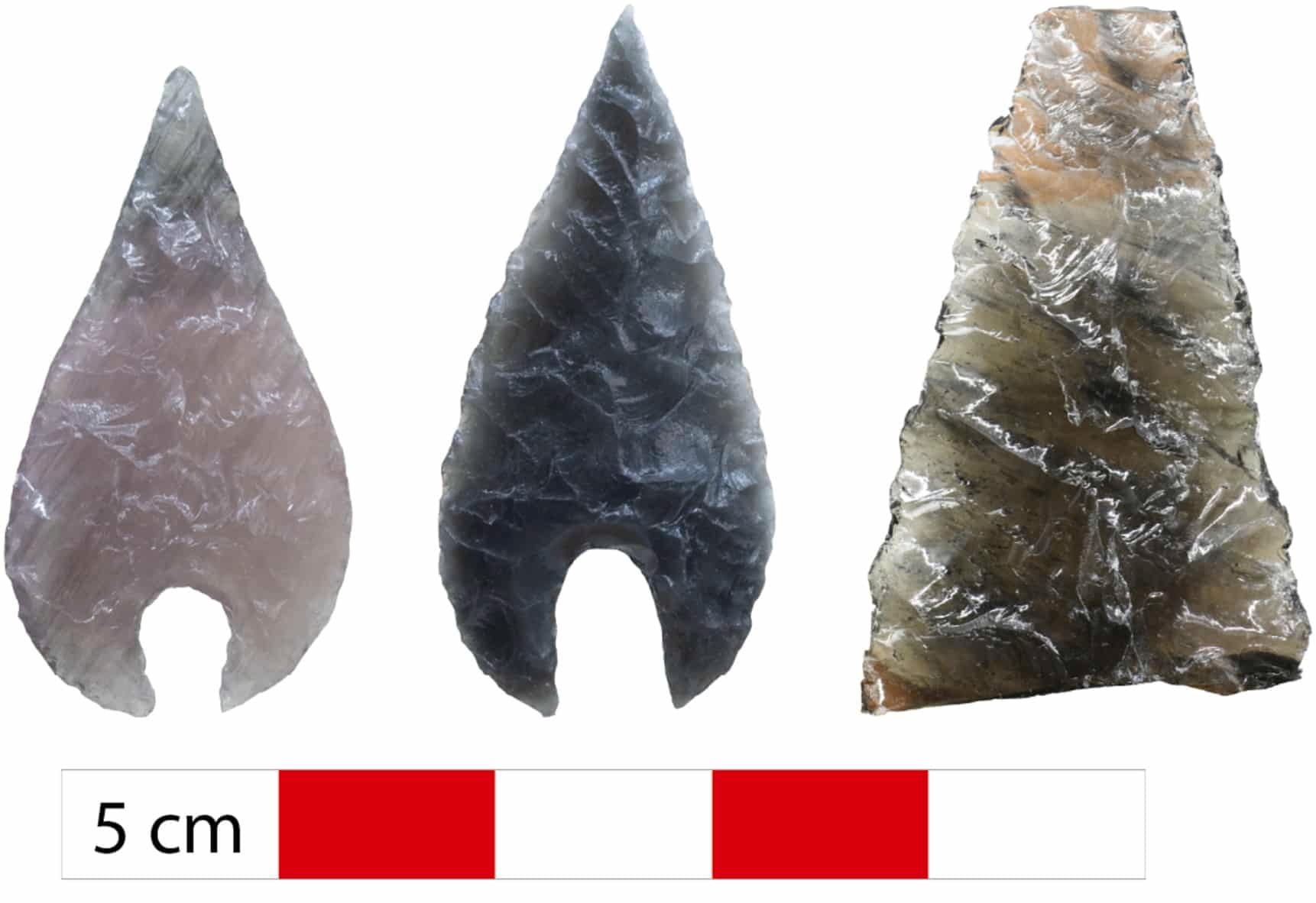
The study focuses on the Late Bronze Age, between 1600 and 1200 BCE, when the Mycenaeans were at their peak. Archaeological discoveries from sites such as Mycenae, Prosymna, and Vranas show that stone arrowheads remained widely used, even as metalworking developed.
Advanced craftsmanship behind simple tools
At first glance, the arrowheads appear simple. However, researchers say their production required a high level of skill. Craftsmen shaped them using a method known as pressure flaking, which involves applying controlled force to remove small pieces of stone and create sharp edges.
This technique allowed artisans to produce thin, symmetrical arrowheads, often just two to three millimeters thick. The process likely began with rough shaping using direct percussion techniques, followed by careful refinement.
While scholars have long understood how these arrowheads were made, the tools used in the final stages remained unclear. Earlier theories suggested that tools made from bone or antler were used. The new study revisits this question using modern scientific methods.
New methods reveal hidden surface details
To better understand the tools involved, researchers analyzed 29 archaeological arrowheads and compared them with 60 experimental replicas. The team used non-invasive silicone molds to capture detailed surface impressions without damaging the original artifacts.
These replicas were then examined using high-resolution imaging tools, including confocal microscopy. This technology allowed researchers to study the surface of the arrowheads at a microscopic level, revealing patterns invisible to the naked eye.
Researchers recreated obsidian arrowheads to understand how Mycenaean craftsmen shaped them 3,000 years ago. Subtle differences in surface patterns reveal how different materials, including metal tools, may have been used in the process. pic.twitter.com/hTAG3KjTI2
— Tom Marvolo Riddle (@tom_riddle2025) April 17, 2026
The analysis showed subtle differences in surface textures. Arrowheads shaped with metal tools, particularly copper, displayed smoother surfaces with tightly spaced ripples. In contrast, tools made from animal materials produced more irregular and evenly distributed marks.
These differences reflect how force travels through the stone during shaping. The study suggests that each tool type leaves a unique signature on the surface.
Evidence points to copper tool use
To confirm these observations, the team applied a mathematical technique known as the continuous wavelet transform. This method analyzes surface patterns across different scales, helping identify consistent differences in texture.
The results showed that arrowheads shaped with copper tools had more uniform surface patterns. This indicates a more controlled and stable force during shaping, consistent with the use of metal implements.
Although no direct traces of copper were found on the artifacts, the surface patterns provide indirect evidence. Researchers say this approach offers a new way to identify tool materials, even when physical residues are absent.
The findings support earlier suggestions that metal tools were used in stoneworking during the Bronze Age. However, this study provides more precise and measurable evidence.
Rethinking Bronze Age technology
The research highlights the continued importance of stone tools in a period often associated with metal. It also shows that ancient craftsmen combined materials and techniques to achieve better results.
By using both traditional and advanced methods, the study sheds new light on the technical knowledge of Mycenaean artisans. It also demonstrates how modern technology can help answer long-standing archaeological questions.
Researchers say further studies with larger datasets could confirm these findings and refine the method. For now, the results offer strong evidence that metal tools played a role in shaping some of the most finely crafted arrowheads of the Bronze Age.
See all the latest news from Greece and the world at Greekreporter.com. Contact our newsroom to report an update or send your story, photos and videos. Follow GR on Google News and subscribe here to our daily email!

