


A newly excavated mega structure in Romania may help explain how one prehistoric community organized life without clear signs of kings, palaces, or major wealth gaps.
Researchers studying the Cucuteni settlement of Stăuceni-“Holm” in northeastern Romania say the unusually large building may have served as a communal or political space, not an ordinary home.
A mystery of large but equal societies
The study, led by Doris Mischka and published in PLOS One, focuses on a large building found at Stăuceni-“Holm” in Botoșani County. The site belongs to the Cucuteni culture, part of the wider Cucuteni-Trypillia world, known for very large settlements that spread across parts of today’s Romania, Moldova, and Ukraine.
For years, archaeologists have debated how these large settlements functioned. Many appeared carefully planned, yet they showed few obvious signs of social hierarchy. Houses often looked similar in size and form.
There were no clear palaces, no writing system, and little evidence of rulers in the usual sense. That raised a major question: how were such places governed?
A building that stands out
The Stăuceni structure stands out sharply from the rest of the settlement. Most houses there measure about 70 to 120 square meters. This one is about 350 square meters. It also sits in a prominent position near the southern edge of the site, close to the likely entrance. That location made it highly visible to anyone approaching the settlement.
Evidence from excavation
Geomagnetic surveys first revealed the settlement plan. They showed at least 45 buildings and a system of ditches and possible palisades. Among those features, one oversized building drew special attention. Excavations in 2023 and 2024 then focused on its southwestern corner.
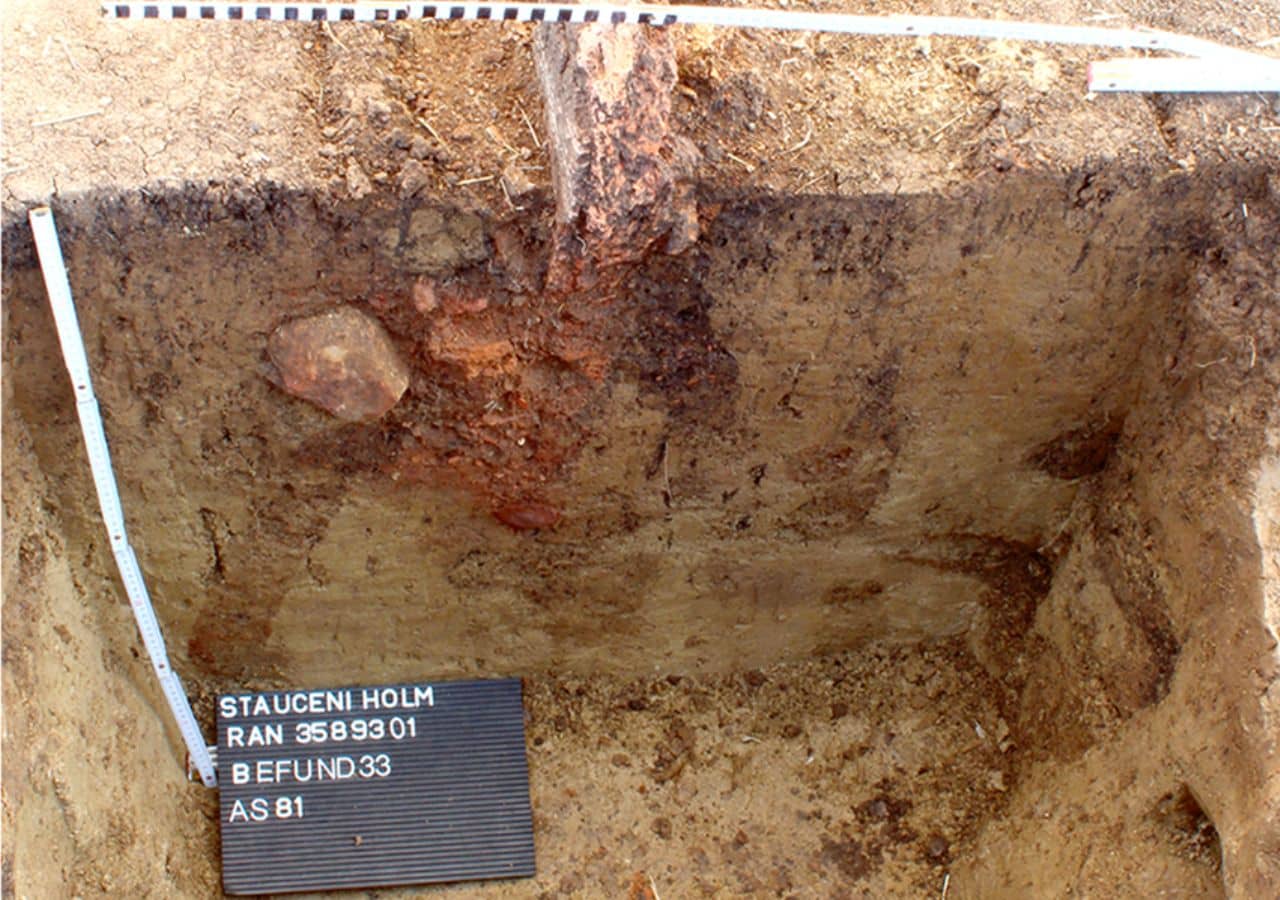
Researchers found a rectangular foundation ditch with posts set at regular intervals. Inside, the floor had been built from split wooden logs laid flat and covered with clay. Two large central postholes suggest the roof may have been supported by internal posts. But the building lacked features usually found in domestic houses, such as ovens, hearths, and clear internal rooms.
Rethinking earlier interpretations
That difference matters. Normal Cucuteni houses often leave heavy remains of burnt clay from walls and floors. This structure produced much less of that material. The evidence suggests a different type of building, possibly one with partly open space or lighter wooden elements that burned away.
The excavation also challenged earlier assumptions based on geophysical images. Some internal magnetic anomalies had looked like room divisions or installations.
But once archaeologists dug down, they found that many of those signals came only from scattered burnt clay, not real interior structures. The team says this is a warning against reading too much from geophysical data alone.
Limited signs of daily activity
Artifacts from the building were relatively few. Researchers found pottery fragments, a bowl with a bull-head decoration, ladles, and a clay cone sometimes called a “conical idol.” They also recovered plant remains, including cereals, weeds, and fruits such as plum, elder, and hawthorn. One sample included henbane, a plant linked to medicinal or psychoactive use.
Even so, the finds do not strongly support the idea that the building served as a storage center, kitchen, or heavily used ritual hall. There were no strong signs of large-scale food preparation, and special objects were limited.
A massive prehistoric building in Romania is reshaping what we know about early societies.
A new PLOS One study led by Doris Mischka reveals a “mega structure” that may have served as a communal or decision-making space, not a home. pic.twitter.com/Ub66du2fKN
— Tom Marvolo Riddle (@tom_riddle2025) April 16, 2026
That leaves open several possible functions. It may have been a meeting place, a decision-making building, or a structure used by a select group within the settlement.
Dating raises new questions
Radiocarbon samples taken from protected spots in the floor date the building to the 40th and 39th centuries BC. That result is important because it may not fit neatly with the traditional dating of Cucuteni A3 pottery found at the site. If the dates are correct, researchers say the broader chronology of this cultural phase may need closer review.
A clue to early social organization
The authors do not claim to have solved the mystery of these mega-structures. But they argue that Stăuceni-“Holm” adds strong new evidence that such buildings played an important role even in smaller settlements, not just in giant mega-sites.
That matters far beyond one Romanian hilltop. The study suggests these structures may have helped communities coordinate social, economic, or political life long before formal states appeared.
See all the latest news from Greece and the world at Greekreporter.com. Contact our newsroom to report an update or send your story, photos and videos. Follow GR on Google News and subscribe here to our daily email!

