



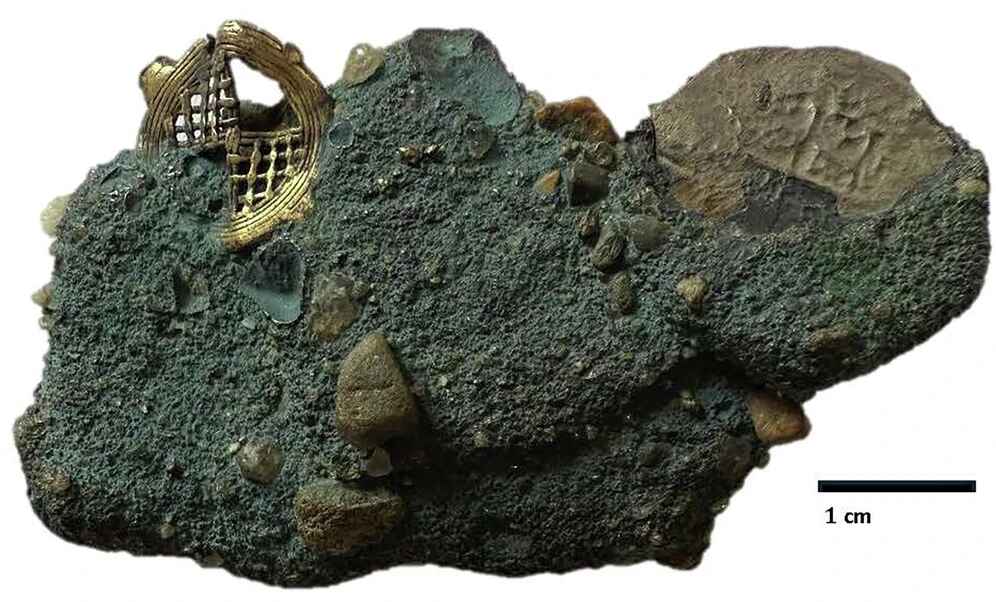
A new scientific study has found that gold recovered from a famous pirate shipwreck was far less fraudulent than European traders long claimed. Researchers analyzed gold artifacts from the Whydah Gally and found that the West African pirate gold closely matched the natural composition of ore deposits in Ghana, directly challenging centuries of accusations that Akan merchants deliberately debased their gold.
The study, published in npj Heritage Science, was led by Tobias B. Skowronek of the University of Bonn, Germany. The Whydah collection represents the largest and most closely dated assemblage of Akan gold artifacts in the world, making it a rare scientific opportunity. Most Akan gold in museum collections was privately gathered with little historical context and cannot be reliably dated.
Pirate ship spent its final voyage along West African waters
The Whydah departed England in 1716, trading along the West African coast from the Senegambia region to the Bight of Benin, including the Gold Coast, modern-day Ghana. The notorious pirate Samuel “Black Sam” Bellamy later captured the vessel near the Bahamas and made it his flagship.
The ship sank during a storm off Wellfleet, Massachusetts, on April 26, 1717. Barry Clifford discovered the wreck in 1984, and the artifacts are now housed at the Whydah Pirate Museum in West Yarmouth, Massachusetts.
For centuries, European writers accused Akan traders of adulterating their gold. In the early 17th century, Pieter de Marees claimed the Akan learned to fuse gold with silver from the Portuguese and grossly debased what they traded.

He warned buyers to cut open gold nuggets to check for hidden iron or glass. In the early 18th century, William Bosman went further, claiming gold dust was mixed with copper or powdered glass.
A gold currency known as kracaws, used near Elmina, was said to be little more than brass filings mixed with small amounts of gold. The Dutch West India Company also repeatedly raised concerns about gold quality in its official records.
Akan gold tested with two separate scientific methods
Skowronek’s team examined 70 pieces from the wreck, selecting 27 for detailed elemental analysis using portable X-ray fluorescence and scanning electron microscopy.
The collection included cast jewelry made using the lost-wax method, natural gold nuggets, and small beads. Several pieces showed signs of clipping, snapping, and hammering, consistent with European traders testing them for hidden impurities.
Silver was detected in nearly all samples but fell within the natural range of Ghana’s Ashanti Gold Belt deposits.
Cast objects contained slightly more copper than natural nuggets, which researchers attributed to workshop contamination or intentional hardening rather than fraud. Gold content across samples ranged from 73.5 to 96.7 percent.
Brazil’s gold rush added a new twist to the story
The researchers also noted that the early 18th century was a period of significant change in the region. Around 1700, Akan states began hoarding gold, partly linked to Brazil’s gold rush in the Minas Gerais region, which reshaped global gold markets and gave the Portuguese new leverage in West Africa.
Skowronek and his team cautioned that these findings represent a narrow window in time and cannot be applied broadly across centuries of West African gold trade. They called for advanced isotope and trace element analysis to better determine the origins of the gold and settle remaining questions about intentional adulteration.
See all the latest news from Greece and the world at Greekreporter.com. Contact our newsroom to report an update or send your story, photos and videos. Follow GR on Google News and subscribe here to our daily email!

