



A laboratory light experiment in Italy has been linked to claims about Jesus’ resurrection, with a physicist’s findings drawing attention from religious scholars and researchers alike.
Paolo Di Lazzaro, senior researcher and chief of research at the ENEA Research Centre in Frascati, Italy, spent five years testing whether ultraviolet lasers could recreate the body image on the Shroud of Turin.
The cloth is a 14-foot linen bearing the front and back outline of a man and is widely believed by Christians to be the burial cloth of Jesus. It was first shown publicly in the 1350s in Lirey, France, and has been disputed by some as a medieval forgery.
Italian lab tests linen linked to Jesus’ burial cloth
Di Lazzaro’s team fired ultraviolet laser bursts at untreated linen woven between 1930 and 1950. The tests produced small patches of faint yellow discoloration with several features matching the shroud, including coloring restricted to the surface threads, neighboring fibers left unaffected, lower fluorescence levels, and a faint image that appears in negative form.
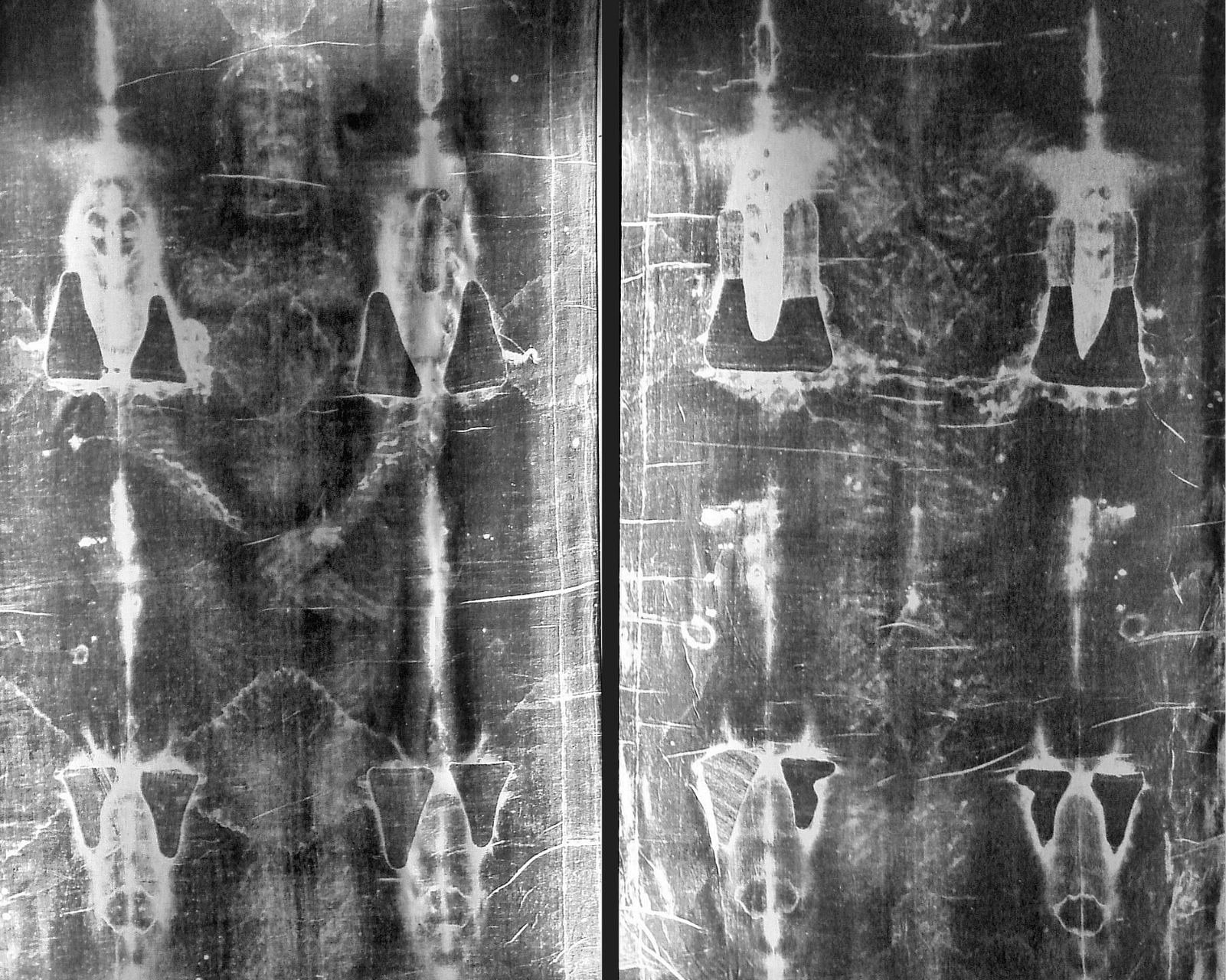
The central finding involved scale. Calculations showed that producing a full-body image like the one on the shroud would require an immense burst of ultraviolet energy released in an extremely brief moment, far beyond what current technology can generate.
Di Lazzaro also noted that ultraviolet light acts only on the outermost layer of linen fibers, changing the surface chemistry without scorching the fabric, which is consistent with how the shroud image behaves.
The study was published in 2010. By that point, Di Lazzaro’s laboratory had spent more than 30 years researching how ultraviolet radiation interacts with metals, plastics, and fabrics.
Can a light experiment prove Jesus’ resurrection?
Biblical scholar Jeremiah Johnston later discussed the results on the Shaw Ryan Show. Johnston said Di Lazzaro told him that creating such an image would require roughly 34,000 billion watts of energy acting within one 40th of a billionth of a second.
He added that this level of power does not exist on Earth. Johnston argued that the light experiment supports belief in Jesus’ resurrection and described the energy involved as what physicists would classify as a nuclear event.
The researchers themselves stopped short of claiming the findings explain how the original image formed, saying the results raise questions that current science cannot fully answer.
See all the latest news from Greece and the world at Greekreporter.com. Contact our newsroom to report an update or send your story, photos and videos. Follow GR on Google News and subscribe here to our daily email!

