



Antisthenes, a prominent figure in ancient Greek philosophy, stands as the founding father of the Cynic school of thought and is known as the tutor of Diogenes of Sinope. He boldly challenged societal customs and laws, and promoted a life of virtue in harmony with nature.
The life of Antisthenes
Diogenes Laertius narrates that Antisthenes’ life was marked by simplicity and defiance of convention. Though his father was an Athenian, his mother was Thracian, which made him a metic (resident alien) rather than a full citizen of Athens. Despite this social limitation, he pursued education with fervor, initially aligning himself with the Sophists before becoming an ardent follower of Socrates. His time with Socrates profoundly shaped his philosophy, particularly his emphasis on self-discipline and the rejection of material wealth.
Following Socrates’ execution in 399 BCE, Antisthenes began teaching in the Cynosarges gymnasium, a place for non-citizens and those of mixed heritage. From this institution, Cynicism derived its name. Here, Antisthenes cultivated a philosophy that celebrated individual freedom and detachment from societal constraints.
The philosophy of Antisthenes
In dialectical discussions, he tried to overturn Socrates’ definition of general concepts. That is, he fought Plato’s theory of ideas and admitted as real only the particular. Only what we see, touch, or otherwise feel really exists (sensualist teaching).
As Alexander of Aphrodisias notes, general concepts, according to Antisthenes, are non-existent (I see a horse, but I do not see chivalry). Each concept means only one thing. From this, the philosopher concludes that no different concept can be attributed to any subject, and the only correct judgments are tautological ones (A is A). It is not correct, according to Antisthenes, to say, for example, “Gold is blond,” but rather “Gold is gold.” Similarly, it is not correct to say, “Man is mortal,” but rather “Mortal is mortal.”
Antisthenes also rejected the definition based on essential characteristics. This philosophy gave rise to the Cynics’ tendency to make themselves completely independent of the needs of the outside world, limiting their needs to a minimum, practicing the endurance all deprivation and all pain, and considering pleasures and especially sexual pleasure to be the greatest evils.
Central to Antisthenes’ teachings was the idea that virtue is the sole good. He believed that it is sufficient for achieving happiness. For him, virtue lies in reason, self-control and living in accordance with nature. He believed that societal laws, customs and material possessions were distractions that enslaved individuals to unnecessary desires and corrupt institutions. He used to say, “True virtue needs nothing. Nor does the wise man, who acts and behaves according to his judgment, need laws. Laws are for the many and the mediocre, not for the elect.”
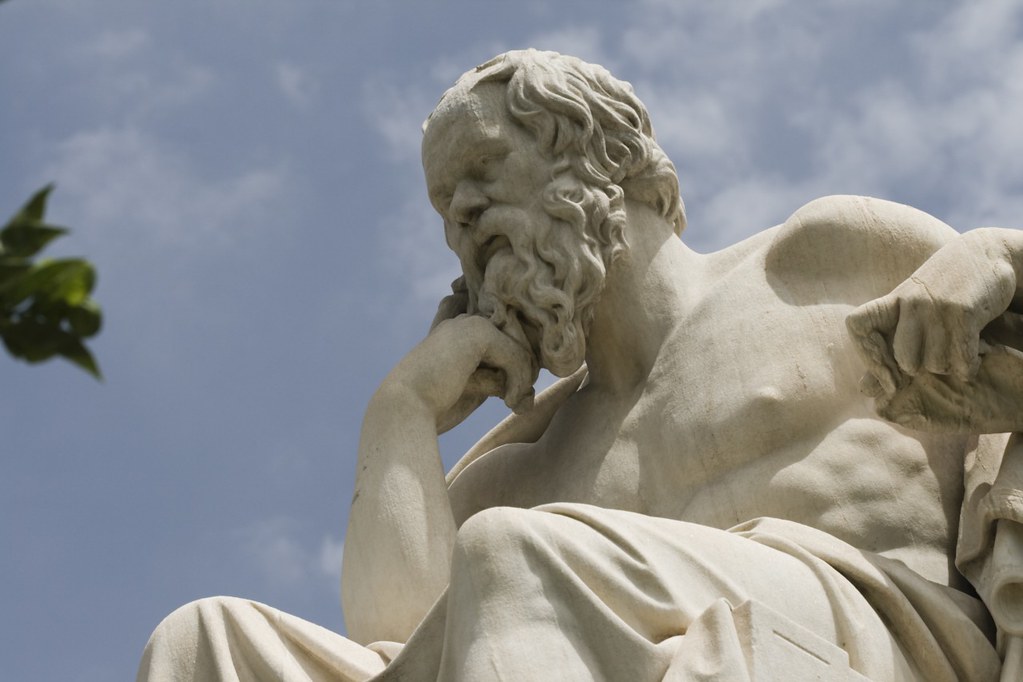
Antisthenes’ rejection of conventional values and emphasis on practical ethics
Antisthenes was a fierce critic of traditional values, arguing that wealth, fame and power were meaningless. He saw these pursuits as chains that bound people to a superficial existence. Instead, he advocated for a life of austerity, where true freedom came from self-sufficiency and independence from societal expectations. By rejecting societal norms, Antisthenes promoted an idea of freedom that transcended the constraints of man-made laws and customs. He argued that one can achieve true freedom by mastering one’s desires and living according to rational principles. For Antisthenes, the wise person was one who lived in harmony with nature, free from the tyranny of external influences.
Unlike many other philosophers of his time, Antisthenes emphasized practical ethics over abstract theory. He believed in living philosophy rather than merely discussing it. This practical approach influenced his followers, who adopted ascetic lifestyles to embody the principles he taught.

The legacy of Antisthenes the Cynic
Antisthenes’ cynic philosophy laid the groundwork for Cynicism, which would later be developed further by his most famous student, Diogenes of Sinope. Diogenes took the ideas of his tutor Antisthenes the cynic to their extreme, living in complete poverty and openly mocking societal conventions. Together, they shaped a movement that stood in stark contrast to the materialism and decadence of their time.
The influence of Antisthenes extended beyond Cynicism. His emphasis on virtue and self-sufficiency resonated with Stoicism, another major school of Hellenistic philosophy. Stoic thinkers like Epictetus and Marcus Aurelius echoed many of his ideas, particularly the importance of living in accordance with nature and the pursuit of inner freedom.
In today’s world, Antisthenes’ critique of materialism and societal constraints remains strikingly relevant. His call to focus on virtue and personal integrity offers a counterpoint to the consumerism and social pressures that dominate contemporary life. By embracing simplicity and questioning conventional values, individuals can rediscover a sense of freedom and authenticity.
See all the latest news from Greece and the world at Greekreporter.com. Contact our newsroom to report an update or send your story, photos and videos. Follow GR on Google News and subscribe here to our daily email!

