



What stories can a handful of Ancient Greek coins reveal about the ancient world, and how did they function as a form of mass media? The answer is far more revealing than most speeches or inscriptions. These coins carried influence far beyond what one might expect.
They worked like a slow, metallic version of modern social media, transmitting messages about political and military power, national identity, and religion into almost every hand across the Mediterranean. In a world without screens, each payment also served as a tiny piece of political messaging.
For most people in antiquity, coins were the only mass medium they regularly encountered, reaching everyone from farmers at market stalls to soldiers on campaign and even their rulers. Every transaction quietly reinforced familiar visual cues—faces of rulers, symbols of cities, and emblems of divine favor—until such images became natural and unquestioned.
The effect is strikingly similar to today’s social media feeds: not a single monumental speech from a monarch, but countless small, repeated exposures to personalities and authority day after day.

Origins of Ancient Greek coins
The story begins in Lydia, in western Anatolia, where stamped electrum pieces from the late seventh century BC are widely regarded as the first true Ancient Greek coins. Greek communities quickly adopted and refined this innovation, transforming coin faces into a visual shorthand that communicated who they were and what they stood for.
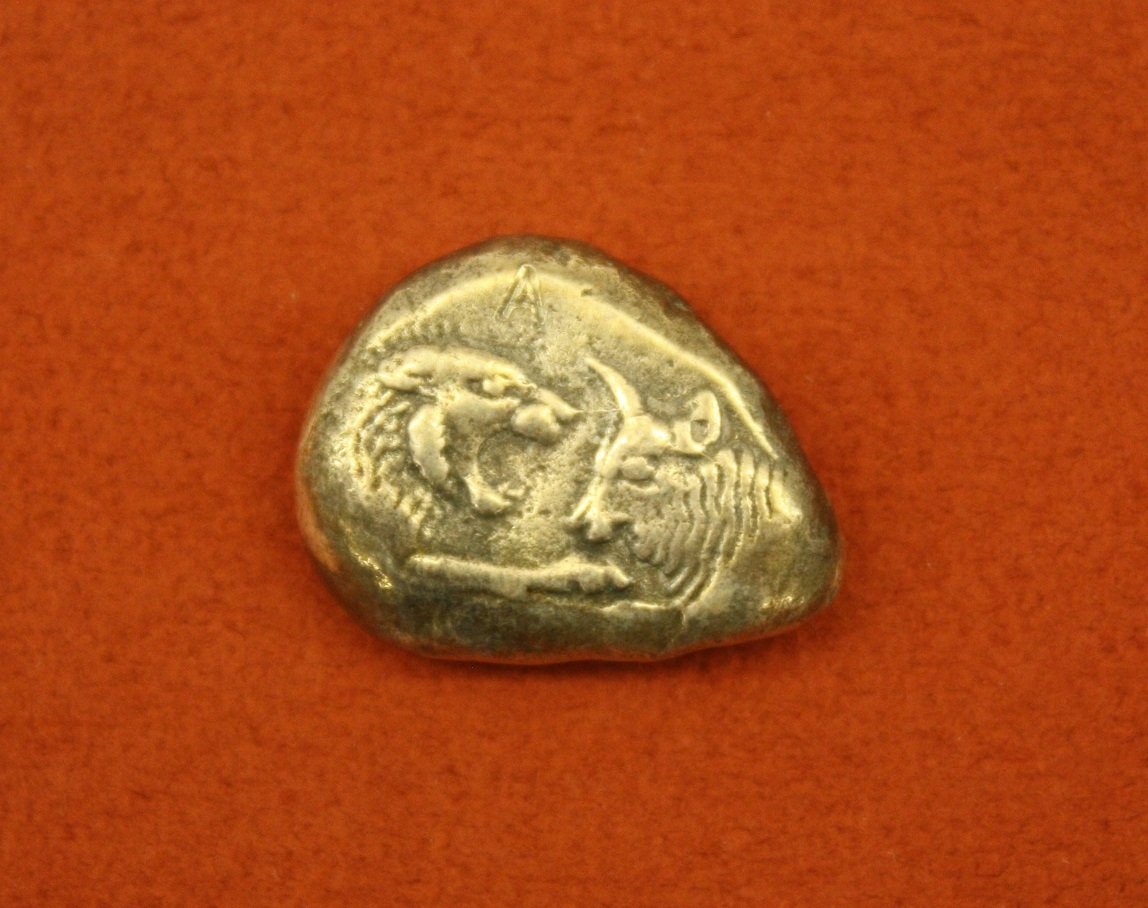
Dolphins, lions, roses, or sprigs of celery were not just decorative whims—they served as deliberate visual brands, instantly recognizable in their world much like a national flag or a modern tech logo is today. As kingdoms expanded during the Hellenistic age, ambitious rulers realized that coinage could promote not only a city but also an individual, opening endless opportunities for self-aggrandizement.
Alexander the Great famously poured captured Persian bullion into minting operations, flooding his territories with coins bearing the image of Heracles to create divine associations. His hero’s likeness and symbols circulated wherever trade reached. It was only after Alexander’s death in 323 BC that his successors, such as Lysimachos and Ptolemy I, began minting coins featuring Alexander’s actual image, often deified with the horns of Zeus-Ammon.
Later dynasts and regional kings, from Bactria to the Black Sea, combined Greek deities with local motifs, creating designs that spoke simultaneously to Greek settlers and indigenous populations. In doing so, Hellenistic rulers wove together diverse subjects under a shared visual language, reinforcing Greek influence in these regions until their eventual decline. Because coins circulated constantly through markets, garrisons, and tax payments, they carried a ruler’s authority far more effectively than proclamations carved in stone or speeches heard once in a lifetime.
Modern numismatists and museum curators rely heavily on these tiny artifacts to reconstruct lost political histories precisely because they were produced in such quantity and with such intentional imagery. When compared with today’s curated social media feeds and algorithm-driven posts, Ancient Greek coins emerge as an early, analog prototype of the same impulse: to broadcast identity, assert legitimacy, and keep a carefully crafted image circulating through the public sphere.
See all the latest news from Greece and the world at Greekreporter.com. Contact our newsroom to report an update or send your story, photos and videos. Follow GR on Google News and subscribe here to our daily email!

