



Anacharsis, a philosopher from Scythia who embraced Greek culture, stands as a remarkable figure in the annals of ancient history. Despite his foreign origins, he left a lasting impression on Greek philosophy, and was renowned for his practical wisdom, sharp wit and critical observations of Greek customs. Although not Greek by birth, he is often regarded as an underrated Greek sage, whose insights profoundly influenced Hellenic thought.
Life and journey of the Skythian sage to Greece
Born into the Scythian aristocracy, Anacharsis sought knowledge beyond the nomadic steppes of his homeland. His quest for wisdom led him to Greece, where he aimed to immerse himself in Hellenic culture. According to tradition, he arrived in Athens around 530 BC and formed a close friendship with Solon, the famed Athenian lawmaker. The philosophical exchanges between the sages became legendary, highlighting the fusion of Greek and foreign perspectives.
He was the first foreign resident to receive the rights of an Athenian citizen. Lucian wrote two dialogues about Anacharsis.
When a man named Atticus once mocked him as a ‘barbarian’ for his Scythian origin, Anacharsis the sage replied with the famous words: “My homeland is a shame to me, but you, by your behavior, are a shame to your homeland.”
Anacharsis also originated the phrase: “Man’s enemy is himself.”
Philosophy and teachings
Anacharsis became famous for his straightforward and often humorous critiques of Greek society. While the Greeks valued elaborate ceremonies and luxuries, Anacharsis championed simplicity and practicality. He famously criticized the use of wine in excess, despite acknowledging its value in moderation. His observations often took the form of aphorisms, making his wisdom easily accessible and memorable.
One of his notable remarks involved the Greeks’ penchant for eloquent speech over actionable deeds. He pointed out that in Greece “wise men speak, and fools decide.” His outsider perspective allowed him to challenge Greek norms without the constraints of local prejudices.
Anacharsis also held strong opinions about laws and governance. As the ancient Greek biographer Plutarch recounts, during his discussions with Solon Anacharsis questioned the effectiveness of laws. He likened them to spider webs that catch the weak but the strong break them. He argued that laws often failed to restrain those in power, exposing the limitations of human-made systems of justice. Despite this skepticism, his debates with Solon underscored a mutual respect. Solon believed in the potential for laws to guide society, while Anacharsis emphasized the importance of moral character over written codes.
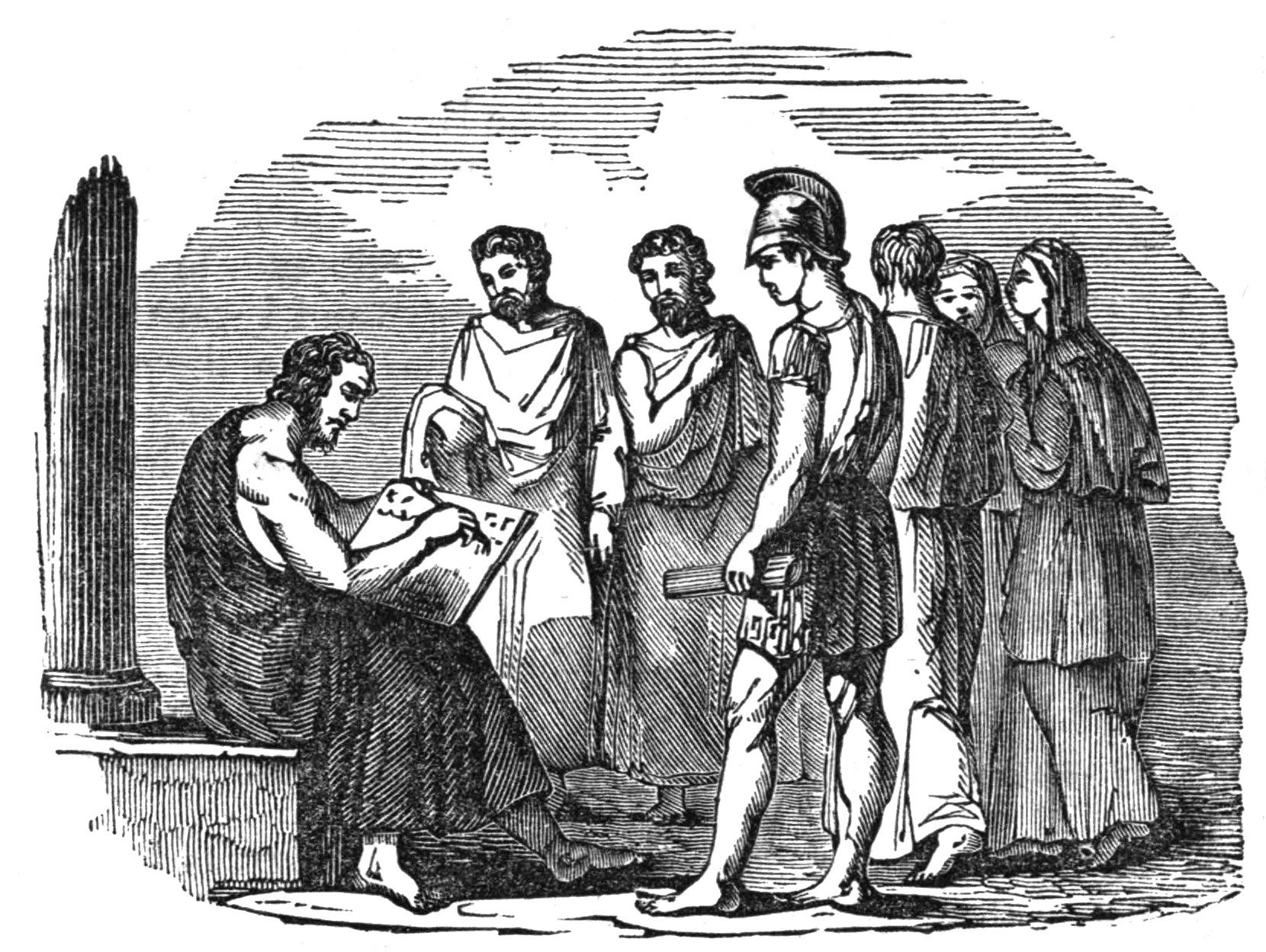
Cultural impact and legacy of the philosopher Anacharsis
Anacharsis’ presence in Athens exemplified the Greeks’ openness to foreign ideas, despite their general disdain for “barbarians.” His friendship with Solon and integration into Athenian society reflected a mutual respect that transcended cultural boundaries. Although Anacharsis did not leave written works, his sayings were preserved through later writers such as the ancient Greek doxographer Diogenes Laertius.
In later centuries, Anacharsis became a symbol of the barbarian sage archetype, illustrating that wisdom is not confined by geography or ethnicity. His legacy influenced both philosophical thought and the broader cultural discourse on the value of outsider perspectives.

Death and historical debates
When the great philosopher Anacharsis returned to his homeland, he attempted to introduce Greek culture, including the worship of the goddess Demeter. His brother murdered him with a bow. He justified the act by claiming that Anacharsis sought to bring the Eleusinian Mysteries into Scythia.
None of his writings have survived. He authored a work comparing the laws of the Scythians with those of the Greeks, as well as another on the art of war. He became known for the simplicity of his lifestyle and his keen observations of Greek customs and institutions.
See all the latest news from Greece and the world at Greekreporter.com. Contact our newsroom to report an update or send your story, photos and videos. Follow GR on Google News and subscribe here to our daily email!

