



Archaeologists working near Pompeii have uncovered remarkable new finds inside the Villa Poppaea, the lavish residence traditionally associated with Poppaea Sabina, the wife of Emperor Nero. Ongoing excavation and restoration work is revealing the true scale, decoration, and complexity of one of the villa’s most refined spaces, known as the Hall of the Mask and the Peacock.
Fresh frescoes reveal elite Roman taste
Researchers say the room is larger and architecturally richer than previously believed. Fresh frescoes are emerging from beneath centuries of volcanic deposits, showing vivid peacocks, theatrical masks, and finely detailed ornamental motifs.

The paintings belong to the Roman Second Style, famous for illusionistic architecture and dramatic visual effects designed to impress elite guests. The villa, buried during the eruption of Mount Vesuvius in 79 A.D., remains one of the most important residences linked to the imperial world.
Project aims to solve mysteries and protect the site
The excavation also seeks to clarify how the western sector of the villa developed. This area borders the historic Via dei Sepolcri and has long raised questions among scholars. The project also supports conservation goals and broader cultural enhancement.
Plans include strengthening links with the nearby Spolettificio Borbonico, which will host museum spaces, storage areas, and visitor services in the future.

Authorities say long-standing questions are being answered
Park Director Gabriel Zuchtriegel says the new campaign is already filling in gaps left by earlier excavations. Researchers are now resolving uncertainties about room layouts and architectural connections while uncovering sections of decoration with striking color and craftsmanship.
Artistic finds deepen understanding of imperial luxury
Among the standout discoveries is a complete peahen figure, paired with a male peacock already visible on the same wall. Archaeologists also uncovered a theatrical mask linked to Atellan comedy, depicting Pappus, a foolish elderly character known for failed attempts to appear youthful.

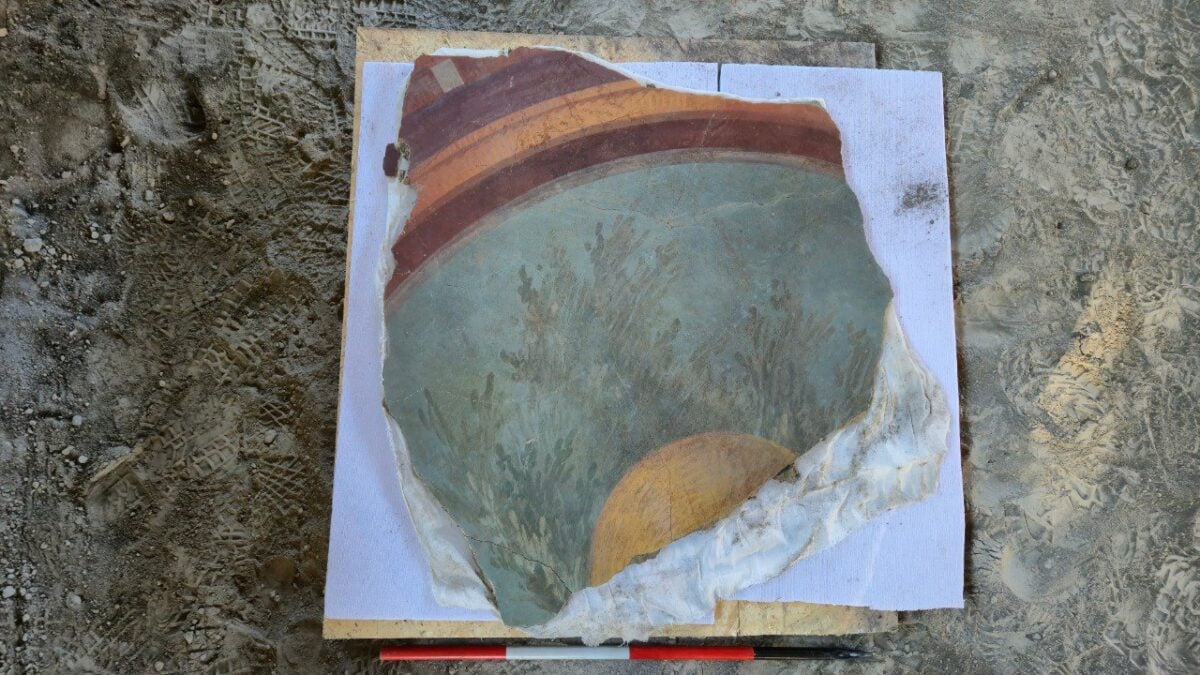
Another fragment shows a gilded tripod inside a circular frame, echoing a bronze tripod nearby and revealing a sophisticated decorative scheme.
Ancient garden traces come back to life
Casting techniques also revealed imprints of trees preserved in their original positions in the villa’s garden. The layout mirrored the rhythm of the southern portico’s colonnade, similar to designs in Pompeian houses. Experts believe the trees may have included olive species already documented in nearby studies.
New rooms expand the known layout
Four previously unknown rooms have also been identified, raising the total number of known spaces to 103. One apsidal room may have belonged to the bathing complex. Archaeologists also identified a paleochannel formed after the 1631 eruption, helping explain how the surrounding landscape changed over centuries.
Restoration brings lost beauty back into view
Meanwhile, specialists are restoring two richly decorated cubicula overlooking the villa’s southwestern area. These small rooms feature elaborate stucco, painted vaults, mosaics, and pigments, including Egyptian blue. The goal is to restore clarity to damaged decorations and bring long-lost color and detail back to life.
The discoveries deepen understanding of one of the Roman world’s most luxurious residences. Researchers say the findings offer rare insight into imperial power, taste, and daily life within the circle surrounding Nero — and into a world preserved in ash when disaster struck Pompeii nearly 2,000 years ago.
See all the latest news from Greece and the world at Greekreporter.com. Contact our newsroom to report an update or send your story, photos and videos. Follow GR on Google News and subscribe here to our daily email!

